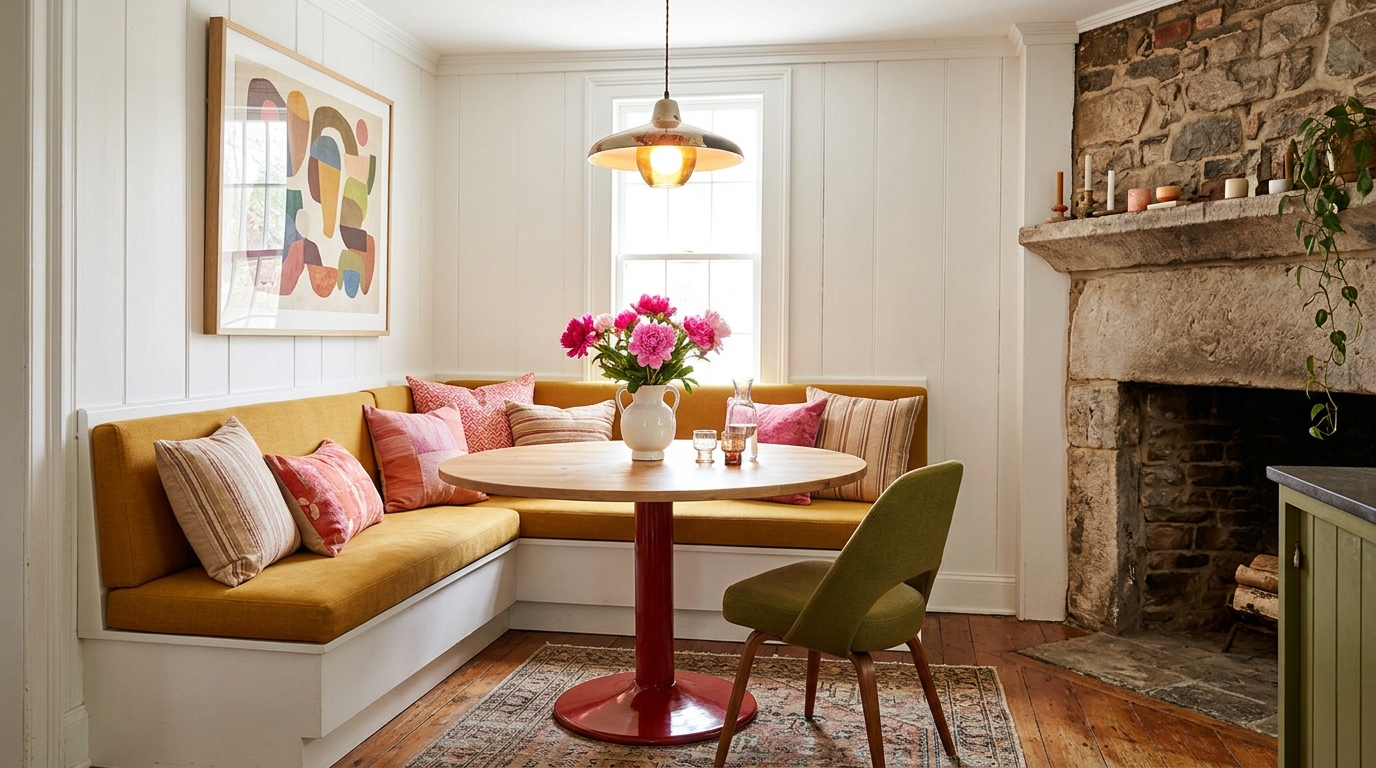
Why does some dining room decor stay with you long after the plates are cleared, while the rest of it fades? It is rarely about the size of the table or the price of the chairs. Good dining room decor comes down to a few quiet decisions about light, texture, color and what sits at eye level once everyone pulls up a chair, and most of us skip at least two of them. We buy a table, keep whatever fixture came with the house and slide a sideboard against the wall. Then the room feels like a place we pass through instead of one we gather in.
The nineteen ideas below range from a dark ribbed-oak set to a pine buffet hiding behind a linen skirt, and from a navy room with a hot pink sideboard to a quiet sage corner. Each one gives you a design move, the reason it works and a way to try it at home, usually without a remodel. You will also find a few lessons I learned while styling real tables, plus seasonal looks for Halloween and the holidays. Read them in order or jump to the one that fits your room. Keep going until the final section, where three small habits make any of these looks feel finished.
1. Repeat One Texture to Anchor Your Dining Room Decor
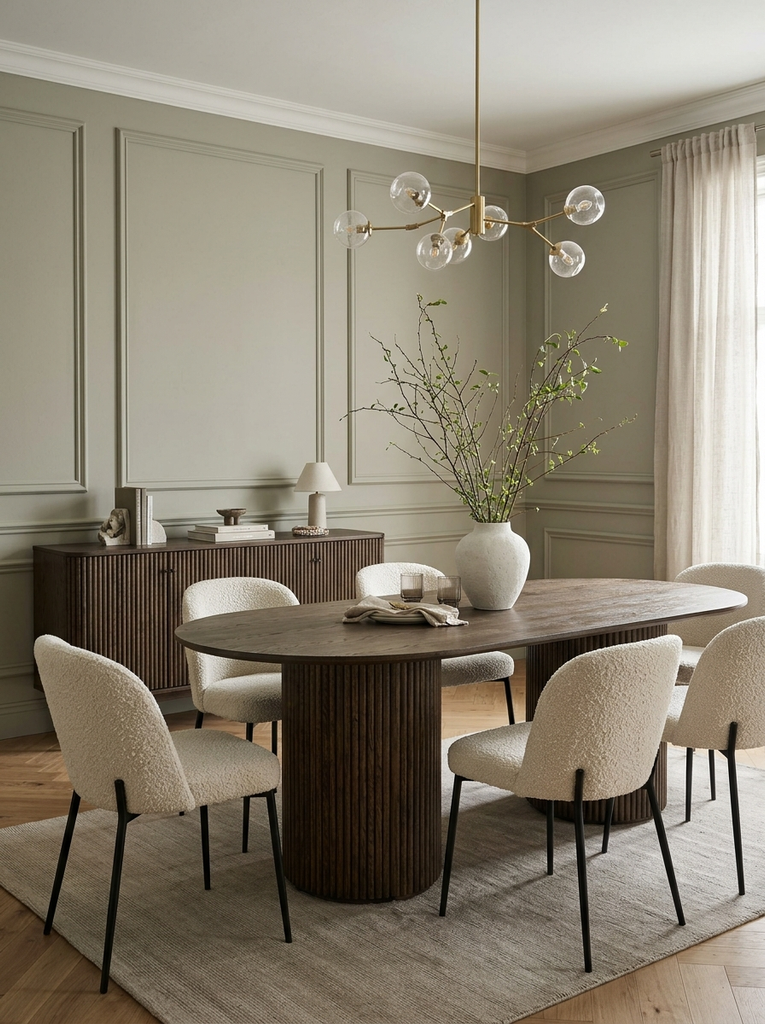
Repeating a single texture is the fastest way to make dining room decor look planned instead of collected by accident. The vertical ribbing on the table base is echoed in the sideboard, so two large dark pieces read as one deliberate family. That repetition lets everything else stay soft, from bouclé barrel chairs to a pale, worn-in rug and a white textured vase holding bare branches. Vertical ribbing also pulls the eye upward, which makes low furniture feel taller and the ceiling feel less close. To copy the idea, choose one surface pattern, such as fluting, caning or a visible grain, and repeat it on two or three pieces at different scales. Add picture-frame molding in a soft greige-green and the walls will frame the furniture the way a mat frames a print.
2. Make a Dark Hutch the Hero of a Farmhouse Dining Room
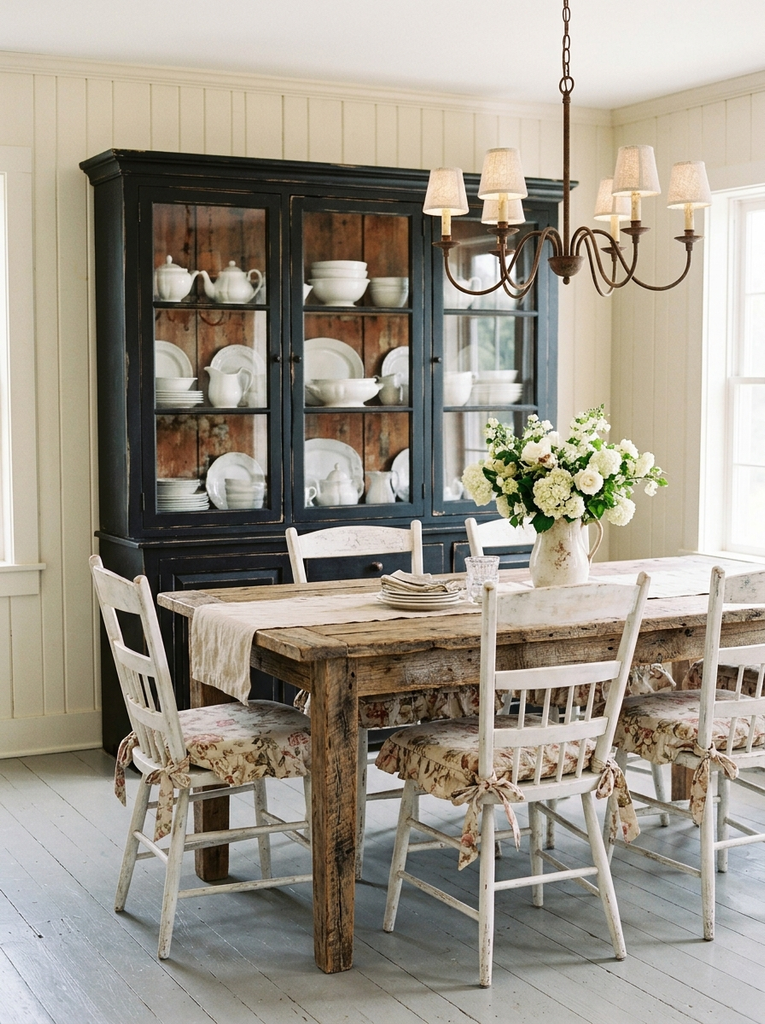
A dark hutch with a warm wood back makes white dishes glow, and that contrast is the whole trick of farmhouse dining room decor. Ironstone platters and clear glasses read as a display instead of storage when they sit against rust-toned planks. Keep the room around the hutch quiet, with creamy paneled walls, a pale painted floor and a reclaimed-style table in a medium tone, so the cabinet can lead. Group platters by height and leave a little air between them so each one catches light. Weathered chairs with tied-on patterned cushions soften the formal black, and a loose bouquet of white blooms keeps the table relaxed. If you do not own a hutch, a pair of floating shelves painted a deep color gives you a smaller version of the same effect.
3. Layer Blue and Gold for Dining Room Decor With a Classic Edge
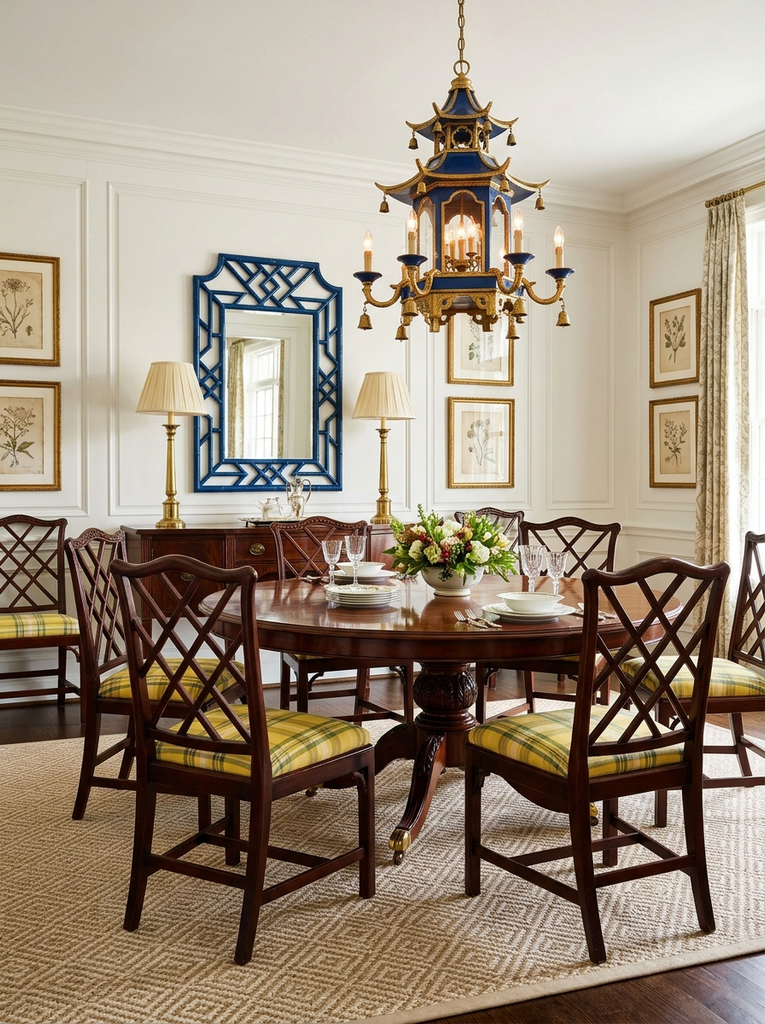
Blue and gold is a dependable pairing for traditional dining room decor because the two colors sit opposite each other in warmth, so each makes the other look richer. A gold pagoda-style chandelier, a lacquered mirror with a fretwork frame and brass lamps on a mahogany buffet repeat the combination at three different heights. Chippendale-style chairs with checked seat cushions add a lighter, playful note that keeps the heavy wood from feeling stuffy. Botanical prints in thin gold frames carry the palette to eye level without crowding the wall. If your furniture is inherited or secondhand, this is an easy way to modernize it: leave the wood alone and change what surrounds it. Start with one blue object, then add gold in smaller amounts until the balance feels right.
4. Dress a Painted-Leg Table for Fall Without Hiding It
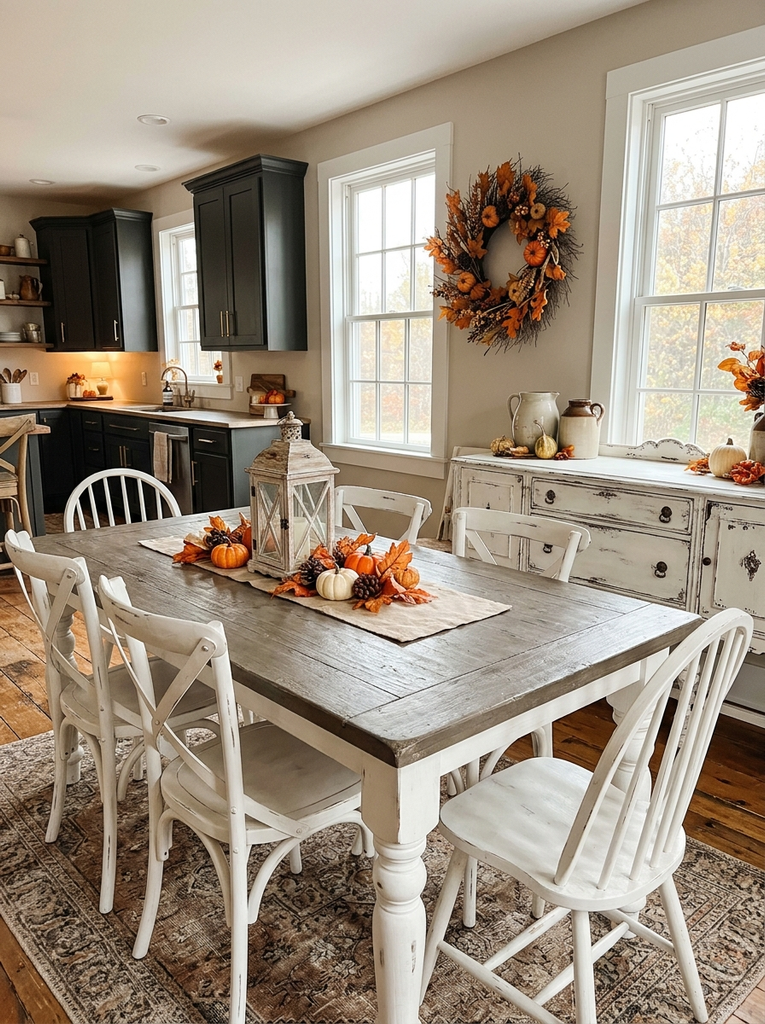
Autumn dining room decor works best when it sits lightly on a table that already looks good. A two-tone farmhouse table, with a weathered gray-brown top and creamy white legs, needs only a low cluster of white pumpkins, a handful of paper-bright leaves and a lantern in the center. Keep the seasonal color in the objects and let the wood grain stay visible between them. Repeat the palette on the sideboard with a wreath above it, a few small pumpkins and candles at different heights. The rule is to stop one item before the surface feels full, because fall decor collects quickly. Everything swaps out in a single afternoon, so the same table is ready for the next season.
5. Split the Wall in Two Colors for Dining Room Decor That Feels Taller
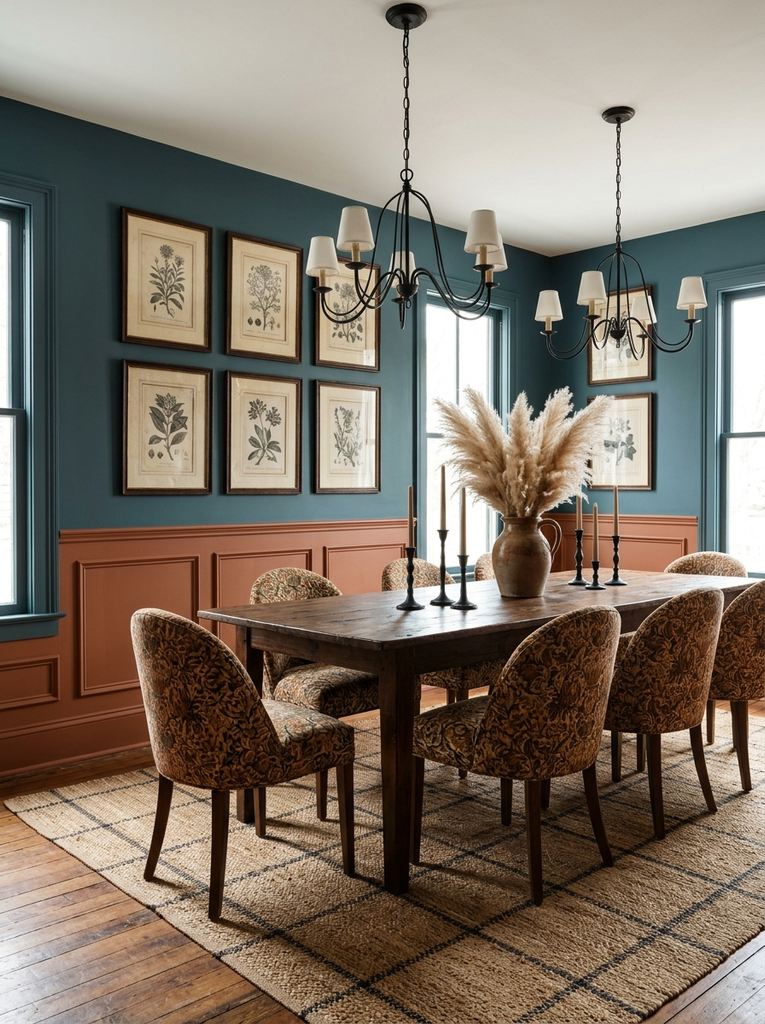
Dividing a wall at wainscot height lets you use two strong colors in your dining room decor without the room feeling busy. Deep teal above and terracotta board-and-batten below sit on opposite sides of the color wheel, so the pairing feels vivid yet settled. Putting the darker shade on top is a smart choice when the ceiling is high, because it brings the top of the room down toward the table. Pampas grass in a ceramic jug, framed botanical prints and black taper candlesticks add height while keeping the palette earthy. Curved chairs in a block-print fabric soften all the straight vertical lines, and a jute rug with a dark grid anchors the floor. Test both paint colors side by side at full size, since undertones change a great deal with daylight.
6. Let One Saturated Color Do the Talking
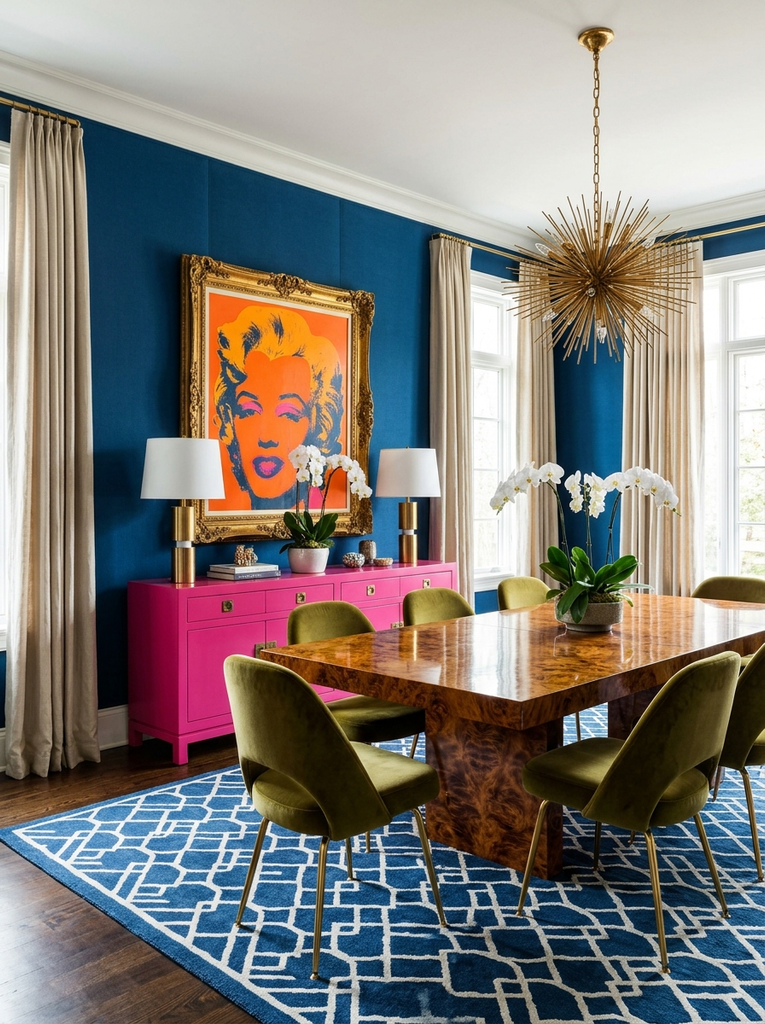
One strongly colored piece can carry all of your dining room decor if everything around it is disciplined. A hot pink sideboard against navy grasscloth is the loudest move here, yet the room works because the rest of the palette is restrained: pale curtains, a geometric navy and white rug, and warm gold on the lamps and chair legs. The orange pop-art canvas in a gold frame acts as a bridge color, which is why the pink looks intentional instead of random. A glossy burl-style table adds warmth that keeps the navy from feeling cold, and muted olive velvet chairs behave almost like neutrals next to the brights. If bold color makes you nervous, begin with a painted sideboard or a single piece of art, since both are easy to change. Allow yourself one loud element and let everything else support it.
7. Hang Pendants Low Enough to Feel Like Part of the Table
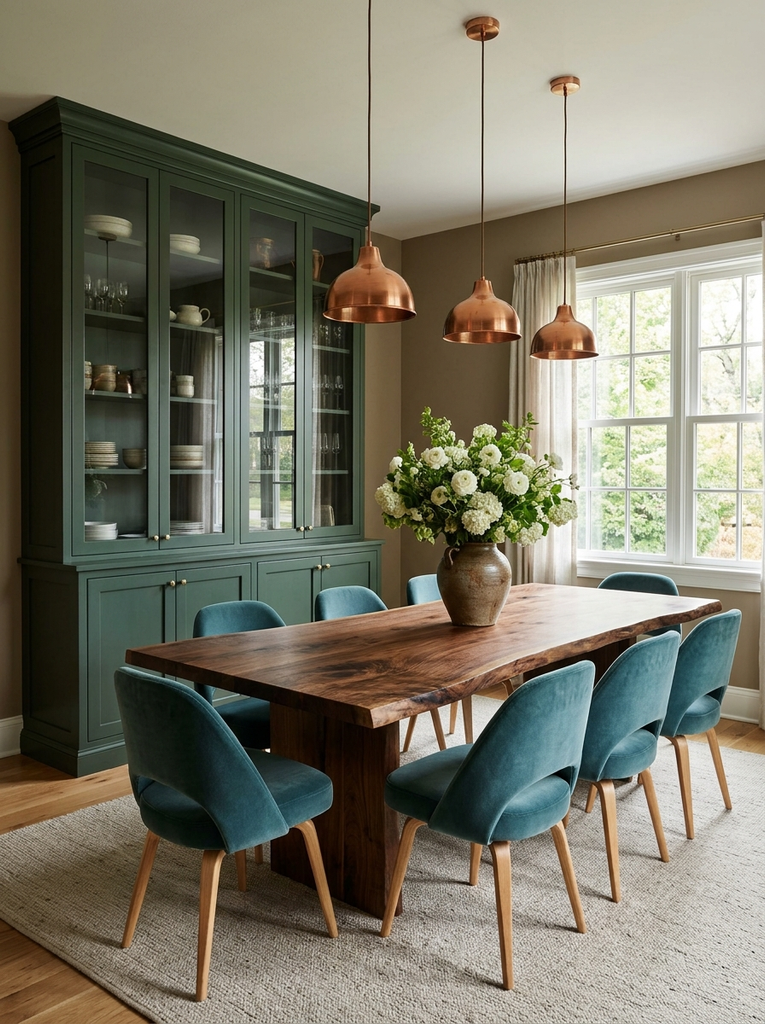
Lighting is the backbone of dining room decor, and pendants should feel connected to the table, not lost in the ceiling. Three copper pendants over a live-edge walnut table do this well because their warm metal picks up the wood grain and their rounded shapes soften the table’s long line. A good starting point is to hang the bottom of the fixture 30 to 36 inches above the tabletop, high enough to clear the sightline across the table and low enough to feel attached to it. I once hung a fixture a hand too high over a long wooden table, and the whole arrangement looked as if it were drifting away until I lowered it. Teal velvet chairs against deep green cabinetry make a restful, layered palette, and glass-front doors give the cabinets glow instead of weight. Put the pendants on a dimmer so the same light works for homework and for dinner.
8. Set an Outdoor Halloween Table That Looks Designed
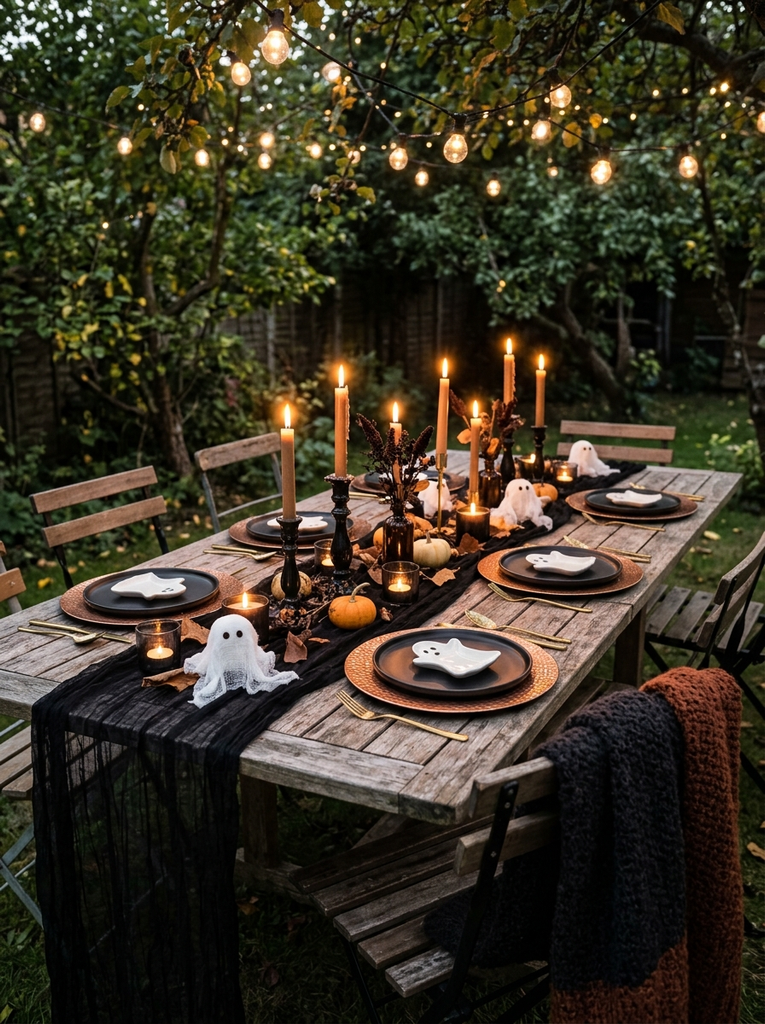
Halloween dining room decor feels grown-up when the theme lives in one or two details and everything else is simply well set. Ghost-shaped dishes on black plates do the playing here, while copper chargers, gold flatware and linen napkins keep the place settings polished. A black gauze runner adds texture and drama without hiding the wood underneath. Candles in black holders and small glass votives create a flickering middle layer that matters more after dark than any centerpiece. String lights overhead and a few cheesecloth ghosts at the edge of the yard stretch the scene beyond the table itself. Choose flameless candles if wind or small guests are part of the evening.
9. Make a Small Round Table Work in a Living Room
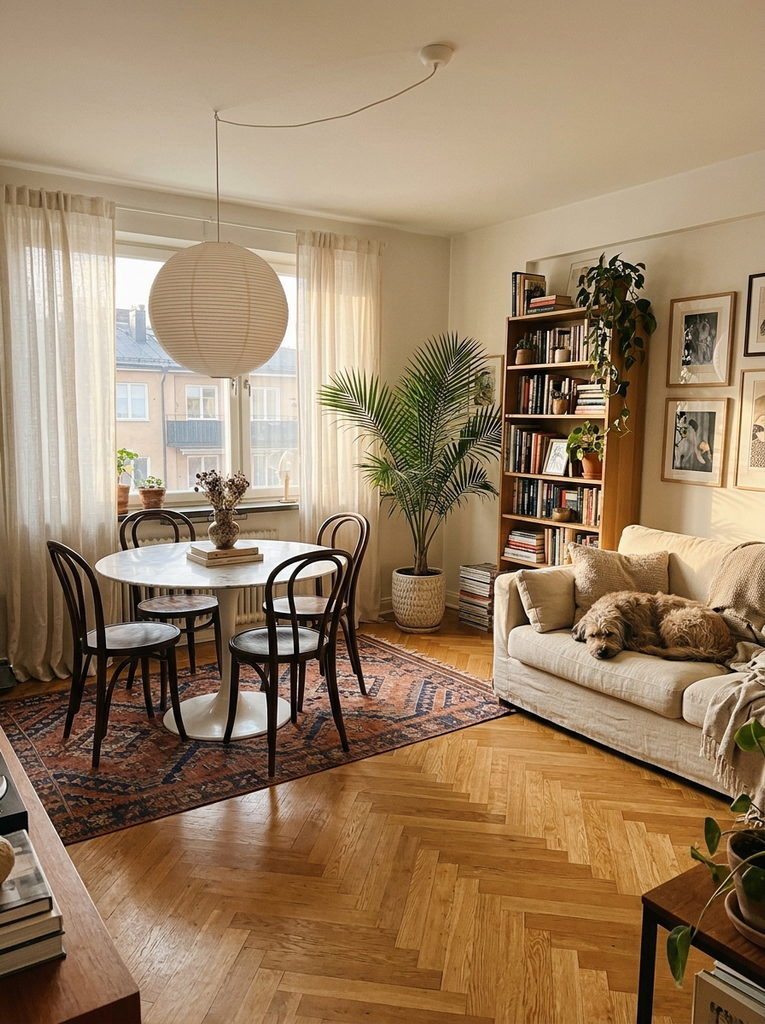
Dining room decor can work even without a dining room, because a corner inside a living room feels intentional when it is treated as its own zone instead of an afterthought. A pedestal table and bentwood chairs by the window borrow daylight, and sheer curtains keep the light soft. A kilim rug anchors the seating side, which quietly separates the two uses without a single wall. A round paper pendant defines the dining zone from above, and it is light enough not to crowd the room. Round tables suit tight spaces because there are no corners to bump and conversation travels easily in every direction. If your dining area shares a room, choose open-backed chairs so the space still feels airy.
10. Scale the Chandelier to the Table, Not Just the Room
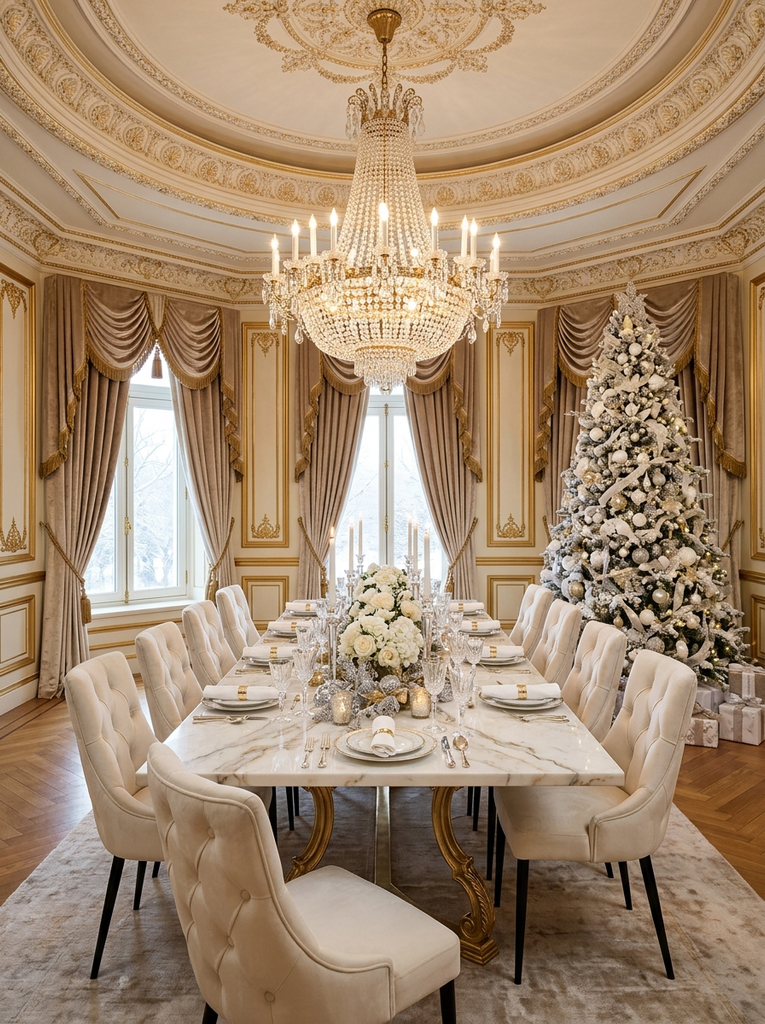
A statement chandelier is the jewelry of dining room decor, and it should relate to the table beneath it, not only to the size of the ceiling above. A fixture about half the width of the table is a reliable starting point, and a long table can take a wider one or a pair. This tiered crystal fixture works because it echoes the curve of the domed ceiling and gives the long white table a clear focal point overhead. Cream tufted chairs with dark legs keep the palette soft while adding contrast at floor level. Gold-toned wall panels and heavy drapes bring warmth so an all-white scene does not turn chilly. For holiday dining room decor, keep the flowers low and let the tree in the corner supply the height.
11. Pair Sage Walls With a Warm Wood Table for Easy Calm
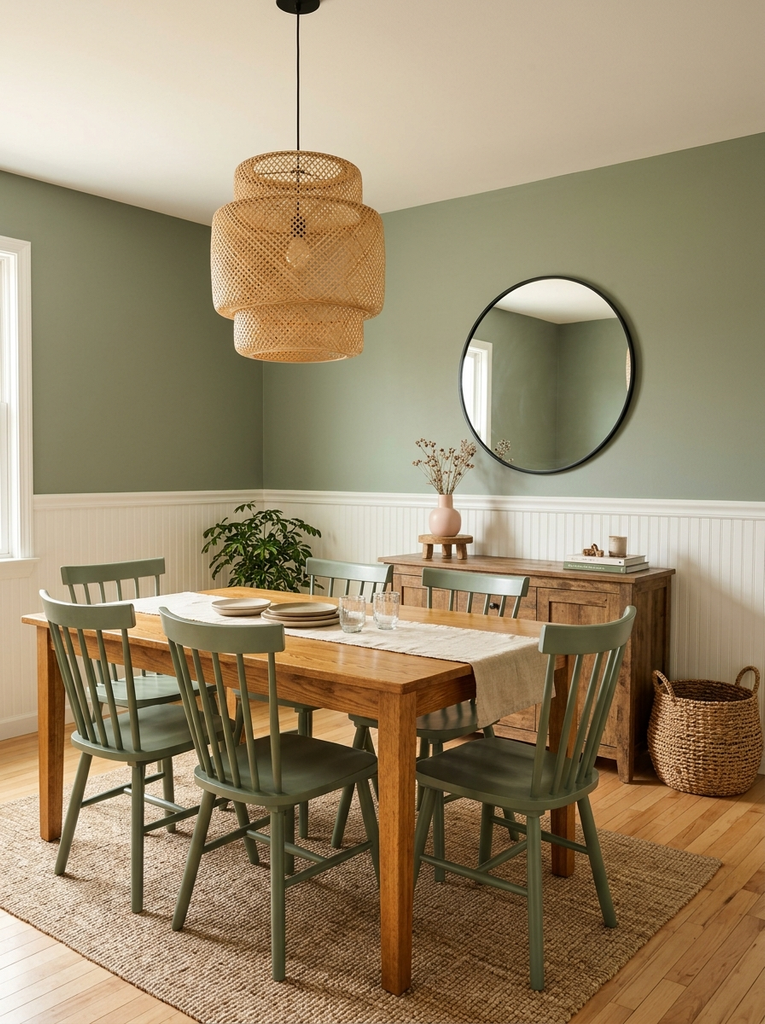
Sage green and honey-colored wood make calm dining room decor because green is the natural partner of warm brown. The green holds the wall above white wainscoting, so the room feels soft rather than dark. Painted chairs in a similar green tie the table to the walls, and a rattan double-tier pendant adds texture overhead. Think in the 60-30-10 rule: sage and white take about sixty percent, wood about thirty, and the black mirror frame and pink flowers share the last ten. One small vase on a wooden riser gives the table a low focal point without blocking conversation. This is also a smart refresh for a builder-grade oak table, since paint and lighting change the look without replacing any furniture.
12. Use Open-Back Chairs to Let Busy Wallpaper Breathe
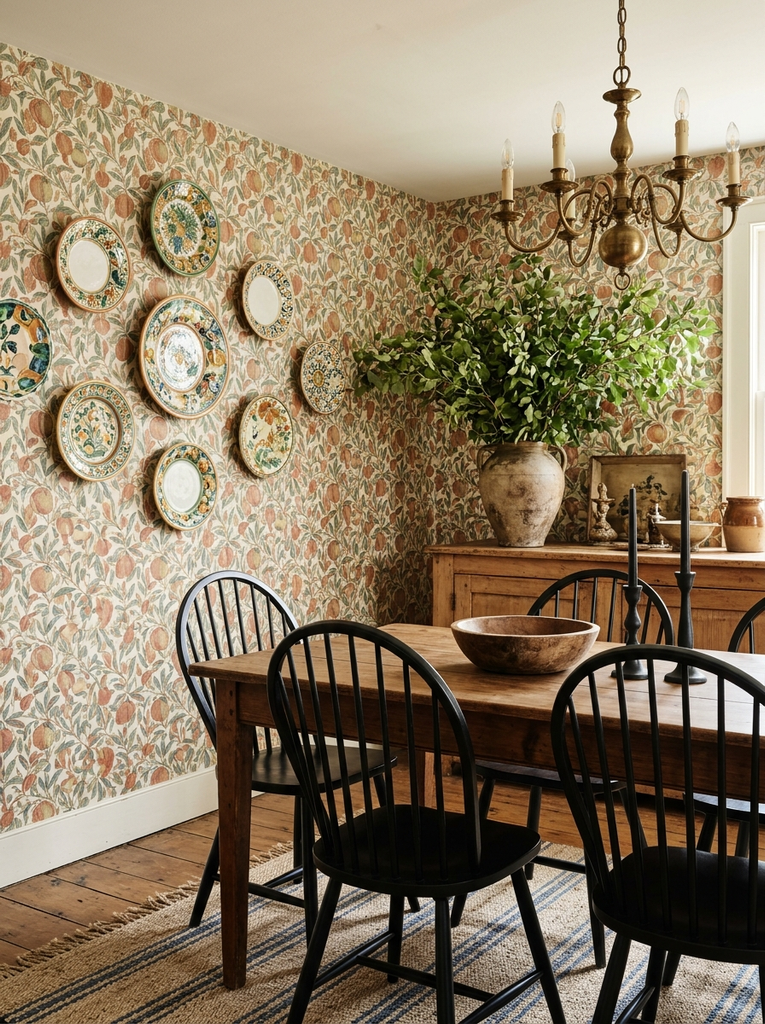
Spindle-back chairs are the secret weapon of dining room decor with bold wallpaper. Black Windsor chairs let you see the pattern through the backs, so the wall stays visible and the room never feels crowded by solid furniture. The leaf-and-fruit paper in muted terracotta and green carries plenty of visual weight, and majolica plates hung across it add rhythm without adding a second pattern. A plain wooden table, a simple bowl and tall taper candles stay quiet beside it. Brass in the chandelier and lamp base brings a warm shine, and a striped rug with soft blue lines grounds the floor. When the walls are busy, keep the rest of your dining room decor simple and let the pattern perform.
13. Warm Up Traditional Furniture With Deep Taupe Walls
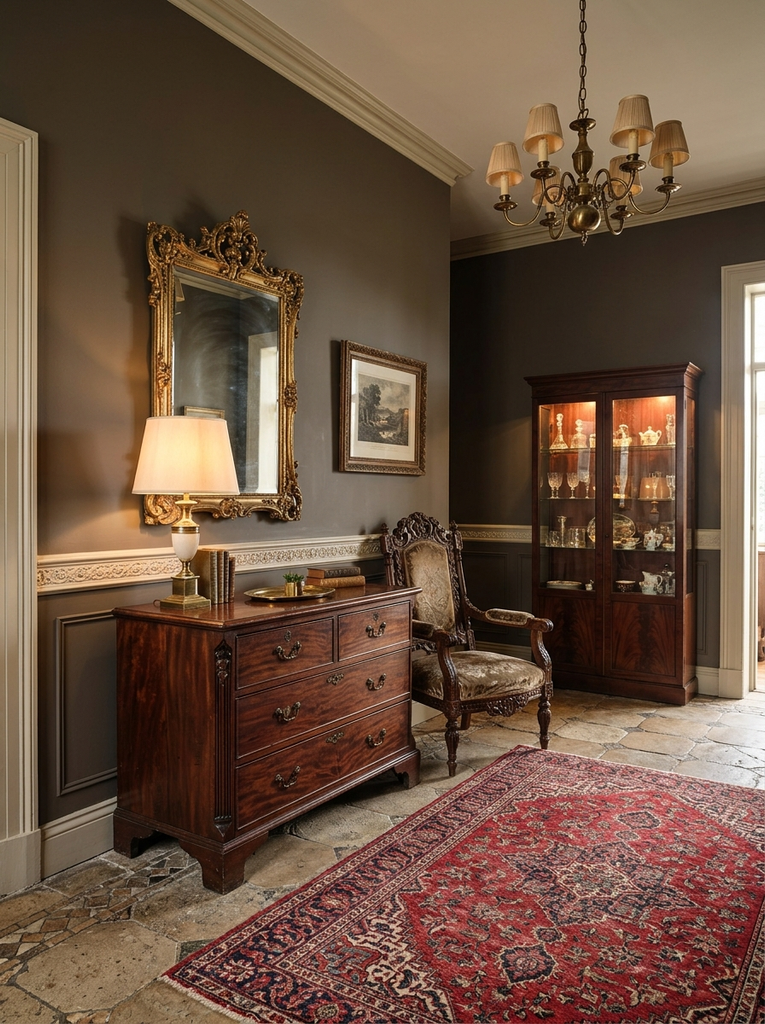
Traditional dining room decor looks richer against a deep, warm neutral than against white. A taupe wall with a chair rail gives a mahogany chest and carved chairs the backdrop they need, and the darker color makes gold frames look luminous. A large mirror above the chest bounces lamplight around the room, which matters when the walls absorb more light. The red Persian rug supplies the pattern and the color, so the walls can stay calm. Choose warm bulbs around 2,700 Kelvin and light lamp shades so the glow feels golden instead of heavy. If you have inherited pieces, this is the easiest way to make them look chosen: paint the wall, add one mirror and repeat one warm metal.
14. Hide Storage Under a Linen Skirt
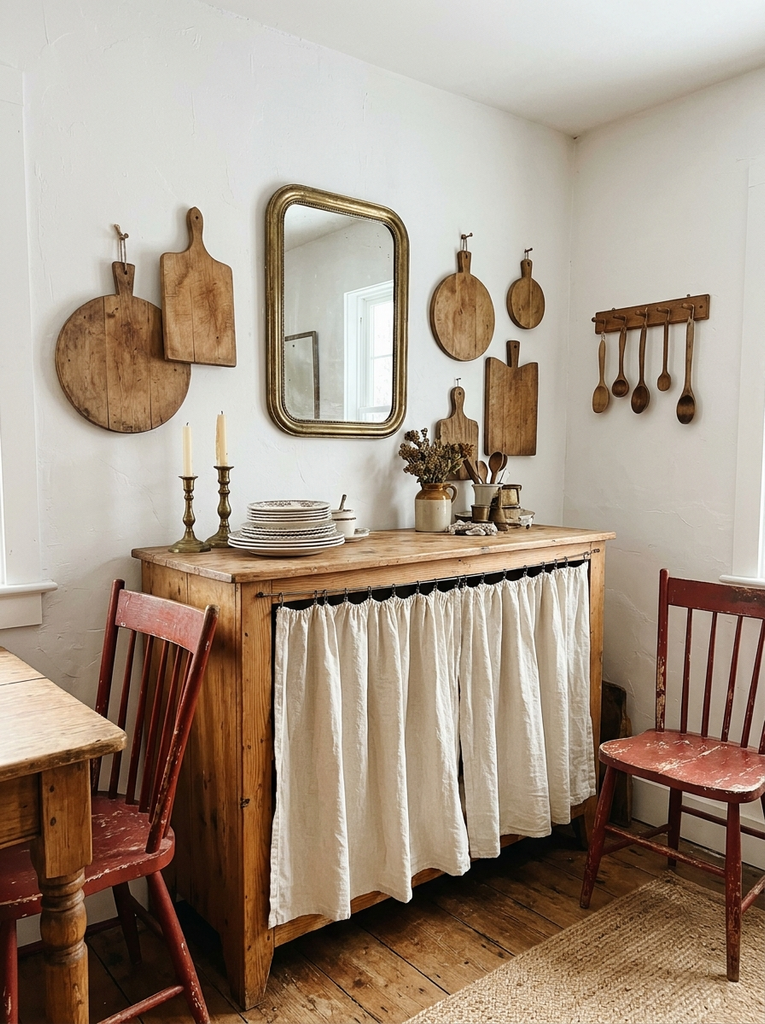
A fabric skirt turns an ordinary pine sideboard into a charming piece of dining room decor and hides everything you would rather not see. A simple cream skirt hung from a tension rod gives instant cover for baskets and extra table linens. I once covered the open lower half of an old buffet this way, and the clutter vanished in about ten minutes without a drill. Above it, a collection of cutting boards, a small brass mirror and a rail of wooden utensils makes a wall display that is practical as well as pretty. Brass candlesticks and a short stack of vintage plates keep the top collected rather than crowded. Choose cotton or linen in a natural shade so the fabric ages well and the look stays relaxed.
15. Build a Bat Wall for Halloween That Looks Crafted
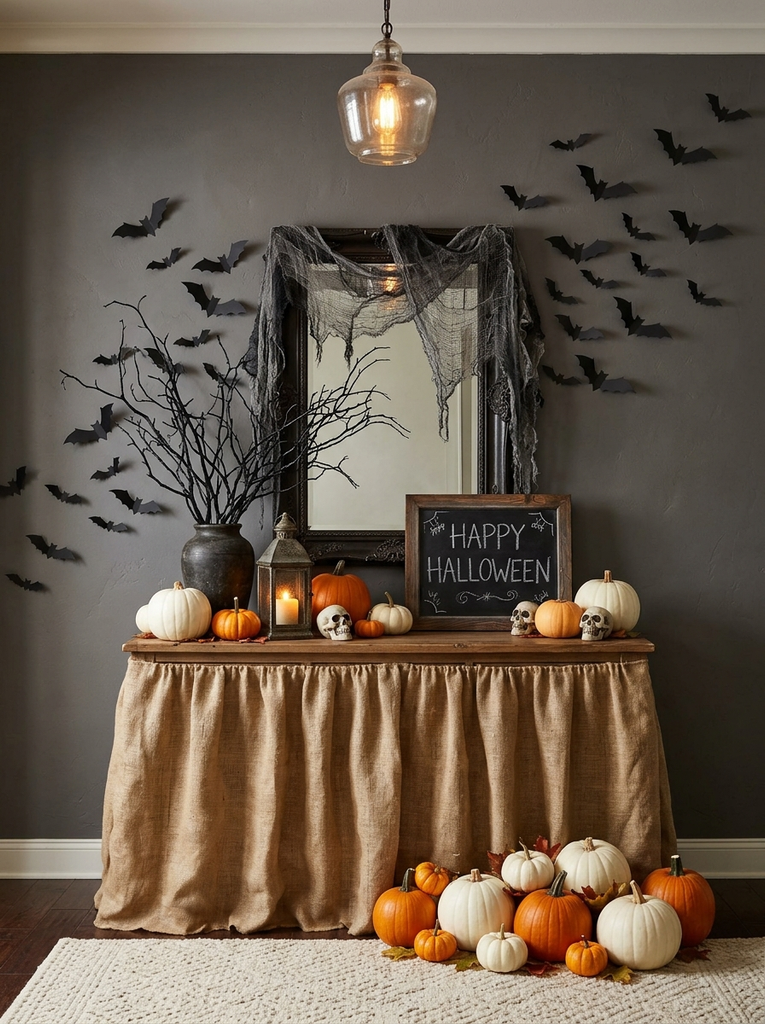
Paper bats flying up a wall are inexpensive Halloween dining room decor, and they make an ordinary sideboard look dramatic. Cut them from black cardstock in several sizes and let them rise toward the ceiling in a loose diagonal, as if they were taking off. A mirror wrapped in gauze, black twig branches and small pumpkins in white and orange build the vignette in layers beneath them. A drop-cloth skirt on the buffet keeps the base calm so the bats get all the attention. Limit the palette to black, white and a touch of orange, and the whole corner will look styled instead of bought from a costume aisle.
16. Use Oversized Pumpkins as a Rustic Centerpiece
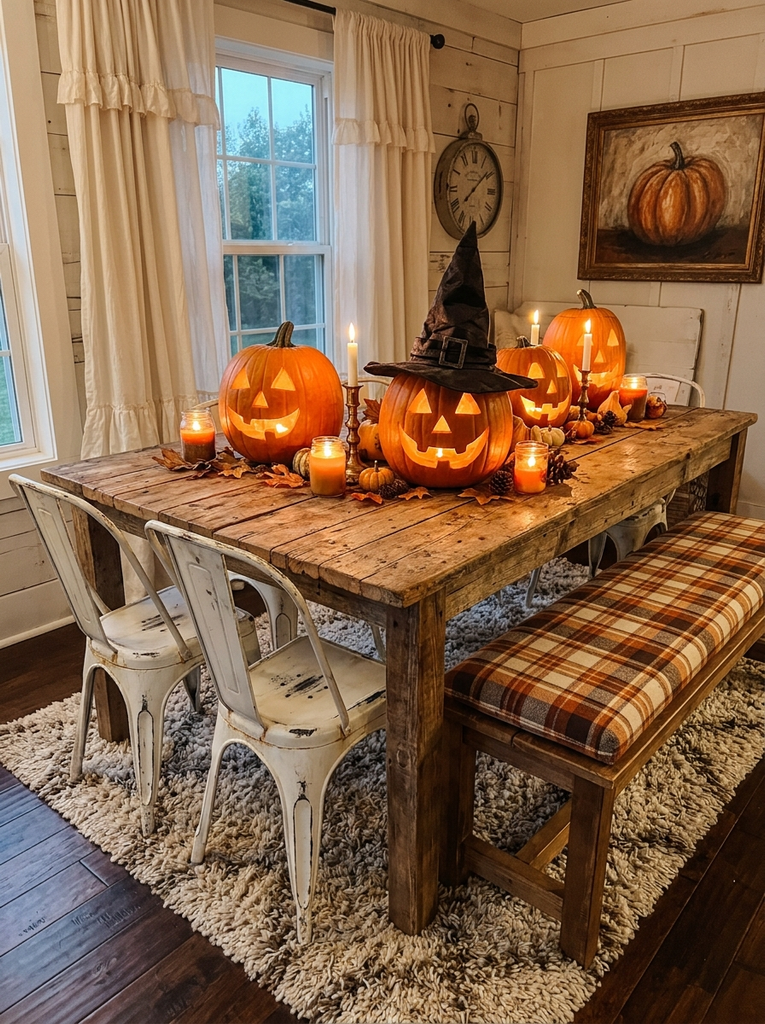
A row of large pumpkins makes a strong dining room decor centerpiece because the scale suits a long rustic table. The jack-o’-lantern faces bring humor, and a witch hat on the tallest one adds a focal point without extra clutter. Candles tucked between them supply warm light and keep the table from looking flat. White metal chairs and a shaggy cream and tan rug keep the room bright, so the theme stays playful instead of spooky-dark. Lace-edged curtains and a pumpkin painting on the wall carry the story upward in a gentle way. Vary heights, leave gaps between the pieces and keep everything low enough that guests can talk across the table.
17. Bring Winter In With Gingham and Greenery
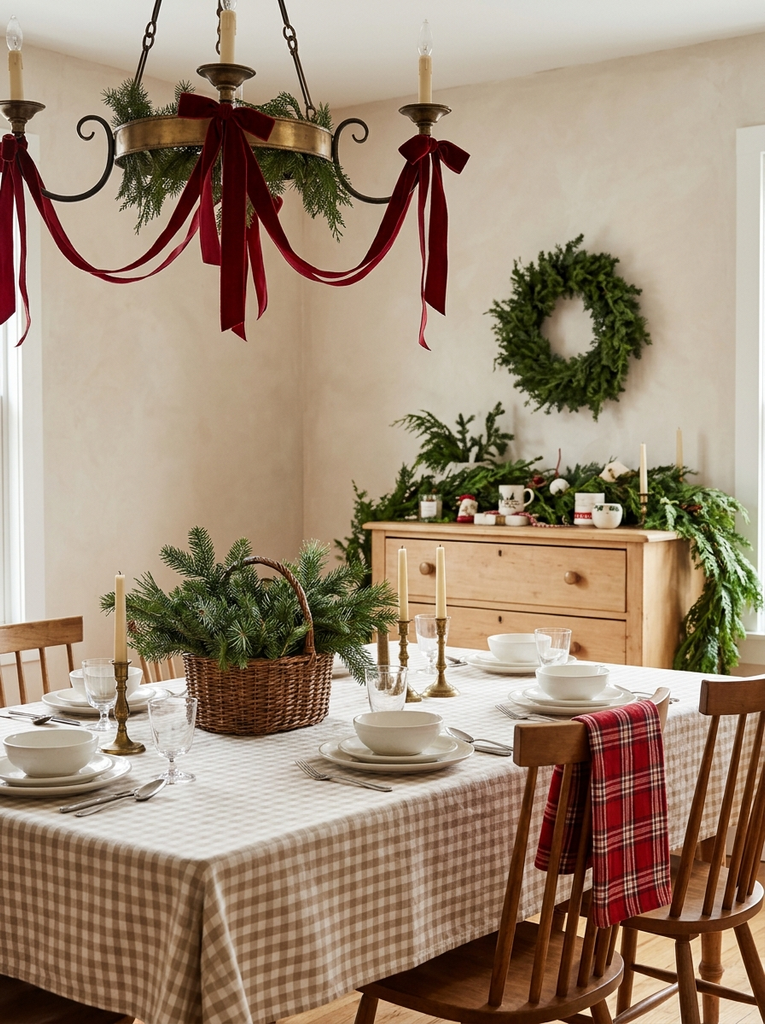
A gingham tablecloth and a basket of evergreen is an uncomplicated way to bring winter dining room decor into the house without a full holiday overhaul. A soft tan check keeps the table from reading as red and green, so the look stays calm. A velvet ribbon on the chandelier and a garland over the hutch bring the festive color up to eye level. White dishes and a brass candlestick keep the palette warm. Real greenery is worth using where you can, since the scent does half of the work. Keep the cloth and basket in the same color family and let the branches be the star.
18. Pair a Painted Table Base With Black Windsor Chairs
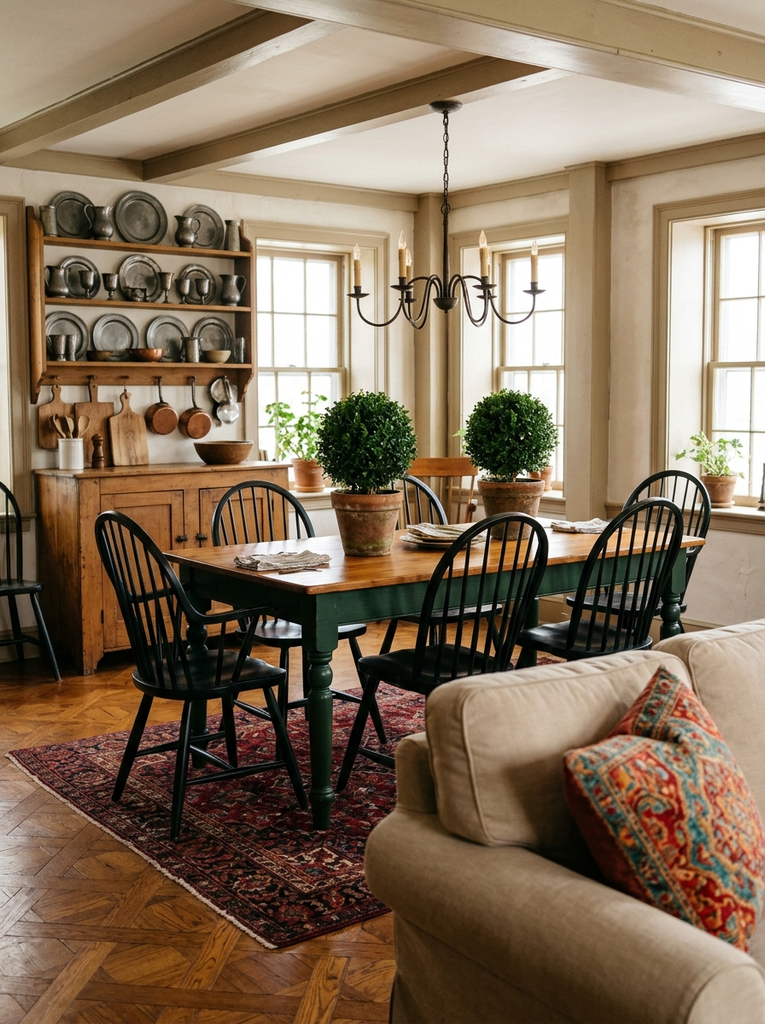
Painted furniture in deep green adds personality to classic colonial-style dining room decor. A forest green base under a honey wood top connects to the boxwood topiaries, and black Windsor chairs add crisp contrast around it. A corner cupboard with pewter plates shows off a collection at eye level and keeps the table clear. Choose a rug that extends at least 24 inches beyond the table on every side, so the chairs stay on it when they are pulled out, as this burgundy Persian does. A candle-style chandelier keeps the lighting simple and in period. Keep the arrangement symmetrical if you want a formal feel, and offset it a little if you want it casual.
19. Build a Harvest Centerpiece Low Enough to Talk Over
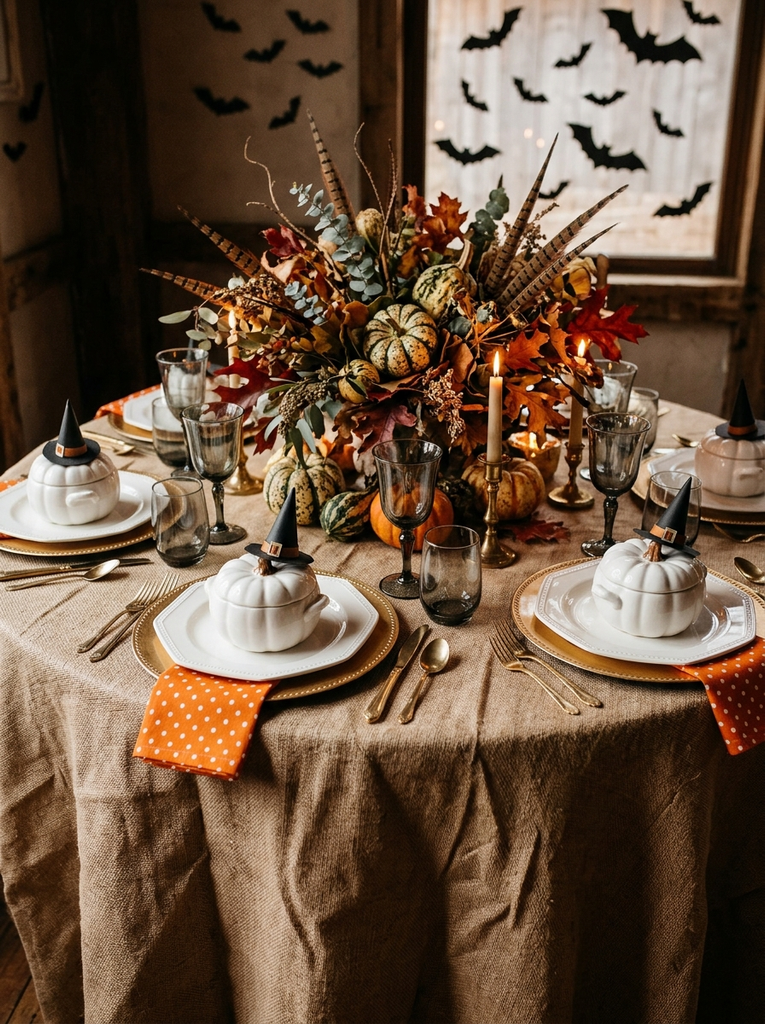
Halloween dining room decor feels cohesive when the color story is limited to burnt orange, black, white and gold. Gold chargers, octagonal plates and white pumpkin tureens give the table a polished base, and little witch hats resting on each plate add the whimsy. A burlap-style cloth adds texture and warms the palette. I once built a centerpiece so tall that guests leaned around it all evening, so now I keep the arrangement full but low and let height come from a few feathers at the edge. Smoke-gray glassware adds a moody layer that suits the theme. Save the tall pieces for the sideboard, where they can show off without blocking anyone’s view.
Bringing It All Together
Every room above works for the same reason: someone made a few clear choices and repeated them. The best dining room decor rarely needs more objects, only better decisions about what the objects are doing. That is as true of a rustic pumpkin table as it is of a formal crystal chandelier. Whether you love a navy room with a pink sideboard or a pine buffet with a linen skirt, the same quiet logic holds underneath.
Three small habits will finish nearly any of these looks. First, edit before you add, and take one object off the table before you place the last one. Second, light the room at two levels, with an overhead fixture on a dimmer plus candles or a lamp at the sideboard, so evenings feel warm instead of flat. Third, repeat one material or color at least three times, in different sizes, so the room feels connected. Do those three things and your dining room decor will feel finished, whatever the season.