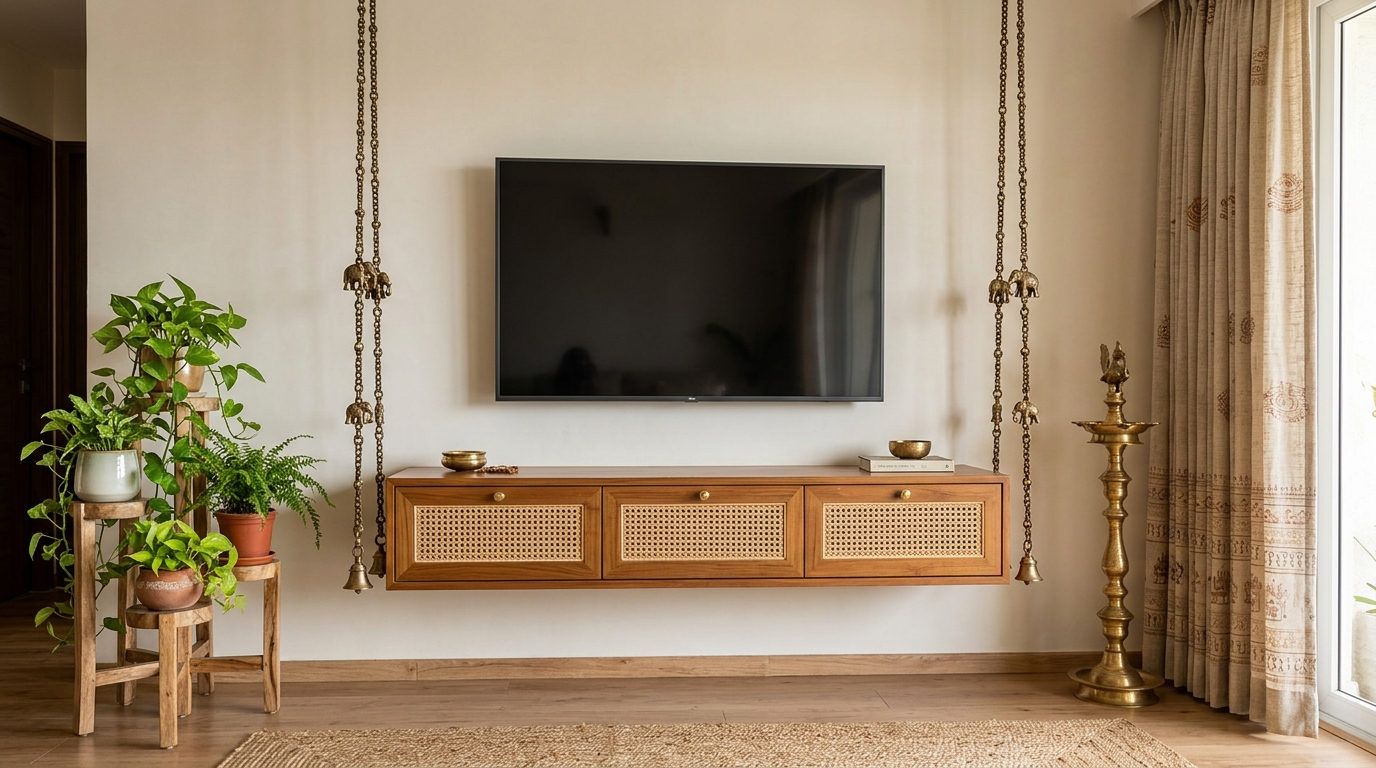
A mounted television is the largest black rectangle most of us will ever hang on a wall, and it pulls the eye long before any sofa or lamp can. The best TV wall decor does not try to hide it. It gives the screen a frame, a texture, a color or a neighbor, so the whole wall reads as one deliberate composition whether the set is on or off. That is as true in a rental where drilling is limited as in a house with a carpenter on speed dial.
This guide walks through nineteen real living rooms and the single design move that makes each wall work, from slatted wood and built-in joinery to paint, wallpaper, lighting and gallery frames. Each section explains why the idea works and how to recreate it at home. Every idea comes with a budget-friendly or no-remodel route, because a polished TV wall decor living room look should never depend on knocking anything down. Stay with me until idea seven, where one small change to a light bulb ended a glare problem I had wrongly blamed on the screen.
1. Paint the Wall Behind the TV a Soft Sage
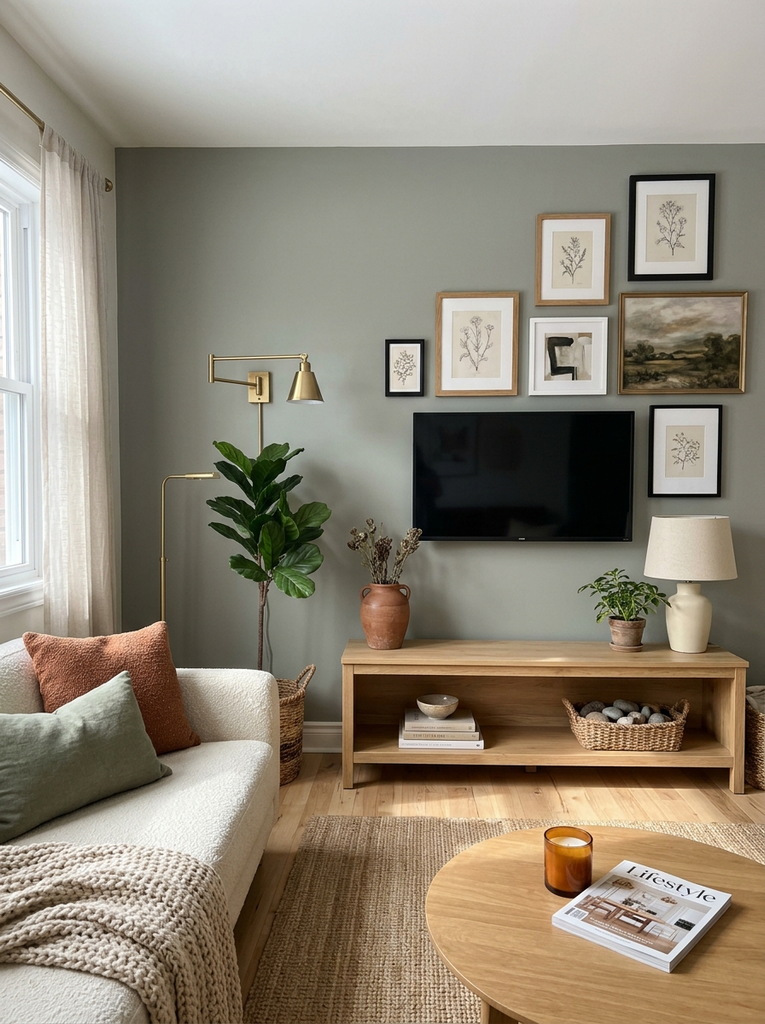
A muted, gray-leaning sage turns the wall behind a television from a backdrop into a calm, living surface. Green in this family sits close to neutral, so it flatters wood furniture, linen upholstery and terracotta accents without ever shouting. Keep the finish matte so the screen does not compete with sheen, and let a stepped cluster of oak and black frames climb the wall beside the TV rather than crowding above it. A low wooden console, a stack of books and one leafy plant at each end finish the composition. If paint is the only change you can make, this is the one that rewards you most.
2. Wrap the Screen in an Oak Built-In

When the television sits inside the joinery instead of in front of it, the room immediately feels architectural. Recess the screen into a panel of the same oak veneer as the open shelves beside it, and the black glass reads as one more material in a considered palette. Use those open cubbies for just two or three handmade ceramics, because sculptural objects with room to breathe look curated, while crowded ones look like storage. Low drawers underneath hide cables, remotes and the soundbar’s power supply. A bold red coffee table and a fresh bouquet then supply color without touching the wall itself.
3. Build a Slatted Wood and Marble Feature Wall
Contrast is what makes this wall feel expensive: warm vertical slats on one side, cool veined stone on the other. The marble-look panel behind the screen acts as a pale halo that
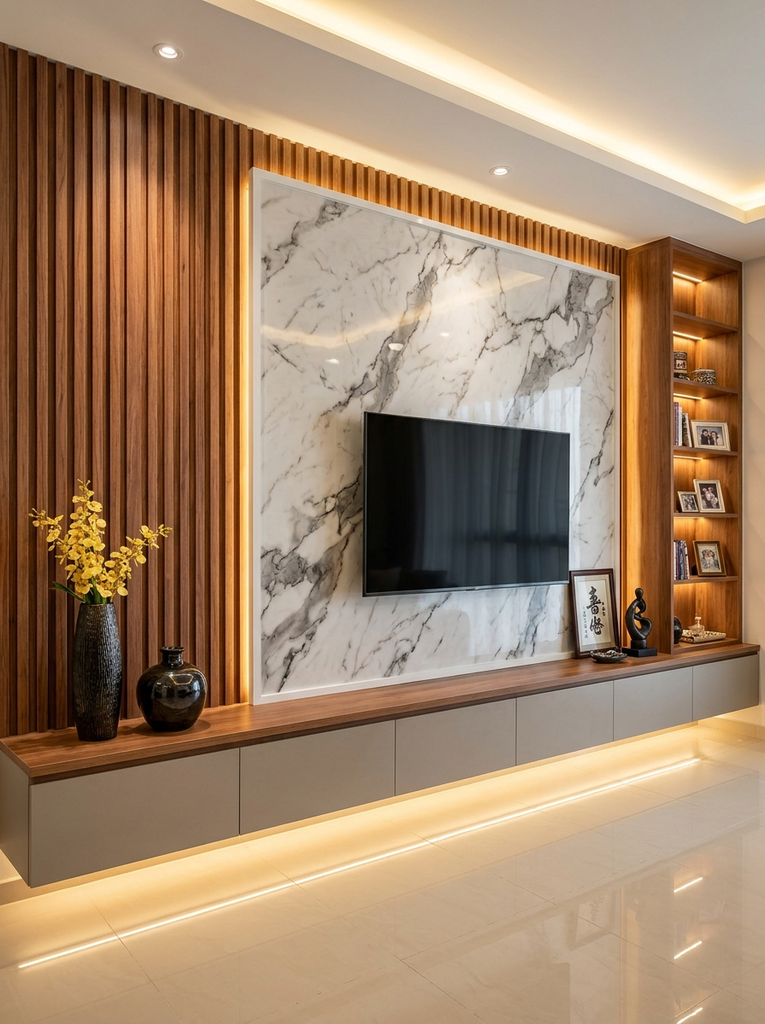
the hard edge between black glass and wall, while the slats add depth and a pleasing rhythm of shadow. Concealed LED strips behind the panel and under the floating cabinet wash the whole composition in a warm glow that is far kinder on the eyes during evening viewing. You do not need real stone for this, since large-format laminate or peel-and-stick panels in a veined pattern give the same look at a fraction of the weight and cost. Keep the cabinet top to two or three objects so the materials stay the stars.
4. Let a Carved Floral Panel Frame the Screen
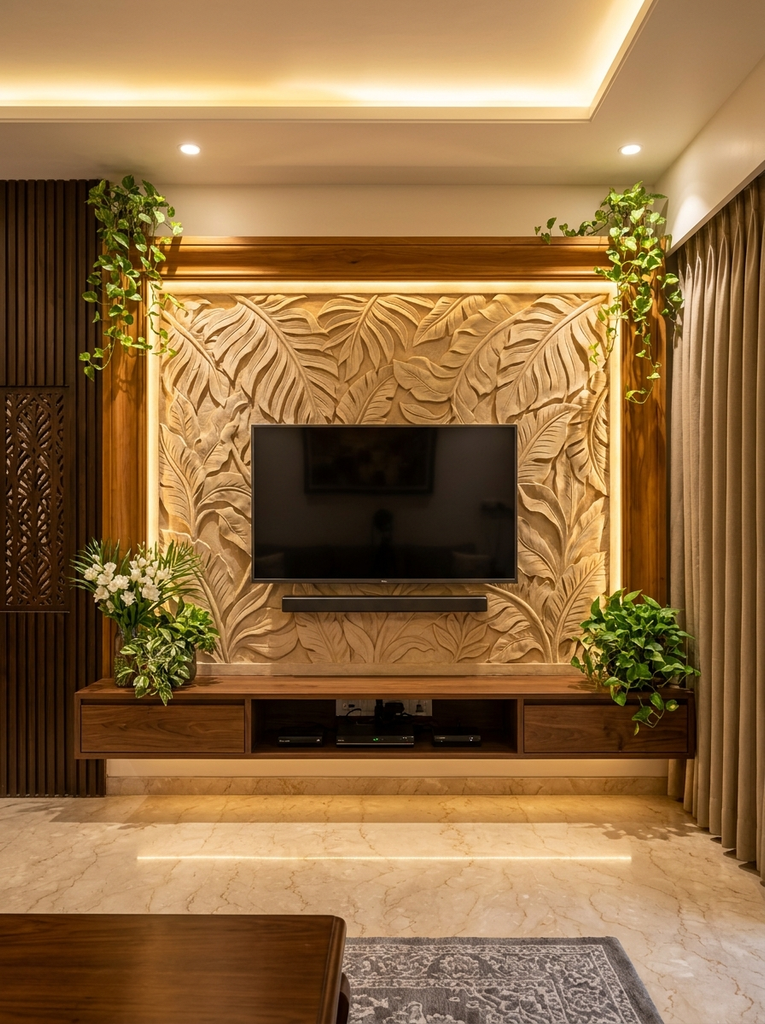
A relief-carved panel in sand and champagne tones gives a television wall the richness of wallpaper with the depth of sculpture. Because the pattern is tonal, it adds texture without visual noise, and a slim timber border plus a ceiling cove of warm light makes the whole thing feel like a built piece of furniture. Trailing pothos tucked into the top corners soften the straight lines and echo the leaf motif in the carving. A floating timber media unit with open and closed compartments keeps devices reachable and wires out of sight. For a lighter project, textured 3D wall panels in paintable MDF or PVC can be cut to size, painted one color and framed with ordinary trim.
5. Run a Single Oak Slat Strip Behind the Screen
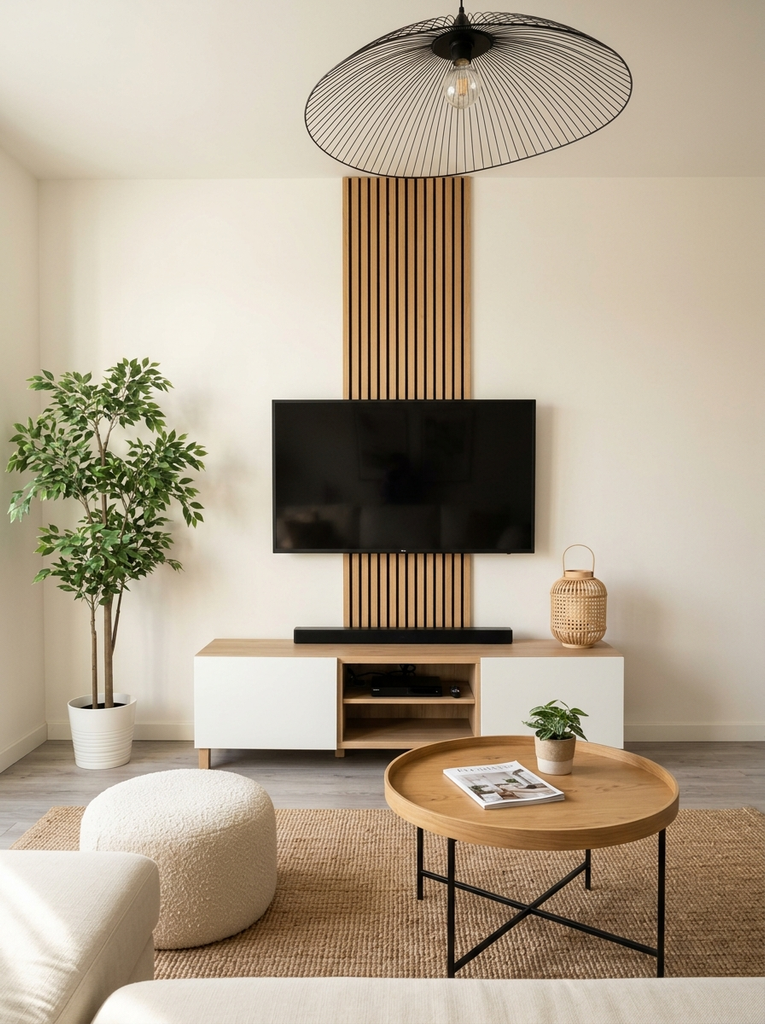
A narrow band of vertical oak slats is one of the least expensive ways to give a plain wall a focal point. Mount the strip so the screen overlaps it, which makes the slats look like a deliberate backing rather than a stripe that happens to sit nearby. I learned this by trial and error: a strip wider than the television competes with it, while one just a little narrower frames it neatly. Set a low white and oak cabinet beneath, with a tall ficus and a woven lantern on either side to balance the vertical. A graphic pendant overhead then adds a second line of interest without asking anything more of the wall.
6. Pull a Moody Teal Wall Beside the Screen
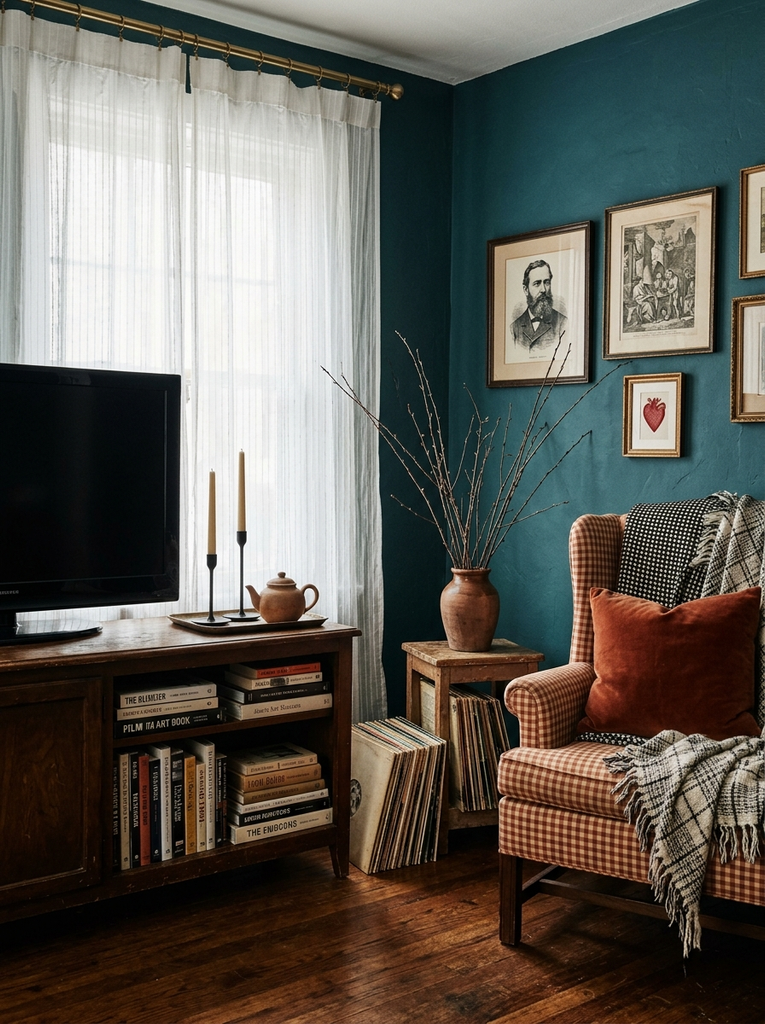
Not every television needs to sit center stage, and a deep wall color is the easiest way to let it step aside. Placed to one side on a dark wood cabinet, the screen shares the wall with a teal backdrop, a small collection of vintage frames and tall branches in a clay vase, so the eye has several places to land. Dark paint absorbs the black rectangle instead of fighting it, which is why saturated walls are an underrated TV wall trick. Floor-length white pleated drapes on a brass rod soften the edge of the screen and add height. A rust velvet cushion and a gingham armchair then carry warmth across the room.
7. Float a White Cabinet Run Under the Screen
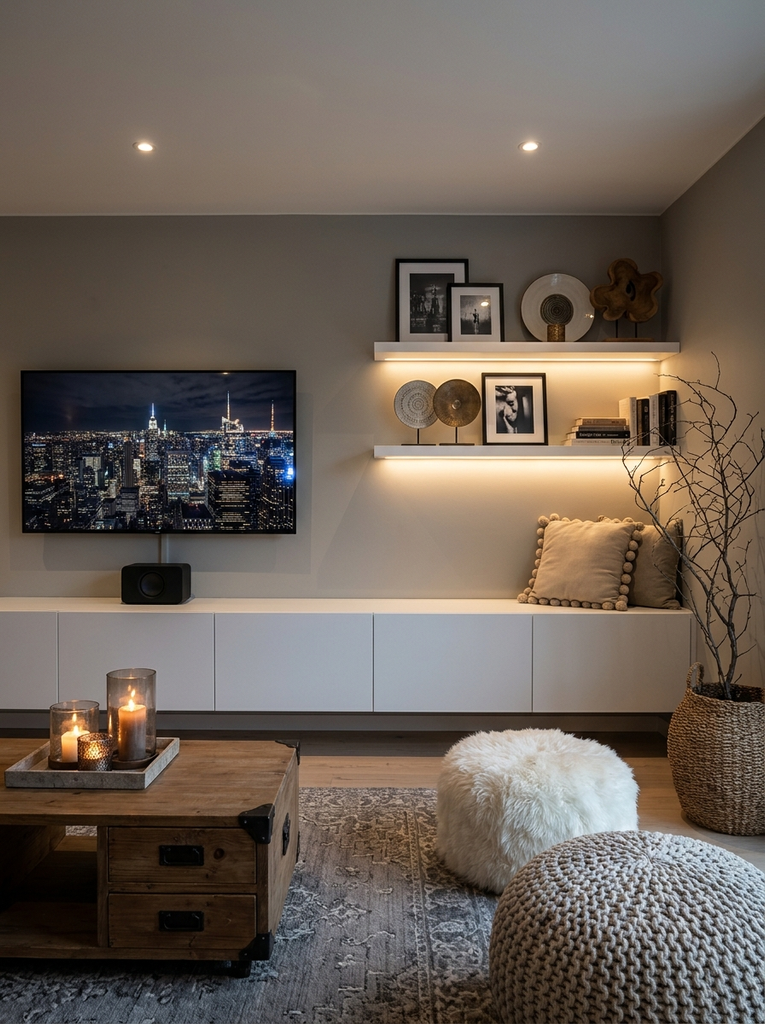
A long run of handleless white cabinets that seem to hover above the floor makes a wall feel lighter and a small room feel larger. Paint the wall behind in a soft greige so the cabinets glow gently, and add two floating shelves above the run for framed prints, a ceramic bowl and a couple of books. Lighting is the real secret here: I once blamed my television for an evening glare that was actually coming from a cool white bulb beside it, and switching to a warm, dimmable one fixed the problem at once. Keep lamps to the side of the screen, never directly opposite it, and let candles do the rest of the atmosphere. A tall branch in a woven basket brings height to the corner without using up floor space.
8. Slim a Slat Panel Behind a White Sideboard
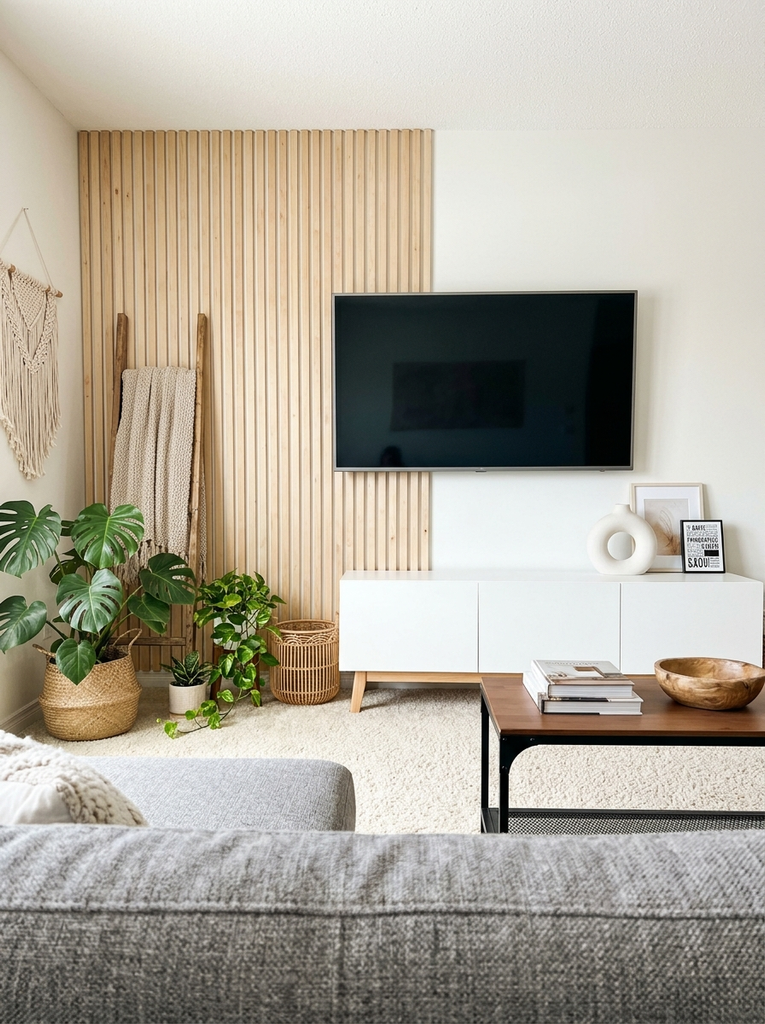
Pairing a white sideboard with a single light-wood slat panel gives a neutral room just enough warmth to feel inviting. Because the white cabinet fades into the wall, the slats become the only strong vertical, and the eye travels up to the screen naturally. Keep the surface styling sparse, with one sculptural ceramic and a small framed print, and lean a wooden ladder with a folded throw nearby for casual texture. A metal-framed coffee table with a wooden top introduces a thin dark line that echoes the screen without matching it. Plush carpet underfoot then softens the whole setup and quiets the room’s acoustics.
9. Pair Dark Slate With Wood Slats and Sconces
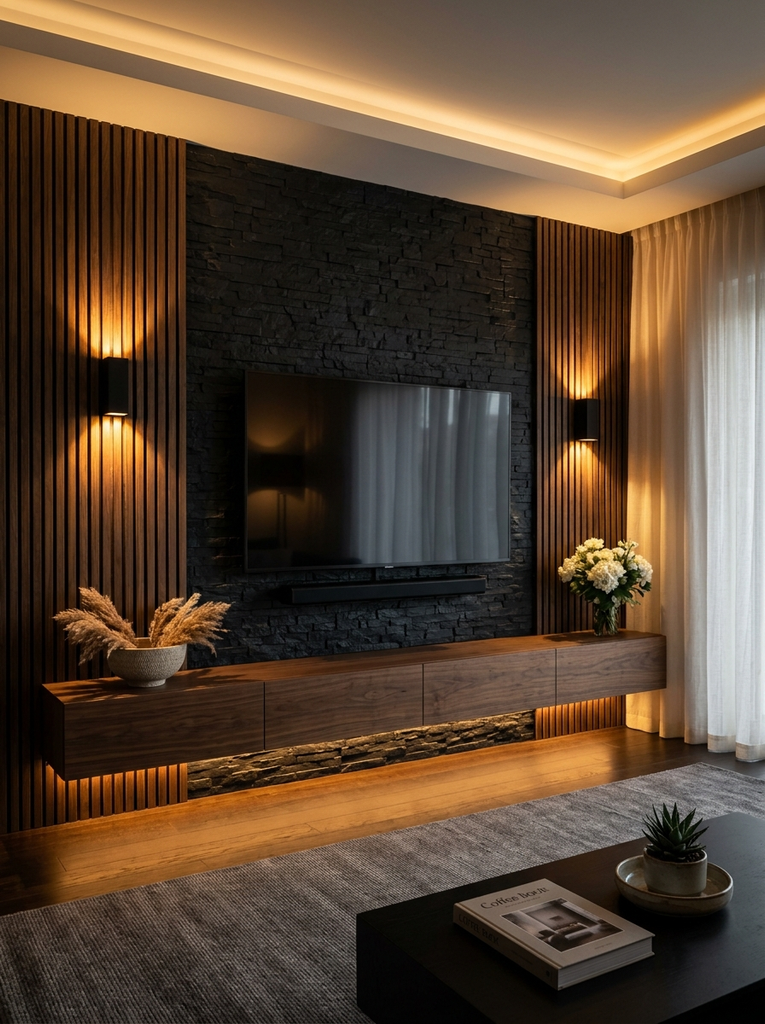
Rough, layered stone behind a television is a bold way to make the screen look like part of the architecture. Charcoal slate cladding absorbs the glare and depth of the black glass, while walnut slats on either side add warmth and keep the effect from feeling cold. Slim black wall sconces cast narrow beams up and down the slats, creating the kind of mood you usually find in a hotel lobby. A floating wooden console with a warm light strip beneath it visually lifts the whole wall off the floor. Dark texture suits a generous room, since it can crowd a small one, so scale the look back to a single slat panel if yours is compact.
10. Dress a Shiplap Wall With Floating Shelves
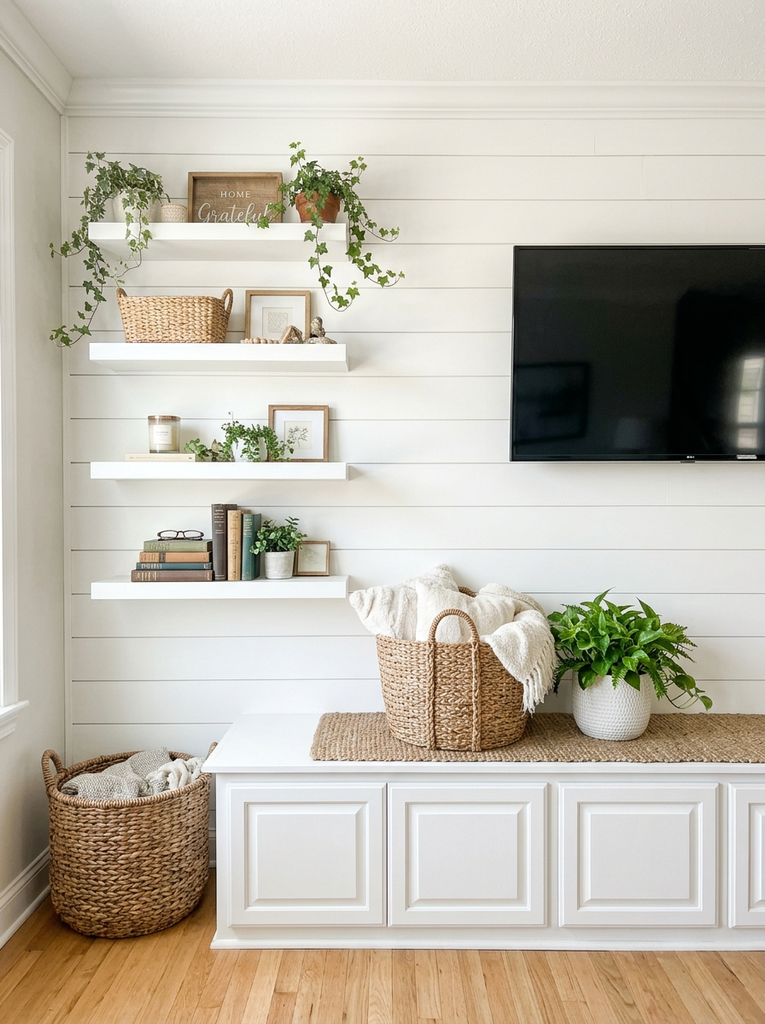
White shiplap gives a television wall instant character, and the horizontal lines make a narrow room feel wider. Add floating shelves on one side of the screen and style them in layers: a framed print, a woven basket, a small plant and a stack of books that actually get read. The shelves balance the visual weight of the TV so it does not sit alone on its wall. A white cabinet below with paneled doors keeps everything clean, and a large woven basket on top can hold throws and remotes. For a renter-friendly version, peel-and-stick shiplap planks and lightweight shelves with hidden brackets deliver the same cottage look.
11. Frame the TV With a Patterned Wallpaper Arch
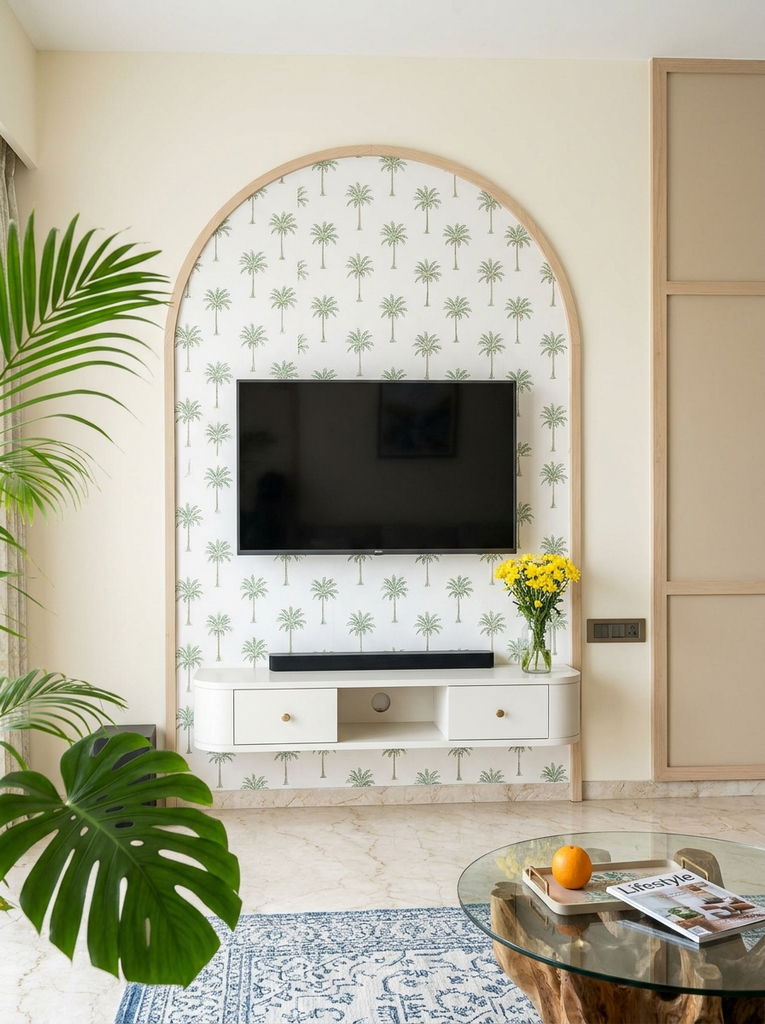
A rounded wallpaper panel turns the television wall into a small piece of design instead of a utility area. The palm-print pattern in soft green on cream is delicate enough to sit quietly behind a dark screen, and the arched timber border gives the whole thing a vintage-resort charm. Mount a compact white floating cabinet below, with one open cubby for a soundbar and two drawers for everything else. A small vase of yellow flowers lifts the composition with a single warm accent. To copy it on a budget, apply wallpaper to a painted board or directly to the wall, then frame it with slim wood trim.
12. Float a Cream Console Under a Softly Lit Panel
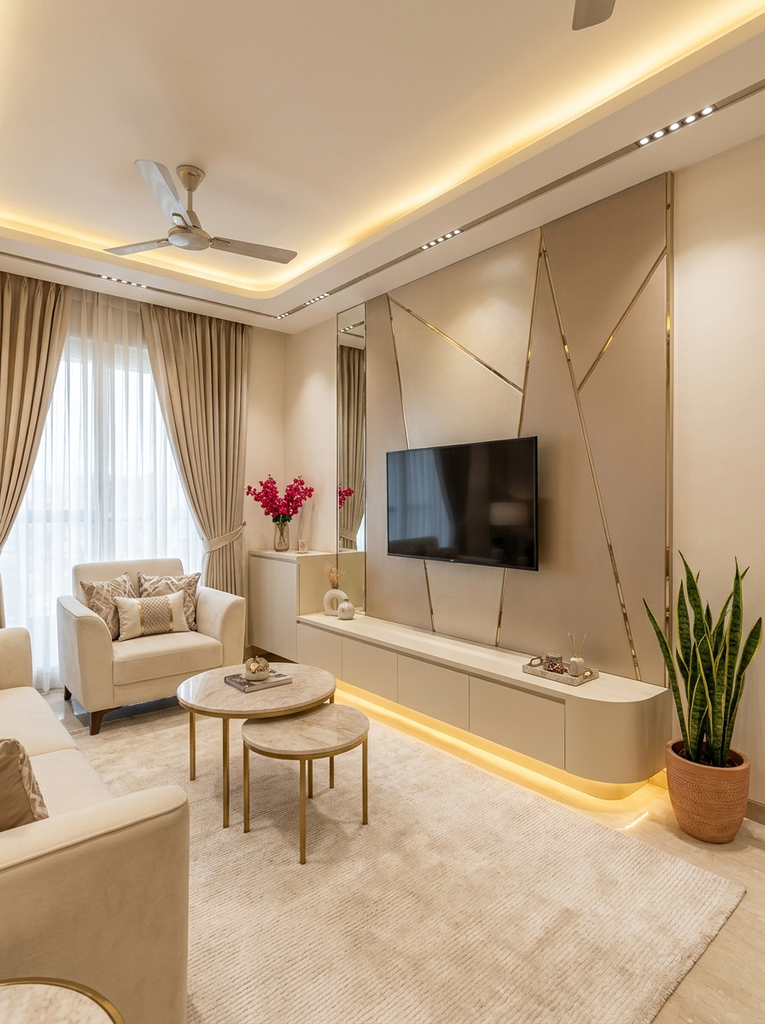
Tone-on-tone paneling in cream and champagne proves that a quiet TV wall can still feel luxurious. Angled panels with fine inlaid lines break the surface into soft planes, and warm backlighting around the edges makes the screen appear to float. A long cream console with curved ends runs beneath it and doubles as storage and display space. Recessed ceiling lights and a continuous cove line keep the room evenly lit, so the screen never sits in a dark void. A pair of marble-topped tables with gold legs and one tall snake plant add polish without clutter.
13. Give the Seating Side Its Own Story
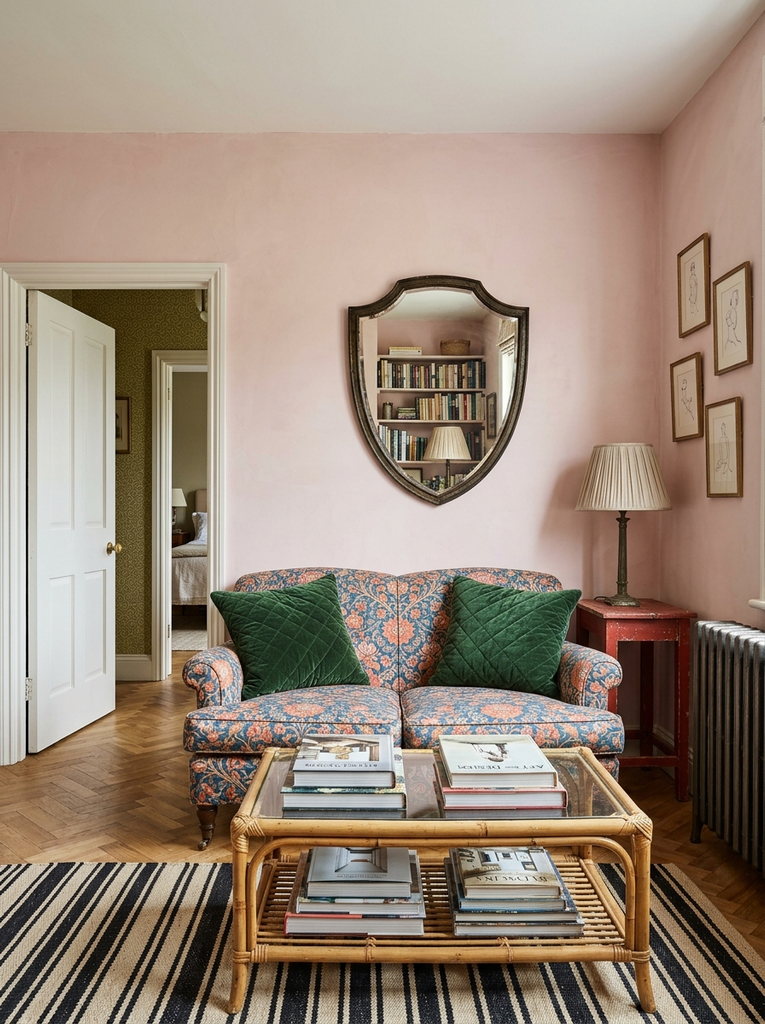
A quiet television wall is easiest to live with when the opposite side of the room does the talking. In this pink-walled corner, a chintz-covered sofa with deep green cushions, a shield-shaped mirror and a rattan coffee table stacked with books create a lively scene that keeps attention from fixating on the screen. A striped rug and herringbone floor add pattern at ground level, so the walls can stay calm. One caution applies to mirrors: hang them off-axis, to the side rather than straight across from the TV, or the screen’s glare doubles in the glass. Layering pattern on the seating side and keeping the TV wall restrained is a balance worth borrowing.
14. Hang a Gallery Wall Around a Slatted Console
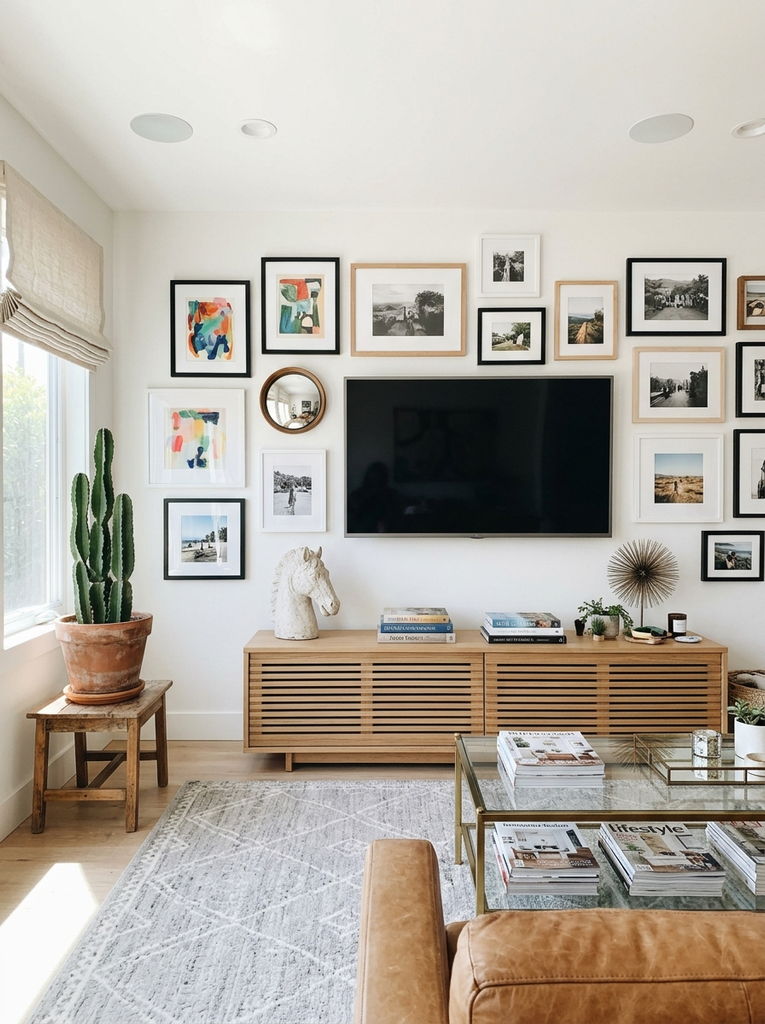
Surrounding a mounted television with art makes it feel like one more frame in the collection. Mix white mats with black, wood and thin metal frames, and vary the sizes while keeping the gaps between them consistent, roughly two to three inches. Before touching the wall, I always cut paper templates, tape them up and move them around until the cluster, including the TV, feels balanced. A low slatted oak console beneath gives the arrangement a strong horizontal base, and a tall cactus in a terracotta pot by the window adds an unexpected vertical. The ribbed texture of the console also softens the geometry of all those rectangles.
15. Match a Run of Soft Blue Cabinets to Your Art
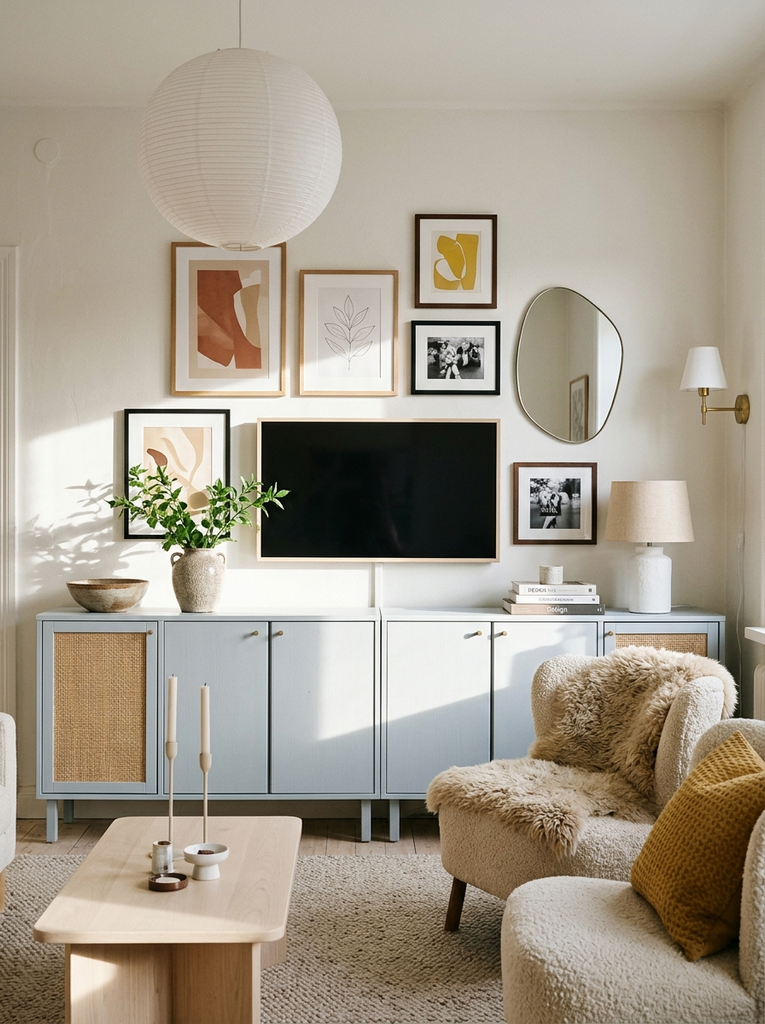
Choose the color of your console cabinets from the art that hangs above them, and the wall will look styled by design rather than by accident. Here, pale blue-gray doors pick up the cool notes in the abstract prints, while warm terracotta and mustard shapes in the frames keep the palette from turning chilly. A paper lantern pendant and a small brass wall light supply soft, diffused light that flatters both the prints and the screen. Keep the cabinet top almost bare, with one tall sculptural candle holder, so the art remains the focus. If you already own a plain cabinet, a coat of cabinet-grade paint in a muted blue-gray is a very affordable update.
16. Tuck the Screen Into Sage Built-Ins Under a Sloped Ceiling

An attic wall with a slanted ceiling is not a problem, it is an invitation to build around your television. Custom shelving that follows the roofline turns awkward corners into useful storage, and painting everything one sage green lets the carpentry read as a single calm object. Shaker-style doors below hide games, cables and media players, while open shelves above hold colorful books that add pattern. A tall wardrobe section on the right makes the whole run look intentional. A bold geometric rug on the oak floor grounds the arrangement without competing with the shelves.
17. Surround the Screen With Walnut Shelving and Records
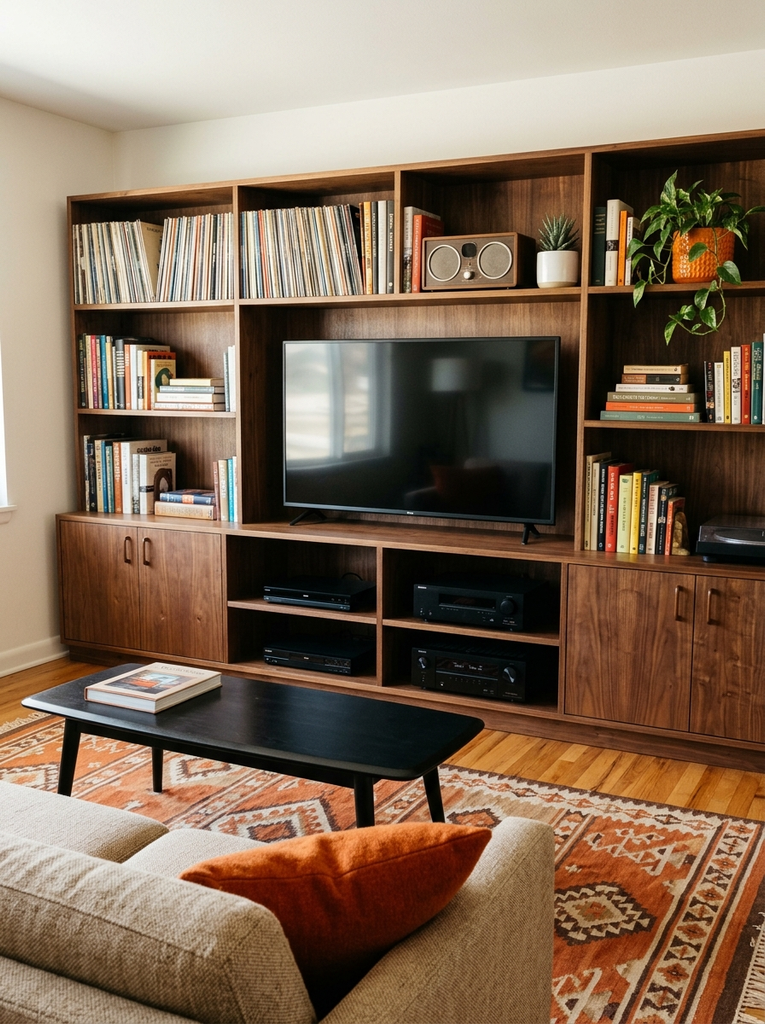
Treating the television as one shelf among many is a smart way to keep it from dominating a living room. A walnut-toned shelving unit with a central niche for the screen gives vinyl records, books, a vintage radio and a few plants a home at eye level. Closed lower cabinets hide the clutter, while an open compartment for the player gear stays easy to reach. An orange planter and a bright cushion on the sofa pull a sharp accent from the warm geometric rug. Stacking some books horizontally between the vertical runs breaks up the grid and adds a lived-in rhythm.
18. Light Vertical Fins on a Navy Panel Wall
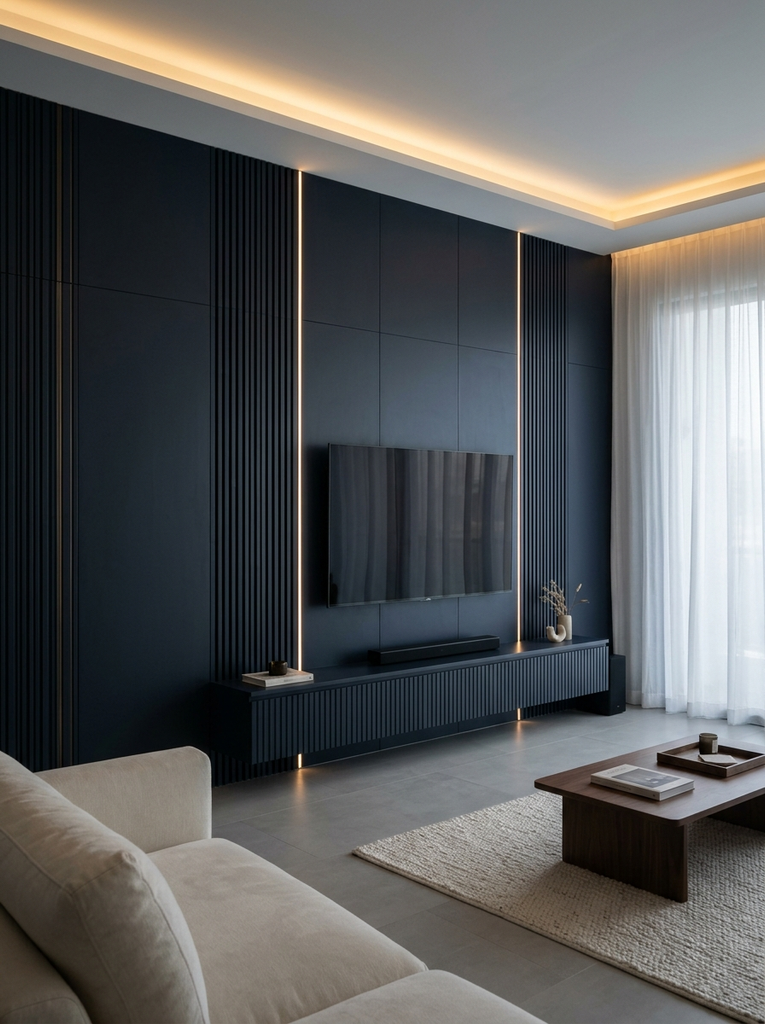
Deep navy paneling with vertical fluted fins gives a room an evening-lounge mood from the moment the lights go down. Thin strips of warm LED set into the grooves draw sharp lines of light upward, which makes the ceiling feel higher and the wall look carefully tailored. A matching fluted floating console below ties everything together, and a continuous ceiling cove adds a gentle overhead glow. Dark, glossy surfaces show every fingerprint and reflection, so choose a matte or satin finish and put the lights on a dimmer. Done well, it is the nearest thing to a private cinema a living room can offer.
19. Anchor an Open Shelf Wall With One Bold Color
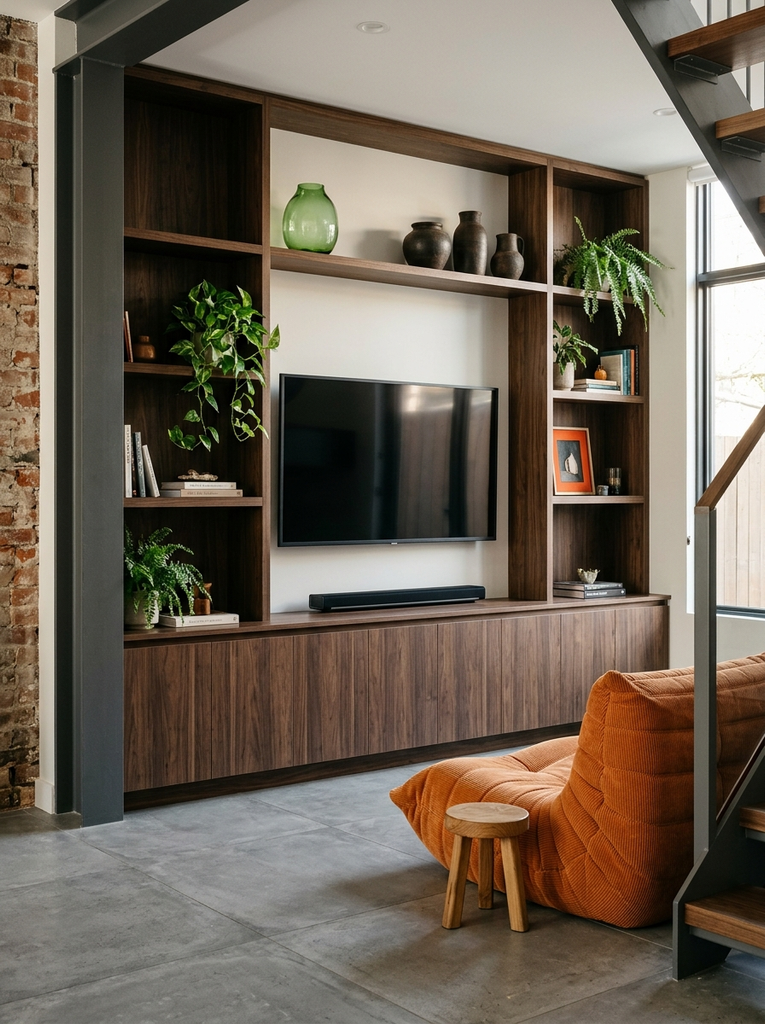
Sometimes a single saturated piece is all a restrained wall needs. Against dark walnut shelves and a calm gray tile floor, an orange corduroy lounge chair brings in energy and makes the whole corner feel alive. The shelves carry a handful of leafy plants, a green glass vase and one small framed piece, stepped down in height to lead the eye toward the screen. A closed low cabinet and a soundbar keep the base tidy. Choose one confident accent and keep every other object neutral, so the color reads as a decision rather than an accident.
What Makes Your TV Wall Decor Living Room Feel Finished
The strongest TV wall decor living room designs share one habit: they treat the screen as part of the composition instead of a problem to solve. Slats, paint, built-ins, wallpaper and gallery frames all work for the same reason, because each gives the black glass a frame, a neighbor or a wash of light. Start with the cheapest change, usually paint or a single slat strip, then add lighting and storage as the budget allows. Keep every surface to two or three objects, mind your sightlines and put the evening lights on a dimmer. Do that, and the wall will look finished long after the screen turns off.