What if the most expensive choice in your kitchen is also the one you think about least? Kitchen cabinets fill more visual space than anything else in the room, so their color, door style and hardware quietly decide whether the space feels calm, cramped or custom-built. They also take the biggest share of most renovation budgets, which makes a poor choice a costly one. The good news is that one well-judged move, often a paint color or a pair of glass doors, can change the whole mood without touching the layout.
This guide walks through twenty real kitchens, from a compact corner to a vaulted cabin kitchen, and pulls one practical lesson from each that you can borrow at home. You will find ideas for small rooms, bold color, natural wood, open shelving and lighting, plus honest notes on where an idea does not suit a dark or tiny space. Along the way I will also share the one habit that saves more cabinet regret than any color trend, and it is waiting in the final section.
Table of Contents
1. Light the Toe-Kick to Make Compact Kitchen Cabinets Glow
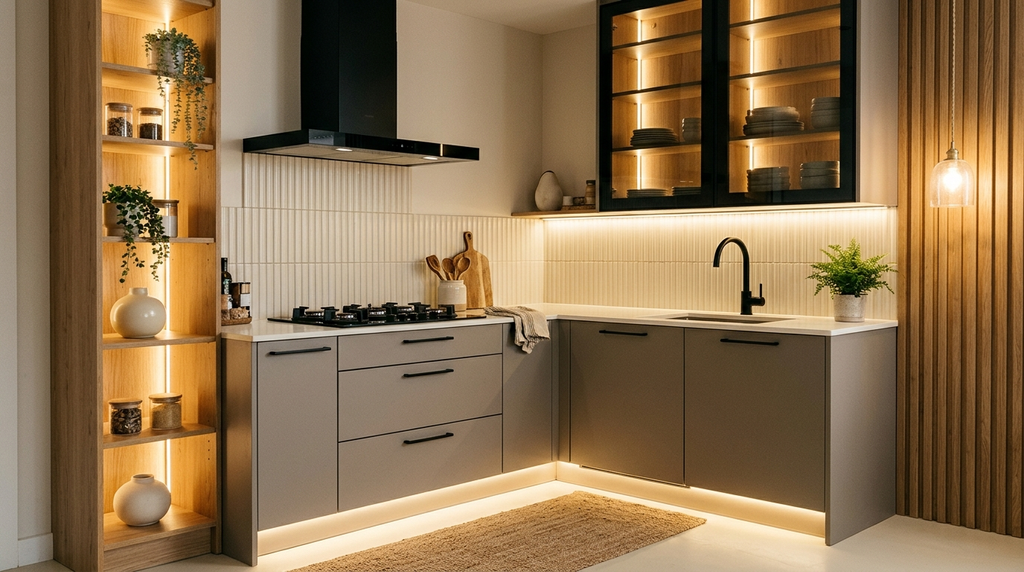
A thin strip of warm light along the toe-kick lifts the base cabinets off the floor and makes a small kitchen feel deeper than it is. The same trick works under the upper cabinets, where a soft wash removes the shadows that make a countertop feel cramped. Choose a warm white around 2700K so the glow flatters wood and taupe instead of turning them gray. In a compact kitchen I once planned, that low glow did more for the evening mood than any paint color could. Pair taupe-gray base cabinets with slatted oak at the end of the run and a small open shelf unit, and the corner looks layered rather than boxed in. Keep the hood dark and slim, and let the lighting do the decorating.
2. Use Glossy Sage Green to Bounce Light Around a U-Shaped Kitchen

Glossy surfaces act like a soft mirror, so a pale sage lacquer sends daylight deeper into a U-shaped kitchen that has only one window. Running the cabinets to the ceiling removes the dusty gap above and gives the room one calm, continuous wall of color. Keep the countertop and backsplash white and softly veined so the green reads as a tint rather than a statement. A couple of small white inset niches give you a place for jars and a break in the glossy flatness. The trade-off is that high gloss shows fingerprints, so look for a finish that wipes clean easily. In a narrow room, the lighter and more reflective the surface, the more space you gain.
3. Choose Greige-Brown Kitchen Cabinets to Soften Stainless Steel

A greige-brown stain with visible grain is a forgiving partner for stainless steel appliances, because the warmth of the wood tone takes the chill off all that metal. Framed shaker doors with a few frosted glass panels near the hood give the upper run some rhythm and hide everyday clutter. A cream backsplash tile with a subtle pattern keeps the eye moving above the counter, while a pale gray floor tile stops the brown from feeling heavy. If your refrigerator is large, wrap it with matching panels on either side so it reads as part of the cabinetry. A satin finish hides daily wear better than a high shine. White quartz on the counters finishes the look and bounces light back up into the darker doors.
4. Paint the Island One Shade Deeper Than the Perimeter Cabinets

Painting an island one step deeper than the perimeter gives the room a clear anchor without breaking the calm. A pale gray-green island against soft white shaker doors creates gentle contrast, and the framed panel detail adds depth that flat doors cannot. Two oversized glass pendants echo the soft color while keeping sightlines open to a tall arched window. A small open cubby at the end of the wall run holds cookbooks and a few decorative objects, which keeps the doors from feeling monotonous. Use the 60-30-10 rule as a guide: white as the main field, the island tone as the secondary color, and wood or metal as the final accent. One deeper tone is usually enough to make a white kitchen feel designed.
5. Stack Tall Cabinets to the Ceiling for a Built-In Look
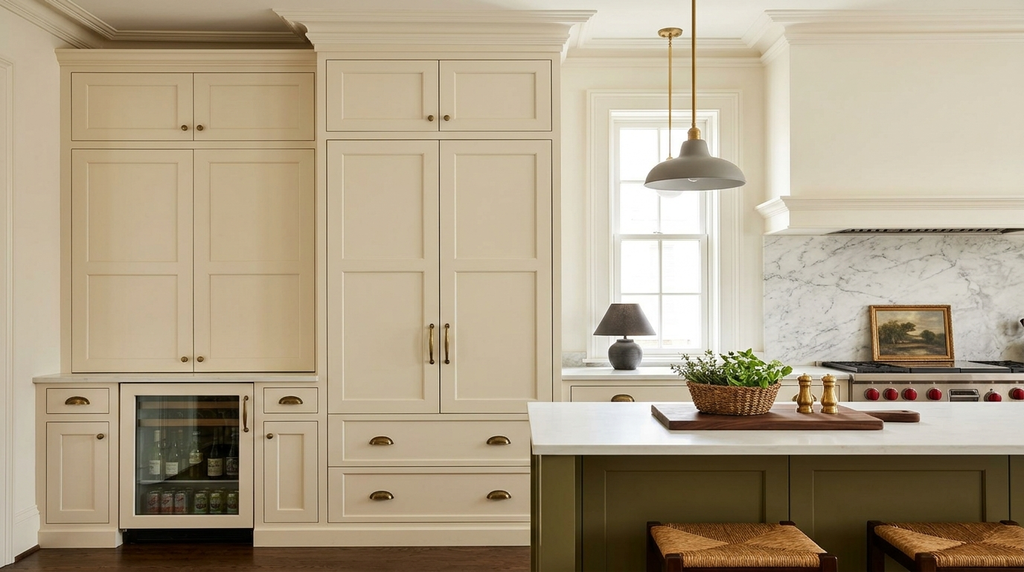
Taking tall cabinets all the way to the crown molding makes a kitchen feel like fitted furniture rather than a row of boxes. A soft cream paint with simple paneled doors keeps those big units from feeling heavy. An olive-green island adds a grounded second color, and woven rush-seat stools bring in the texture that softens all the hard surfaces. Paint the trim in the same cream as the cabinets so the molding reads as part of the architecture. A single brass pendant over the island ties the metal tones together. If your ceiling is lower than nine feet, choose a shallower crown so the top of the cabinetry does not press down on the room.
6. Break Up a Run of Uppers With Glass-Front Doors
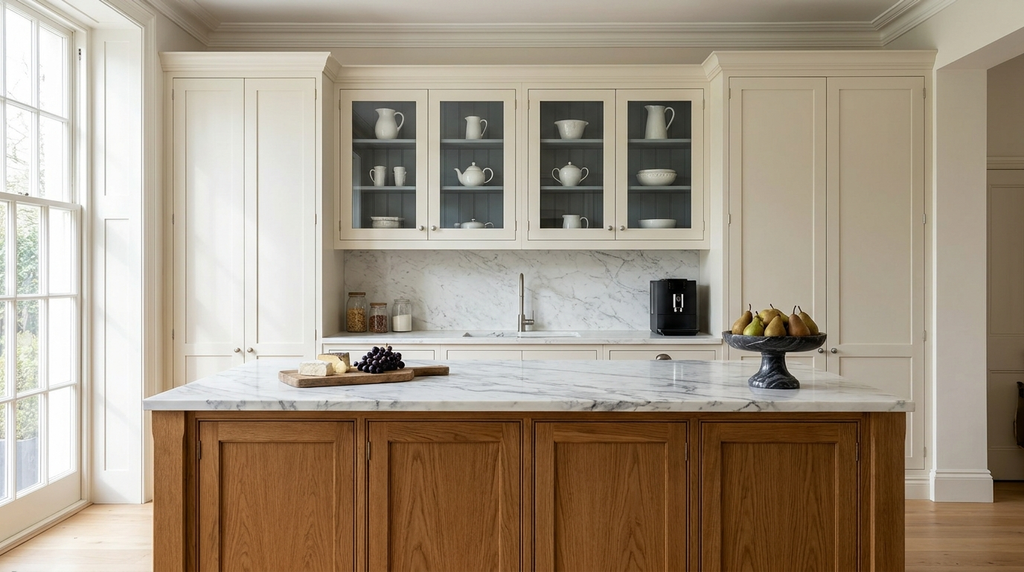
Glass-front doors give a long upper run an easy break, and they let you decide what the room shows. Group your best white dishes and a few pale vessels behind them, and leave a little air between objects so the display breathes. Keep solid paneled doors at either end so the cabinetry feels framed, then bring a marble-look backsplash up to the underside of the crown. Painting the inside backs of the glass cabinets a slightly deeper tone makes whatever sits in front of them stand out. A warm oak base on the island adds contrast against all that pale paint. Edit what you display, because glass fronts reward restraint and punish clutter.
7. Try Dusty Blush Cabinets With an Antiqued Mirror Backsplash

Dusty blush behaves like a neutral in disguise, and it turns warm wood, brass and gray stone into a lively palette. Choose a blush with a trace of brown or gray in it so it never tips into candy pink. An antiqued mirror backsplash reflects both the room and the light, which gives a darker cooking corner real depth. Hammered brass pendants echo the warm undertone, while a herringbone wood floor grounds all that softness. Open shelves with plain white dishes keep the look relaxed and lived in. Mirror shows splashes quickly, so wipe it down as you cook and it will keep the glow.
8. Go Handleless for a Seamless Run of Flat-Panel Cabinets
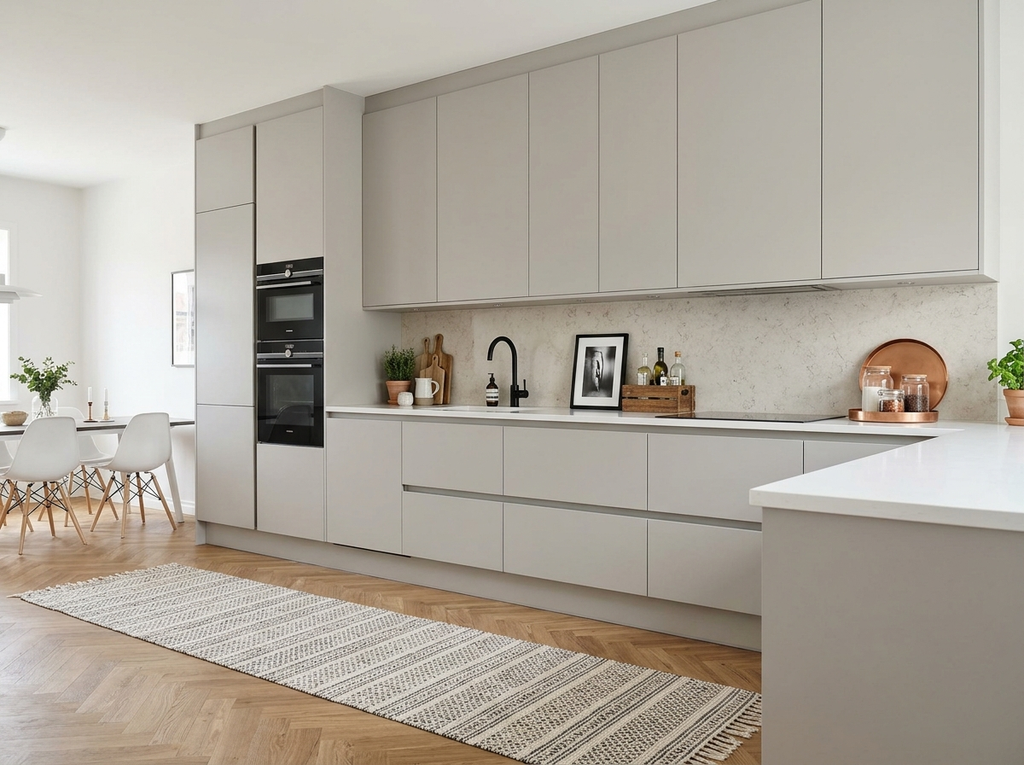
A run of flat-panel kitchen cabinets without visible handles reads as one calm surface, which is ideal when the kitchen opens into a living or dining area. Choose a soft gray in a satin finish so the doors look quiet rather than clinical. A thin recessed grip along the base units gives the hand somewhere to land without breaking the line. Tall oven columns at the end keep eye-level appliances built into the wall instead of competing with it. A stone-look backsplash with soft veining adds life to all that smoothness. Herringbone wood underfoot supplies the warmth that gray lacks, and a patterned rug at the dining end ties the two zones together.
9. Pair Forest Green Cabinets With a Warm Oak Backsplash
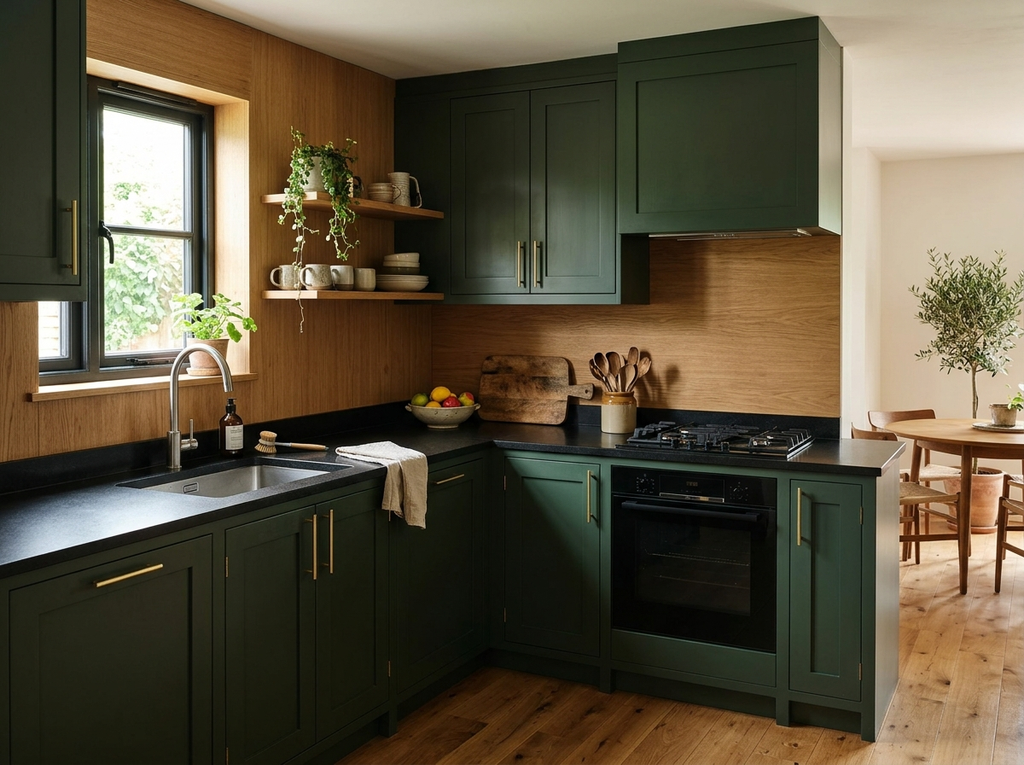
Forest green feels richer next to warm oak, because the wood echoes the green’s yellow undertone. Carry an oak backsplash up the wall and add open oak shelves beside the window to build a cozy, almost cabin-like corner. Black stone counters give the whole room visual weight, while slim brass bar pulls add a quiet glint against the dark paint. Leave the window bare so the greenery outside becomes the final layer of color. If your kitchen gets little daylight, choose a slightly lighter green so the room does not feel like a cave. Brass, oak and black make a dependable trio for dark cabinetry.
10. Add Reeded Glass to Olive Green Cabinets

Reeded glass hides what is inside a cabinet while still glowing when light passes through it, so you get the feel of display without the clutter. Olive green with round brass knobs and a bridge-style tap gives the corner an old-world pantry character. A butcher block counter and a hanging rail with S-hooks add function and a handmade note. A few bundles of drying herbs on the rail make the scene feel lived in without any extra decor. Paint the wall paneling in the same family as the cabinets for a cocooning effect. Oil the wood counter with a food-safe finish every few months so it keeps its warm color.
11. Keep It Simple With White Uppers and Oak Lowers
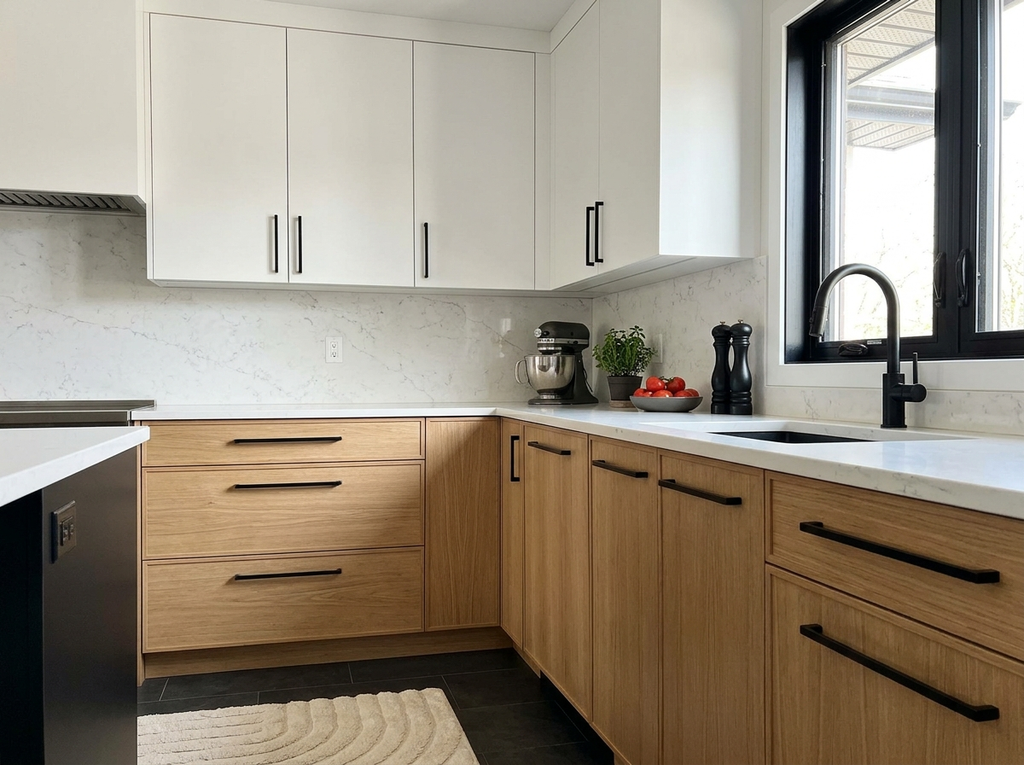
Light uppers over wood base cabinets is the easiest two-tone formula, because it keeps the eye high and the weight low. White flat-panel doors with slim black pulls look crisp, while the oak at counter level adds warmth exactly where your hands go every day. Black window frames and black handles repeat across the room, which gives it a graphic through-line. A dark tile floor anchors the lighter cabinetry and hides the traffic of a busy kitchen. Match the countertop and backsplash to the upper cabinets so the white reads as one clean plane. Repeat black in three places, and stop there.
12. Commit to Black Shaker Cabinets and Balance Them With Brass
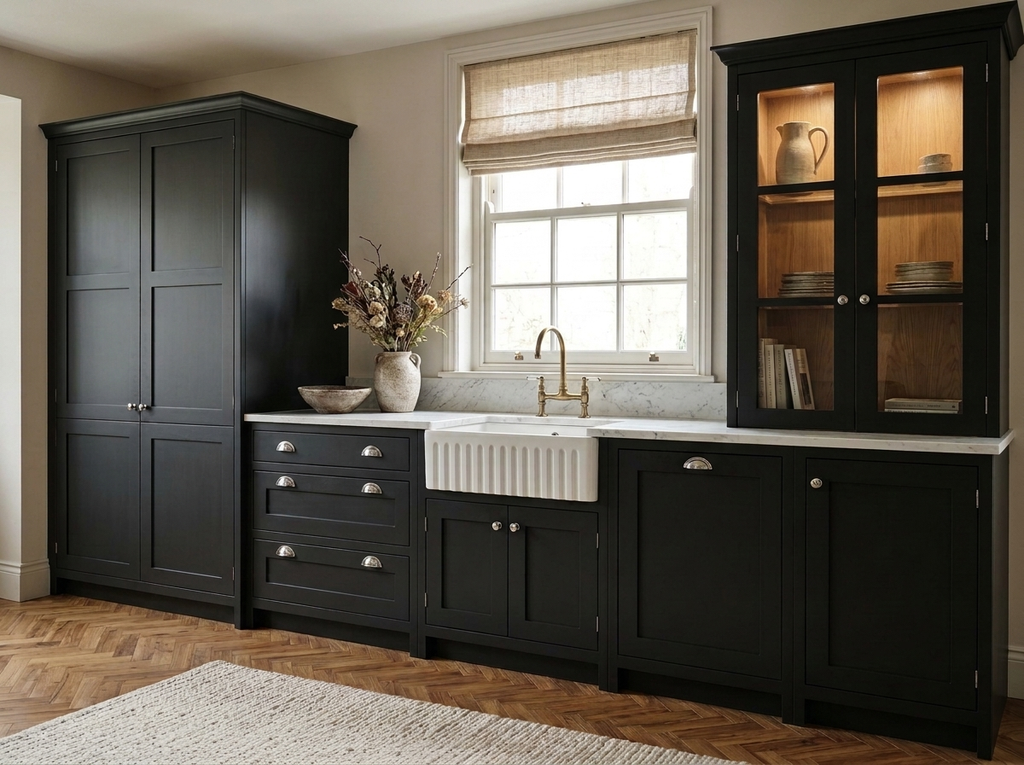
Black shaker cabinets feel dramatic and traditional at the same time when you balance them with a white apron-front sink and a warm brass tap. Choose a matte or low-sheen finish so dust and fingerprints stay quiet. A tall glass-front cabinet with a warm wood interior and soft internal lighting turns everyday dishes into a small display. Light marble-look counters bring contrast and keep the dark doors from swallowing the room. A woven shade at the window softens the hard edges. Dark cabinetry suits rooms with good daylight, so if yours is dim, add layers of lighting before you commit.
13. Choose Straight-Grain Oak for Quiet, Minimal Warmth
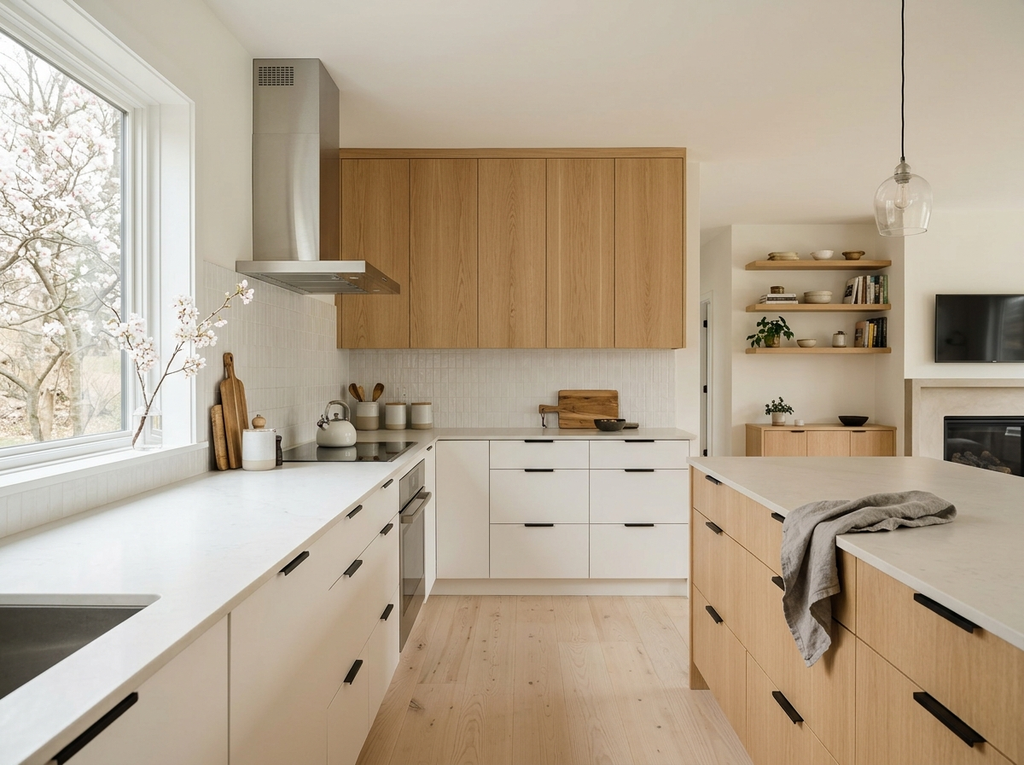
Straight-grain oak feels calm because the lines run in one direction, and that quiet pattern lets a minimal kitchen feel warm instead of stark. Use light oak for the tall and upper cabinets, then keep the base units in soft white so the room never feels top-heavy. Slim black handles give just enough definition without adding visual noise. Ask your supplier to match the grain across neighboring doors, because a continuous pattern is what makes veneer look like solid timber. A pale oak floor in a similar tone makes the whole space feel like one soft, unified material.
14. Mix Three Cabinet Colors Without Losing Control
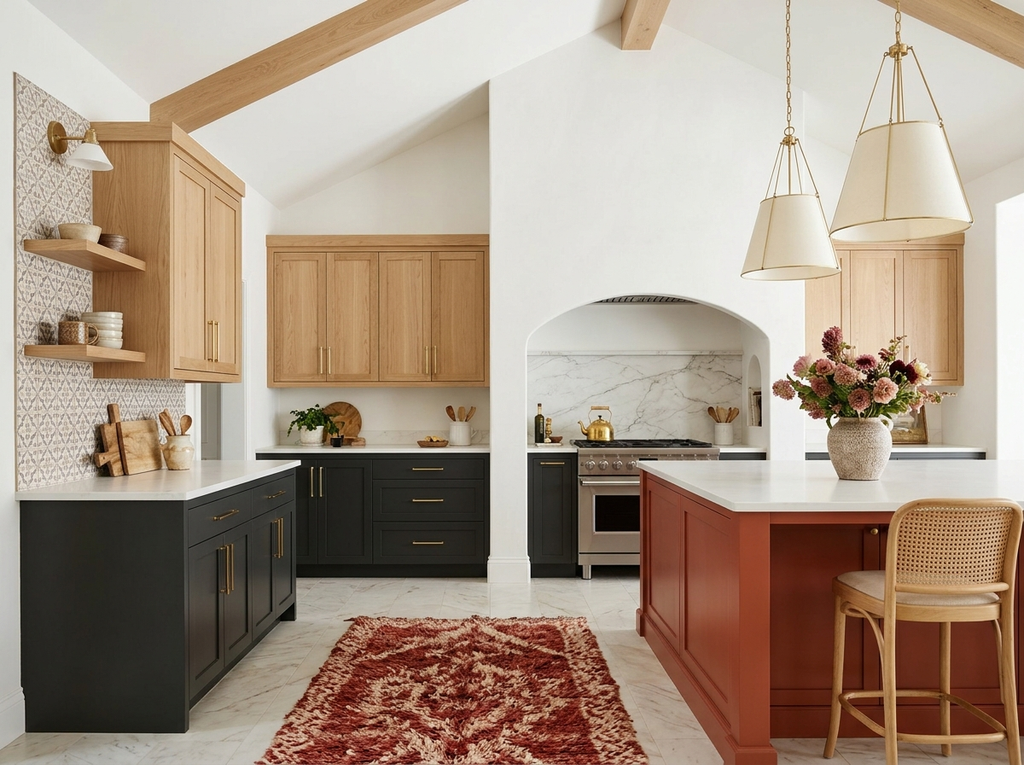
Mixing three cabinet colors works when each one has a job. Natural wood goes up high to keep the room light, charcoal on the perimeter grounds the work zone, and a terracotta island becomes the single focal point. Repeat the same warm brass hardware on all three so they feel like one family. A vaulted ceiling with exposed beams adds a fourth warm tone, so keep the walls and counters white to give the eye a place to rest. A shaggy rug in matching reds and creams carries the palette to the floor. Let one color lead and let the other two support, and the mix will look deliberate rather than busy.
15. Let Bold Wood Grain Do the Decorating in a Tiny Kitchen
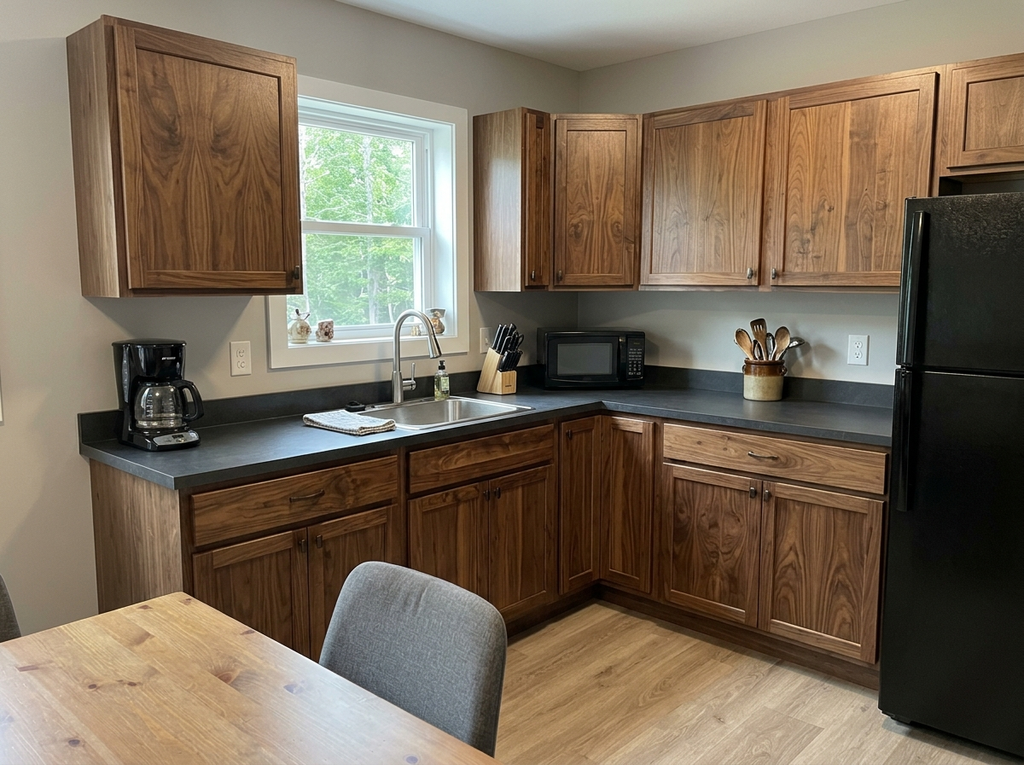
A strong wood grain can be the entire decor plan in a tiny kitchen. Rich walnut-toned doors with visible figure, set against dark counters and a black refrigerator, make a compact room look intentional rather than makeshift. Take the cabinets right into the corner so no space is wasted, and mount the upper units tight to the window frame for a custom feel. A light wall color and a pale floor keep all that darkness from closing in. Skip patterned backsplashes here, because the wood already supplies all the pattern the room needs. Simple bar pulls in a matching metal keep the focus on the grain.
16. Replace a Few Doors With Open Shelving in a Tiny Kitchen
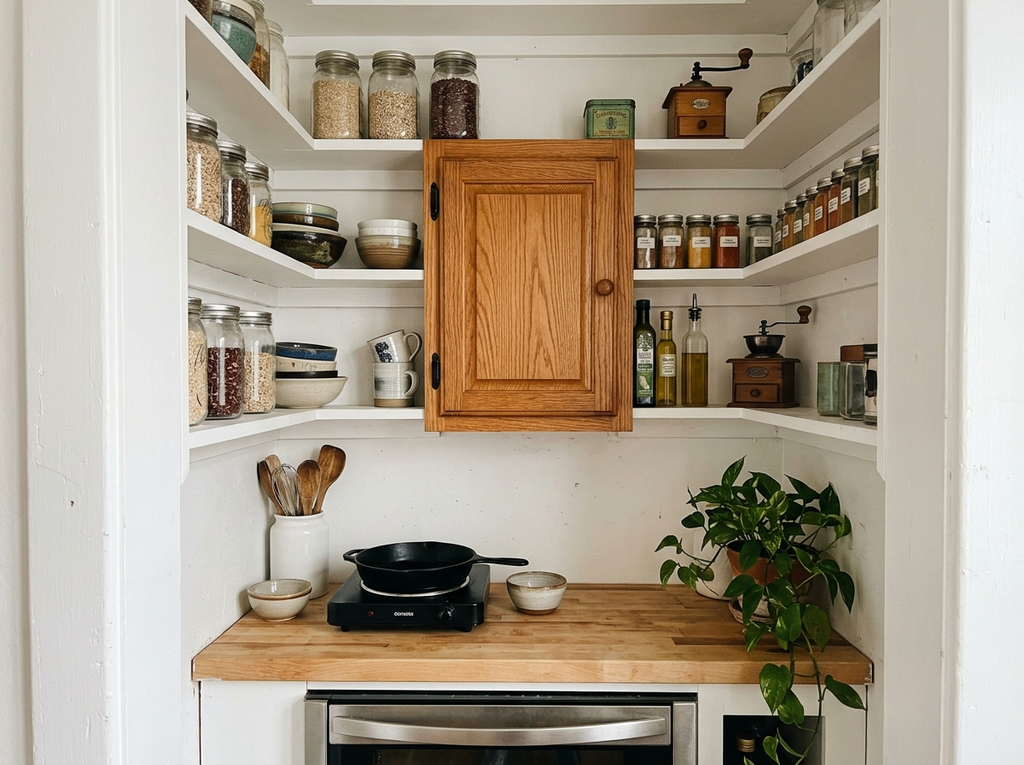
In a tiny kitchen I once swapped a pair of upper doors for open shelves, and the room instantly felt twice as wide, though I had to commit to keeping everything tidy. Glass jars of grains and spices, stacked bowls and a row of mugs turn storage into part of the decor. Keep one solid oak cabinet nearby for the visual noise you would rather hide, such as boxes and bottles. A single-burner induction hob on a butcher block counter is enough for a compact cook space. White paint on the walls and shelf boards lets the contents supply the color. Open shelving works best when you edit it twice a year.
17. Finish Deep Green Base Cabinets With One Bright Accent
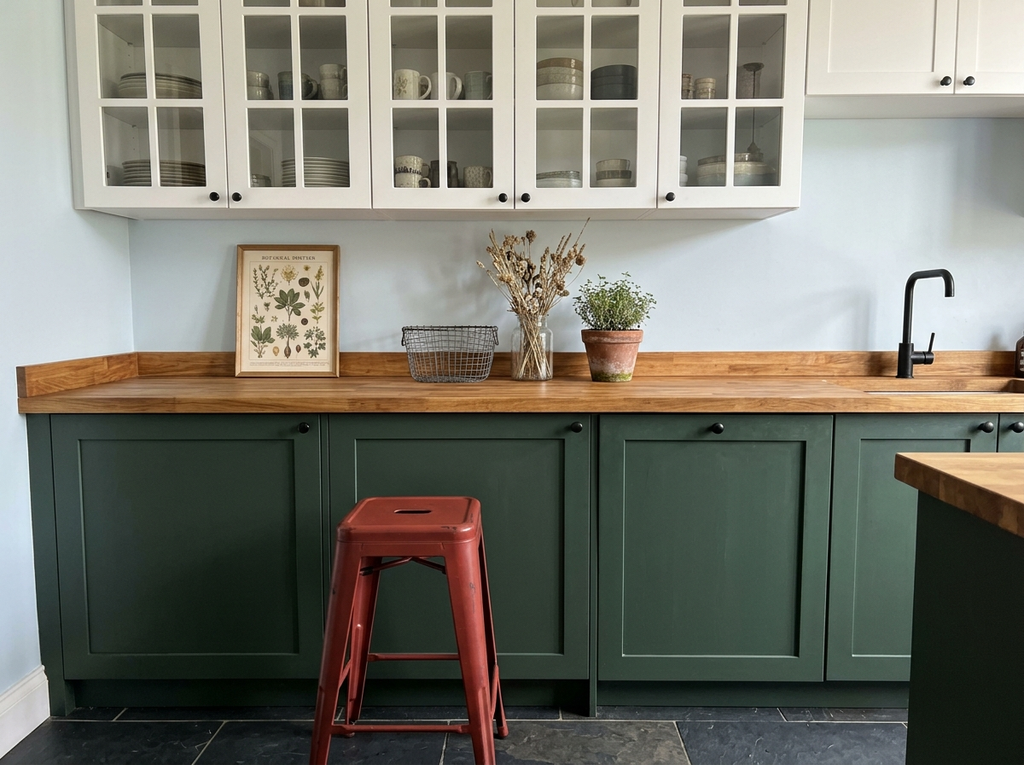
Dark green base cabinets under light glass-front uppers give a kitchen both weight and air. A pale blue wall behind a butcher block counter keeps the room fresh, while slate floor tiles hold the dark tones together at ground level. Then add one saturated accent, such as a red metal stool, so the eye has a playful place to land. White uppers with glass fronts keep the top half open and let you display dishes without closing in the room. Simple knob handles and a deep sink complete the cottage mood. Limit the bright accent to a single object, and it will feel like a wink rather than a clash.
18. Pair Deep Berry Lowers With Knotty Pine Uppers
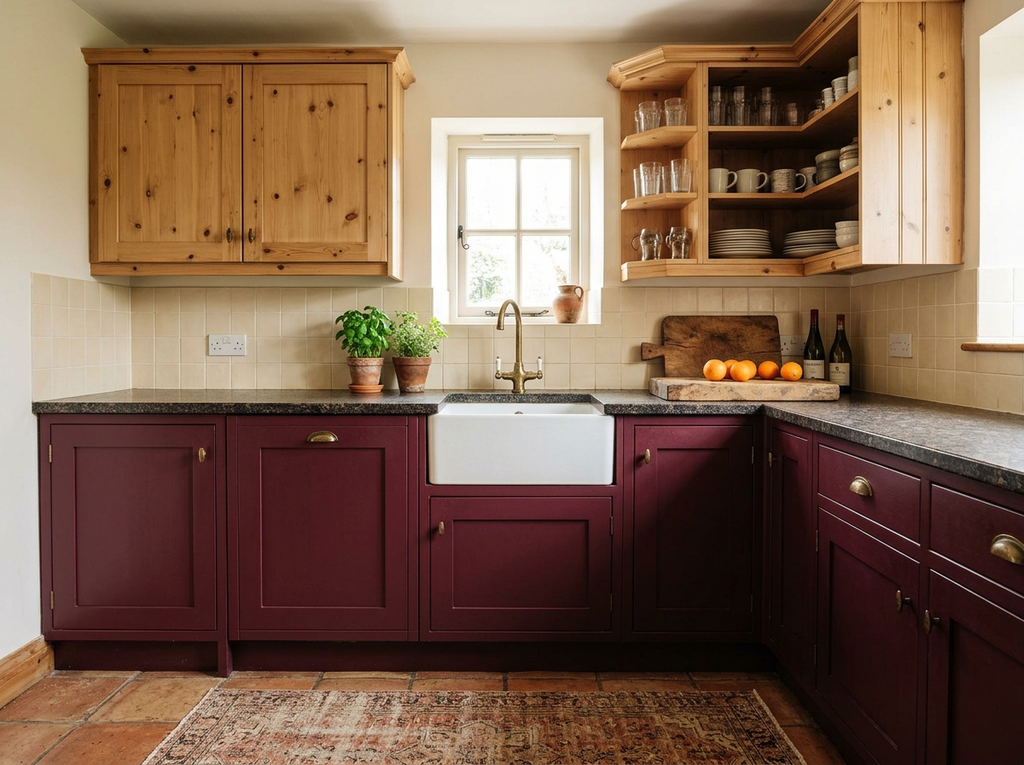
A deep berry red on the base cabinets paired with light knotty pine above creates a warm, collected look that feels cheerful and grounded at once. The pine adds a bit of rustic character, so keep the lower doors in a plain shaker style and let the color do the talking. Aged gold pulls and a matching tap bring in a soft metallic glow. A white farmhouse sink brightens the center of the run, and a terracotta floor with a worn runner keeps the palette earthy. Dark granite-look counters tie the red and wood together. Remember that pine yellows slightly with time, so choose a clear finish that ages gracefully.
19. Lean Into Reclaimed Wood Cabinets for a Cabin Mood
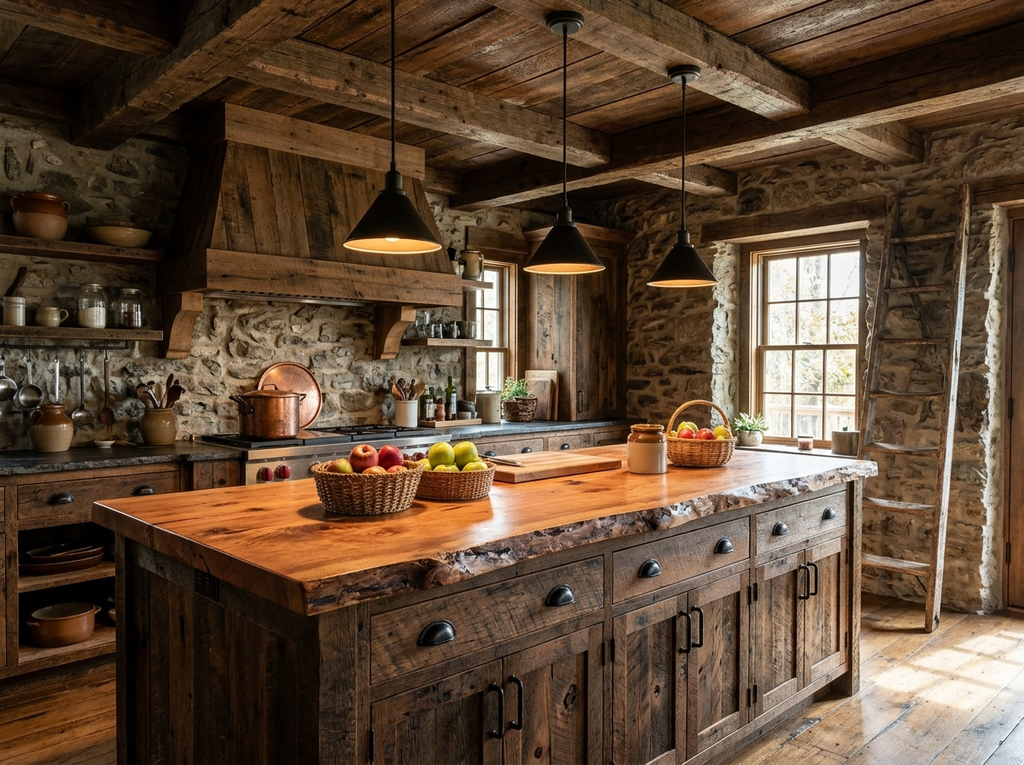
Reclaimed wood cabinets bring instant history to a kitchen, especially when you let the knots, nail holes and color shifts remain visible. A thick slab island in a warm, coppery stain becomes the centerpiece, and black metal pendants cut through all that orange with a crisp graphic edge. Stone walls and a timber ceiling raise the texture level, so keep appliances and counters simple. Seal every wood surface well, because kitchens are tougher on timber than living rooms. This style needs generous space and good daylight to avoid feeling heavy. In a small room, use reclaimed wood on a single feature such as an island or a hood surround.
20. Turn a Narrow Nook Into a Pantry With Blue-Gray Cabinets
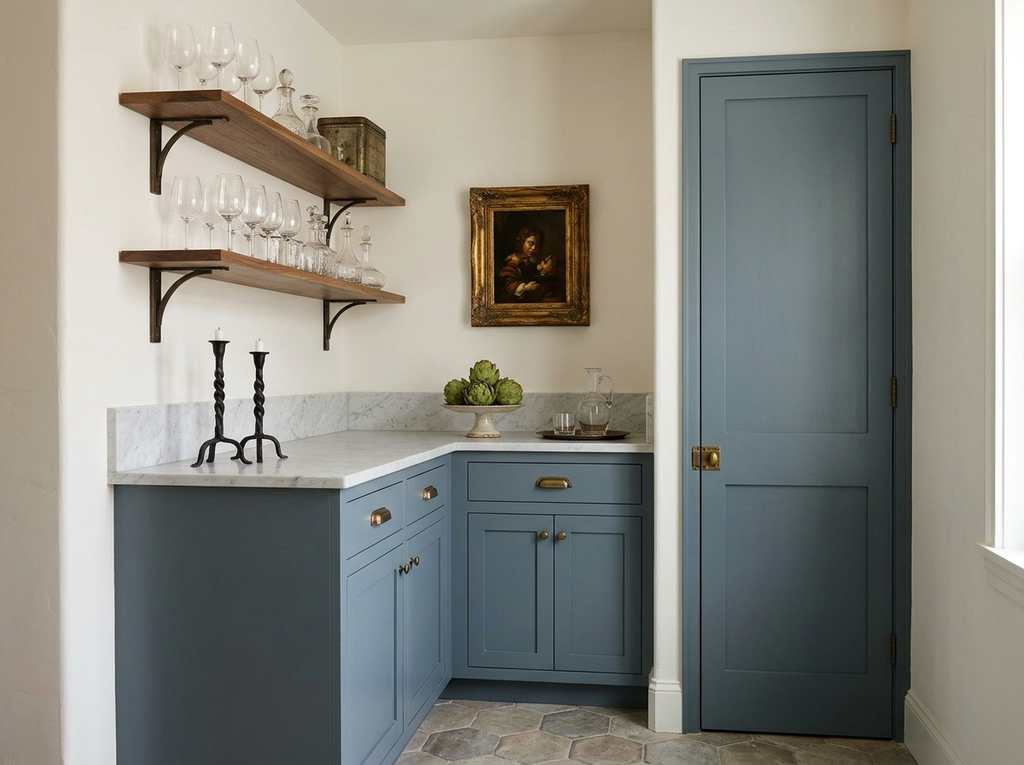
A narrow alcove can become the hardest-working corner of a home when you give it a few well-chosen cabinets. Blue-gray paint on shaker doors looks calm and slightly formal, and it pairs beautifully with warm brass pulls and a pale marble top. Add two open walnut shelves on simple brackets for everyday glassware and a decorative tray. A framed painting above the shelves gives the nook a gallery feel and lifts the eye. Cool paint with warm wood and metal is a balanced recipe that works in almost any climate or style. Keep the doors closed below, and the nook will stay tidy even when the rest of the kitchen is busy.
What Makes It Feel Finished
Across these twenty kitchens, the same few principles keep returning. Light colors expand a space, deep colors anchor it, and natural wood warms every palette it touches. Hardware, whether slim black pulls or aged brass knobs, is the jewelry that tells the room what era and attitude it belongs to, and repeating any accent at least three times makes it look planned. Remember too that kitchen cabinets are a long-term commitment, so choose a door style you will still love after the trend moves on.
Now for the habit I promised. Before you order a single door, paint a large sample, at least two feet square, and tape it to the wall where the cabinets will stand. Live with it for several days, checking it in morning light, at midday and under your evening bulbs. On one of my own projects, a green that looked soft and herbal in the shop turned almost gray by lamplight, and I was glad to learn that before it covered a whole wall of cabinetry. A tiny swatch flatters you, while a big sample tells the truth. Do that one thing, and every other decision in your kitchen gets easier.