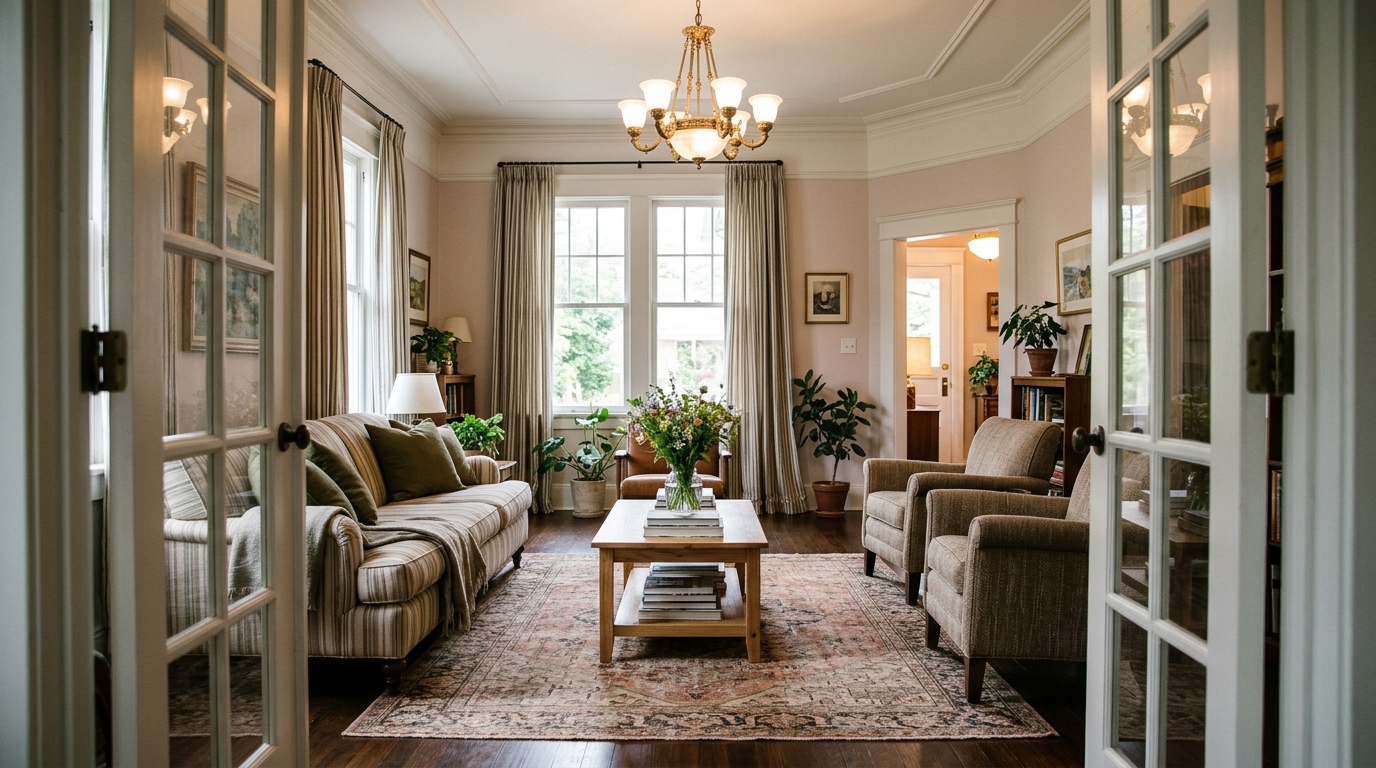
What do the rooms you never want to leave have in common, and why is it almost never the price tag?
The best room decor ideas rarely begin with a shopping trip. They begin with a reason to linger: a lamp that warms a corner at six in the evening, a throw that begs to be pulled over your knees, a piece of art that gives your eye somewhere to land. Whether you are dressing a dorm, a nursery, a cottage living room or a narrow bedroom under the eaves, the same handful of principles decide whether a space feels thrown together or quietly collected.
This guide walks through eighteen real rooms and the single design move that makes each one work, from color and texture to lighting, scale and the small objects that give a space its personality. Every idea translates easily to a rental, a modest budget or a room you cannot repaint. Stay with me until idea thirteen, because that is where one tiny adjustment changes how big a room feels.
1. Start Your Room Decor Ideas With One Oversized Print
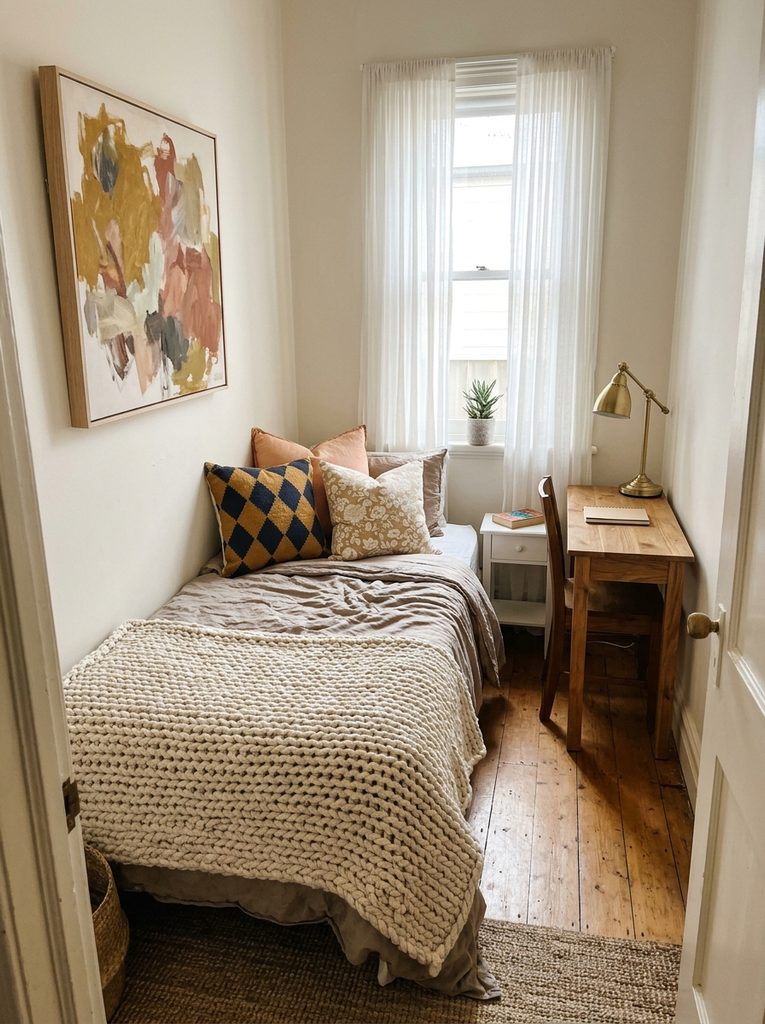
In a small bedroom, one large piece of art does more than a crowded gallery wall ever could. A tall abstract print in mustard and terracotta, centered above the headboard, gives the wall a clear focal point and lets everything else stay quiet. Overlapping, soft-edged shapes work especially well because they feel calm rather than busy, and the warm palette gathers the bedding into one family. Keep the frame in light wood so it melts into the wall instead of competing with it.
Hang the piece so its lower edge sits a hand-span or two above the pillows, which ties the art to the bed rather than leaving it floating. Then let the pillows echo it: one geometric, one floral and one softly woven, all borrowing a color or two from the print. I once tried three small frames in this exact spot and the wall felt fidgety, but a single large canvas settled the whole room in minutes. If a big original is out of budget, a large print in a ready-made frame delivers the same scale for a fraction of the cost.
2. Soften Crisp White With Rattan and Warm Wood
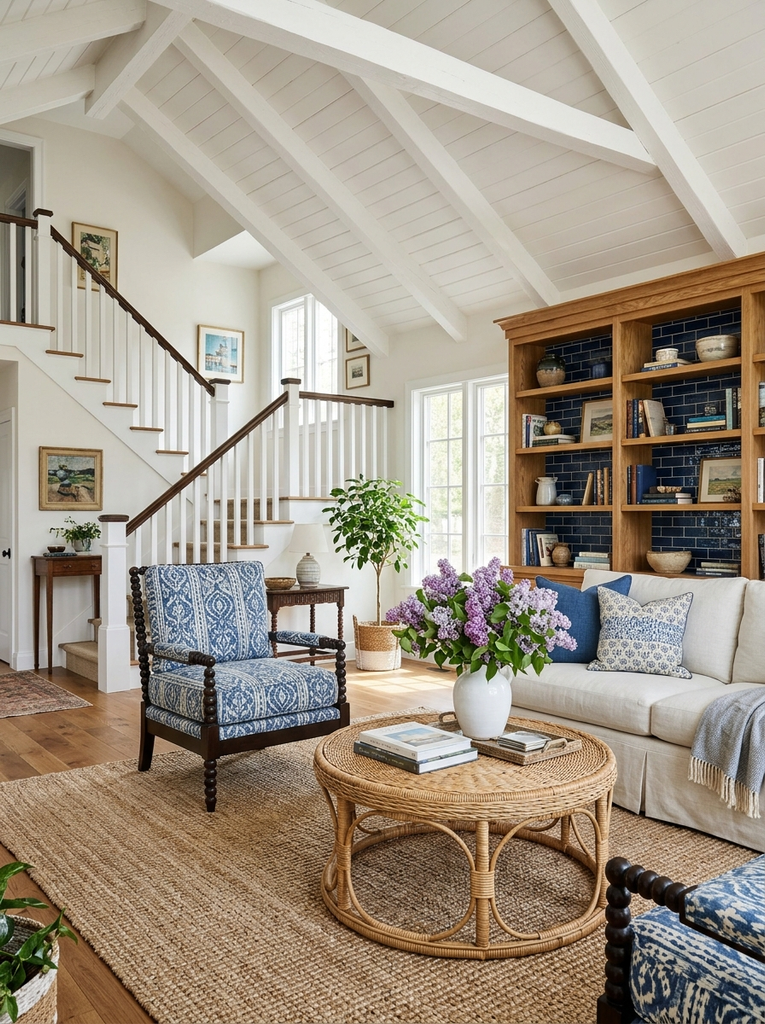
Crisp white trim, coffered ceilings and a staircase with painted balusters can feel formal until something woven and warm walks in. A wood coffee table wrapped in rattan, a sisal rug and a pair of turned-leg side tables bring the handmade texture that keeps a white room from feeling like a showroom. Add one patterned chair in a dusty blue block print, and the glossy blue tile behind the shelves suddenly has a partner on the other side of the room.
The rule worth borrowing is to pick a single accent hue and repeat it in three places so the eye travels. Here the faded indigo shows up on the tile, the armchair and the edge of the sofa, and nothing else competes with it. A plain white vase of lilacs or any seasonal branch finishes the scene without adding clutter. Renters can get most of this effect with a natural-fiber rug and one slipcovered or reupholstered chair, with no paint required.
3. Build a Personal Display Zone With a Grid Panel and Floating Shelves
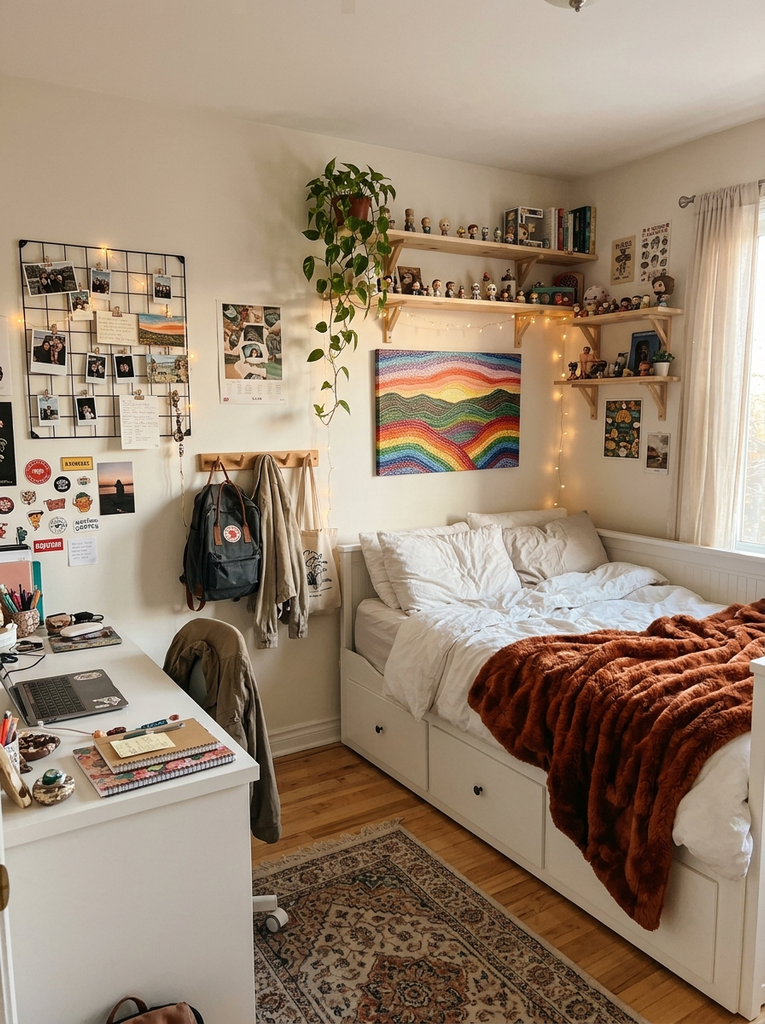
A personal display zone is one of the friendliest room decor ideas for anyone who loves photos, souvenirs and small collectibles but dreads a cluttered wall. A metal grid panel needs only a couple of fixings, and clips let you swap postcards and snapshots in seconds. Pair it with a rainbow-banded landscape painting and the wall becomes a mood board you can rearrange without ever reaching for the hammer again.
Floating shelves handle the three-dimensional pieces, such as small figures, a clock and framed portraits, while a row of hooks beneath keeps keys and necklaces within reach. String lights along the headboard add a soft glow, and a rust knit throw layered with faux fur picks up the warm tones in the painting. To stop a busy wall from tipping into chaos, keep the shelves to two levels and group objects in odd numbers. Leave a few inches of bare wall between zones so each one has room to breathe.
4. Let a Striped Wool Blanket Set the Whole Palette
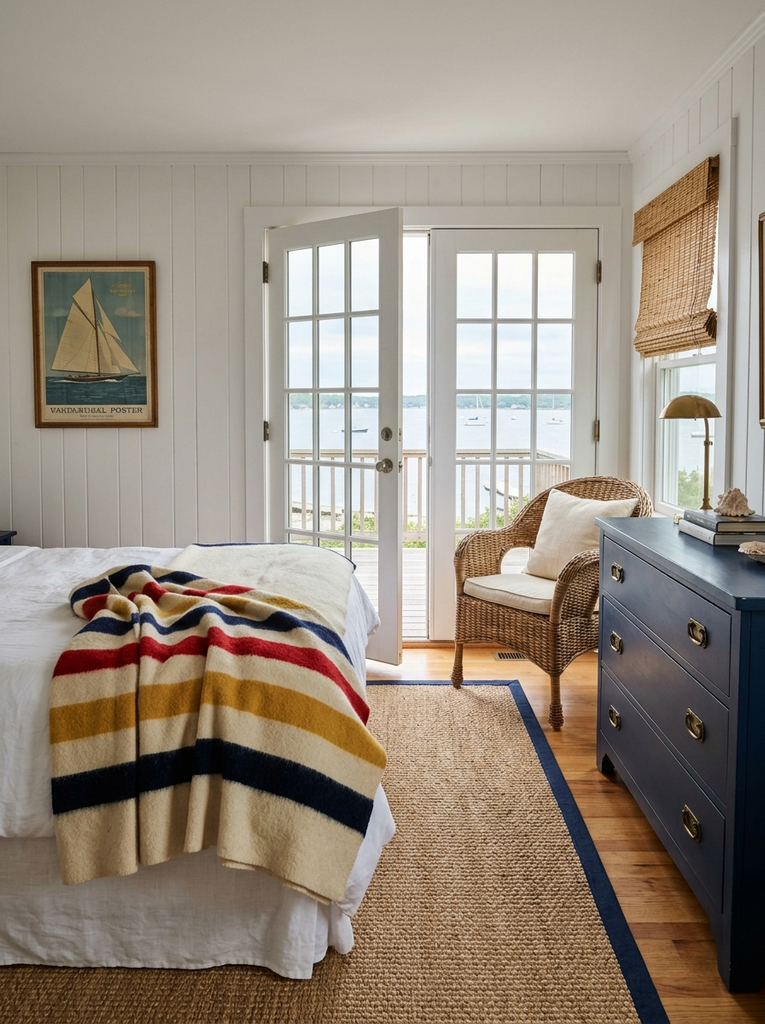
A bold striped wool blanket can set the entire palette for a bedroom before you buy a single other thing. Navy, red, gold and cream stripes across the foot of the bed give you four colors to pull from, and the rest of the room simply listens. Here a navy dresser with brass pulls repeats the deepest stripe, a woven bamboo shade echoes the gold, and white shiplap walls carry the lightest cream. It is the 60-30-10 rule at work: roughly sixty percent white, thirty percent navy and ten percent red and gold.
French doors that open onto a water view do half the work, but you do not need a harbor to borrow the idea. Add a wicker chair with a striped cushion in the corner, and ground the bed with a jute rug edged in navy. Keep the artwork simple and sea-themed, like a framed sailing print, rather than filling the wall with novelty pieces. The result feels like a relaxed summer house, which is exactly the point.
5. Put Bold Color on the Floor and Keep the Walls Calm
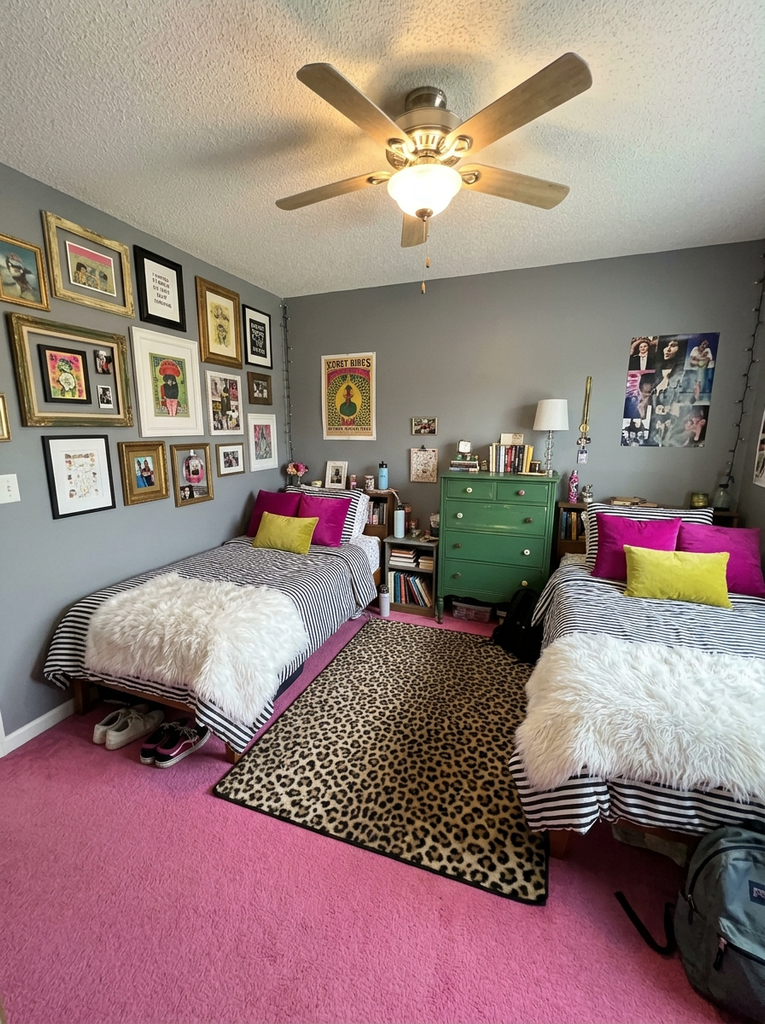
Bold color belongs on the floor when the walls have to stay neutral, and a shared dorm room proves it. A hot pink carpet under soft gray walls could look loud, yet a leopard-print hide rug and a couple of white sheepskin throws turn it into a deliberate, playful scheme. Striped bedding in pale gray keeps the beds calm, while one magenta and one chartreuse pillow pick up the floor colors on top.
Rugs are the renter’s secret weapon in rooms like this, because they cover carpet you did not choose and define each person’s zone without a single new wall. A mismatched gallery of frames above one bed and a green dresser between the two give each side its own identity. If you share a room, agree on one unifying color, then let each side go its own way with accessories. That way the space reads as a pair rather than a collision.
6. Wrap a Sloped Ceiling in Small-Scale Wallpaper
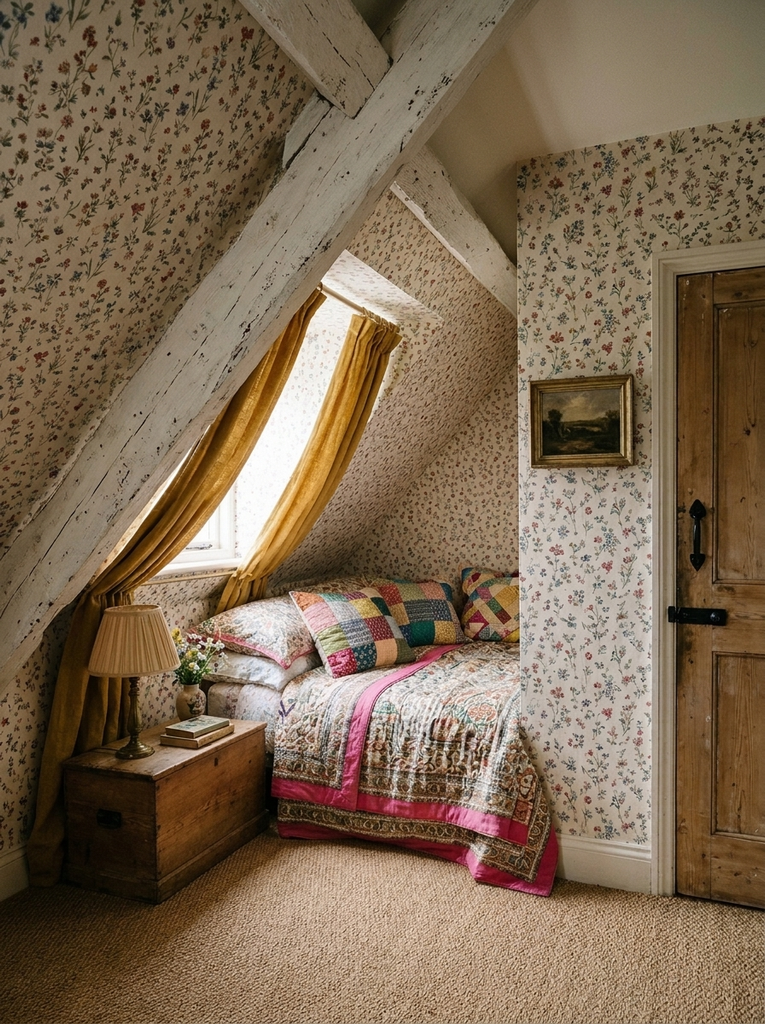
Small-scale wallpaper carried over a sloped ceiling can turn an awkward attic corner into the coziest room in the house. A tiny floral print on both the walls and the slope makes the angles feel intentional, as if the room were tailored around you. A painted white beam breaks up the pattern and keeps it from pressing down, and the pale paneled strip of ceiling adds a quiet line of relief.
Warm mustard curtains on the French doors pick up a color from the print, while a quilted bed with a hot pink border adds the one jolt of brightness the room needs. A pleated lamp and a patchwork pillow keep things layered, and a sisal carpet underfoot grounds it all. For room decor ideas like this one, choose a small, repeating pattern on a light background, because large or dark designs can swallow a low ceiling. If you rent, removable wallpaper on the main walls gives you the effect without the commitment.
7. Use Colored Light to Create a Mood Corner
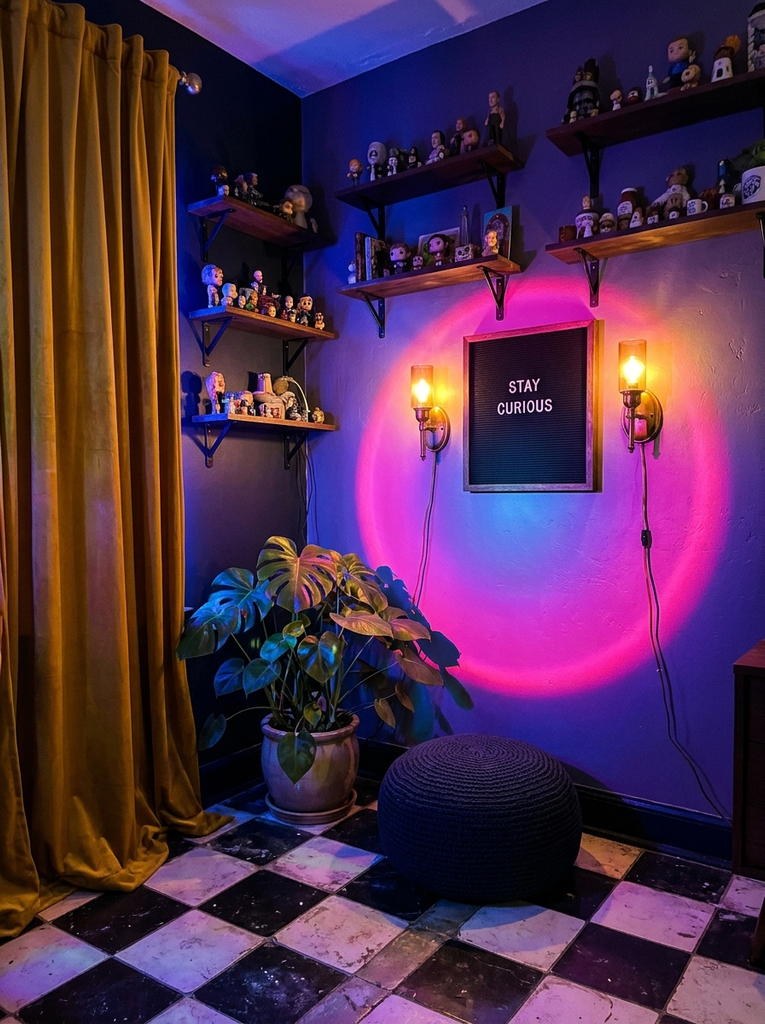
Light can be the whole decorating idea when you want a space to feel like a hangout rather than a bedroom. Wall-mounted picture lights above a framed print and a shelf of collectibles pull attention to the objects you love, and a wash of blue and violet turns a plain wall into a backdrop. A small spotlight that casts a soft round circle of pink on the wall adds a playful second layer, and the black-and-white checkerboard floor gives the whole scene a graphic base.
Colored light is a mood tool, not an all-day setting, so put it on a dimmer or a switch of its own. Keep one warm lamp for evenings when you want to read or wind down, because saturated blue light feels energizing rather than restful. Display figures on narrow ledges so each one catches a beam, and route cords behind the shelving to keep the floor clear. Peel-and-stick checkerboard tiles give renters the same floor effect without grout.
8. Paint the Back of a Built-In for an Instant Focal Point
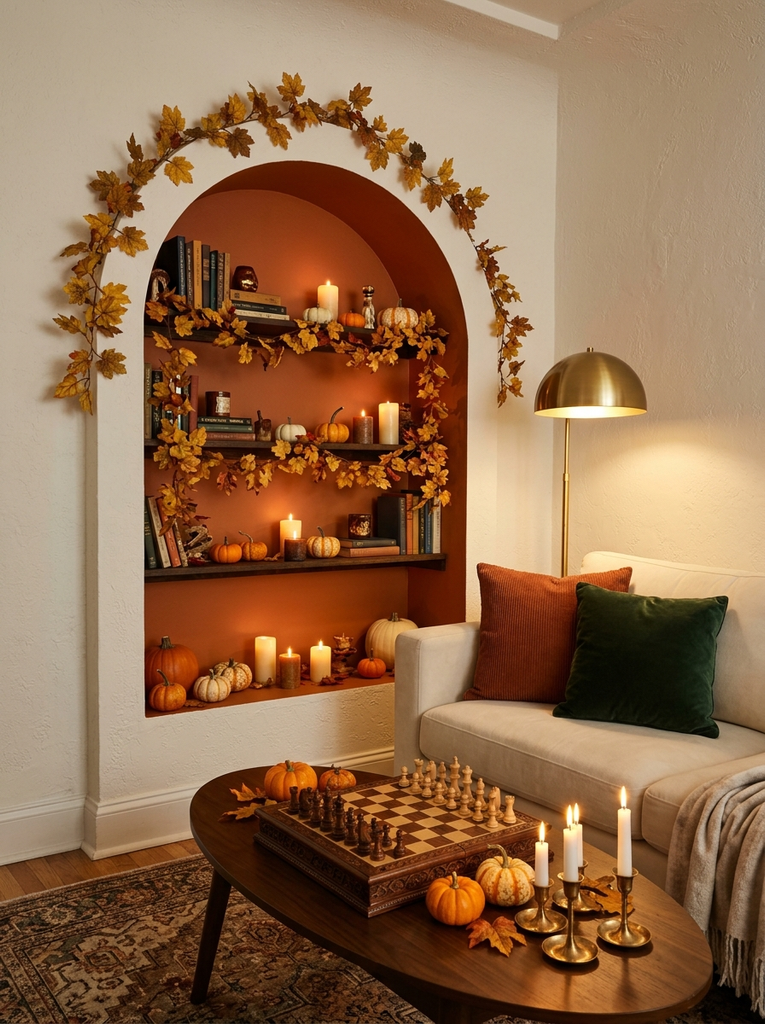
Painting the back of a built-in is the cheapest way to create a focal point, and a deep burnt orange inside an arched alcove shows how well it works. The shelves read as a stage, so autumn objects such as mini pumpkins, taper candles, a leaf garland and a checkerboard game board look curated rather than scattered. Deep, warm color on a recessed surface creates the illusion of depth, which is why the niche feels richer instead of smaller.
Pair it with a brass dome floor lamp and bulbs around 2700 kelvin, because warm light flatters warm paint, while cooler bulbs turn orange muddy. Cream upholstery with rust corduroy and one deep green cushion keeps the palette tight. I painted the back of a shallow shelving niche in a similar spiced shade once, and the whole room felt taller afterward because the eye read it as depth. Test a sample patch first, since orange shifts dramatically between morning and evening light.
9. Add Half-Height Paneling to Soften a Nursery
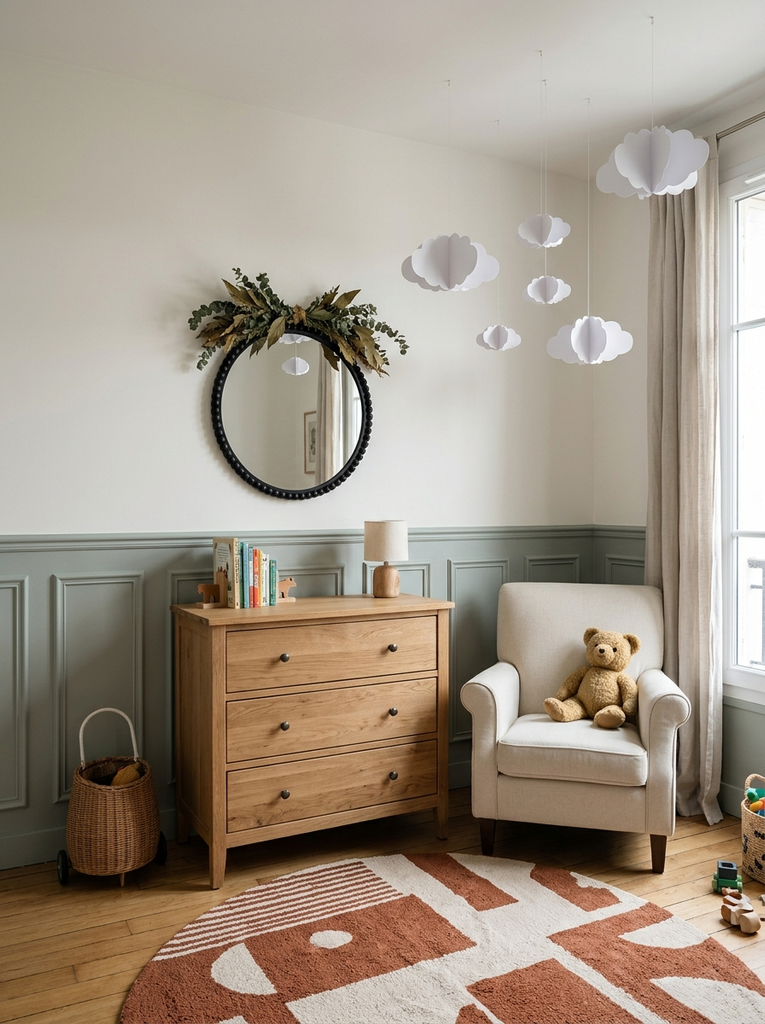
Paneled wainscoting painted in a soft sage blue lends a nursery quiet structure without making it feel heavy. Painting only the lower third of the wall keeps the room light, and the pale upper wall bounces daylight around. An oak dresser, a round mirror with a beaded black frame and a leafy wreath, and a pleated lamp add warmth and a few grown-up details so the room does not read as a toy store.
Playful touches earn their place when they stay few: a plush teddy bear, a wooden rainbow stacker and a handful of paper clouds drifting from the ceiling. A rust-and-cream rug with a half-circle pattern ties the wood tones to the wall color. For safety, anchor tall furniture to the wall with straps, and keep anything hanging or fragile well out of a child’s reach. If paneling is out of budget, peel-and-stick molding painted in one color gives the same look in an afternoon.
10. Layer Natural Textures in a Cottage Living Room
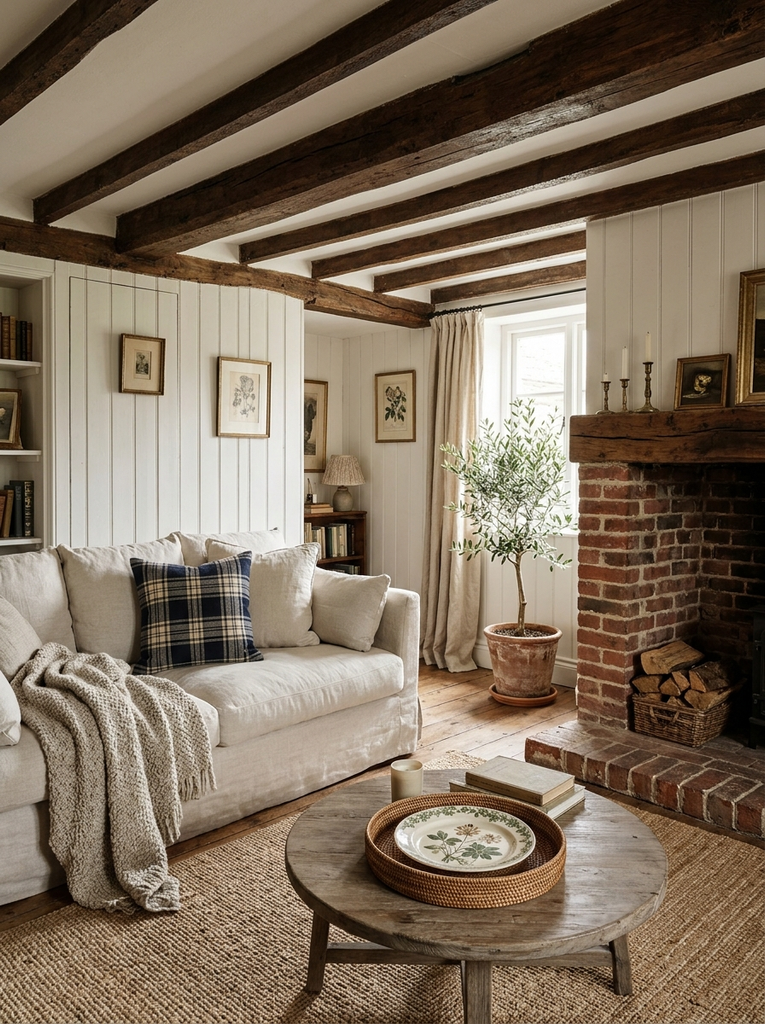
A cottage living room works best when every surface has some texture and none of it shouts. White shiplap walls, exposed timber beams, a linen sofa and a jute rug build a quiet neutral base, and then a few well-chosen accents in navy and plaid supply the personality. A plaid cushion, a wool throw and a botanical print above a wooden shelf do the storytelling without a single loud color.
Round, rustic coffee tables soften a room full of straight lines, and a basket tucked underneath hides blankets and magazines. Plants on the windowsill and a potted olive tree in the corner bring in life and make the large window feel like part of the decor. Keep the curtains in natural linen and hang them high, so the window looks taller. Mixing a few wood tones is fine, as long as the undertones all lean warm.
11. Style Built-In Shelves With Seasonal Finds
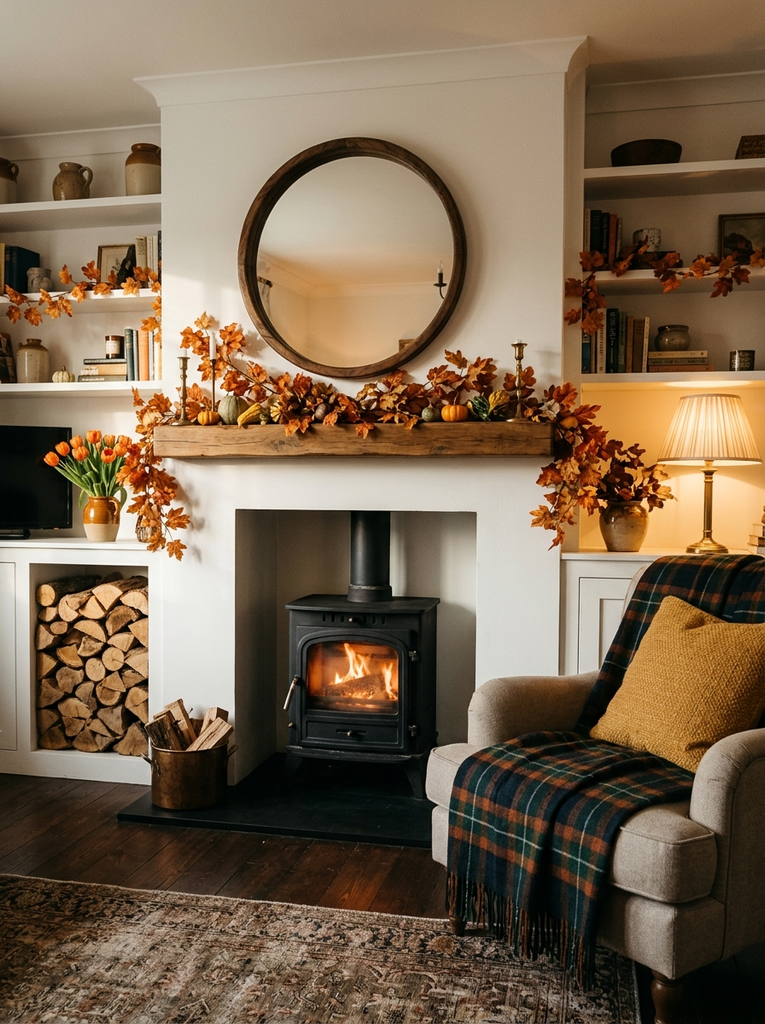
Built-in shelves can look styled with almost no spending when you treat them like a seasonal display. A leaf garland strung across each shelf, a vase of orange tulips and a few framed photos turn plain white boards into the focal point of the room. The firewood tucked into the cubby below is decoration too, because stacked logs bring pattern and warmth that no accessory can fake.
The discipline that keeps this from feeling cluttered is leaving breathing room: group items in odd numbers, vary heights and leave a few inches of empty shelf between groups. A round mirror above the mantel doubles the light, and a pleated lampshade in soft gray adds a gentle glow at dusk. Gather leaves and dried grasses on a walk, press them under a heavy book, and you can restyle the entire space for free each autumn.
12. Cluster Posters, Shells and a Mirror Into One Wall Story
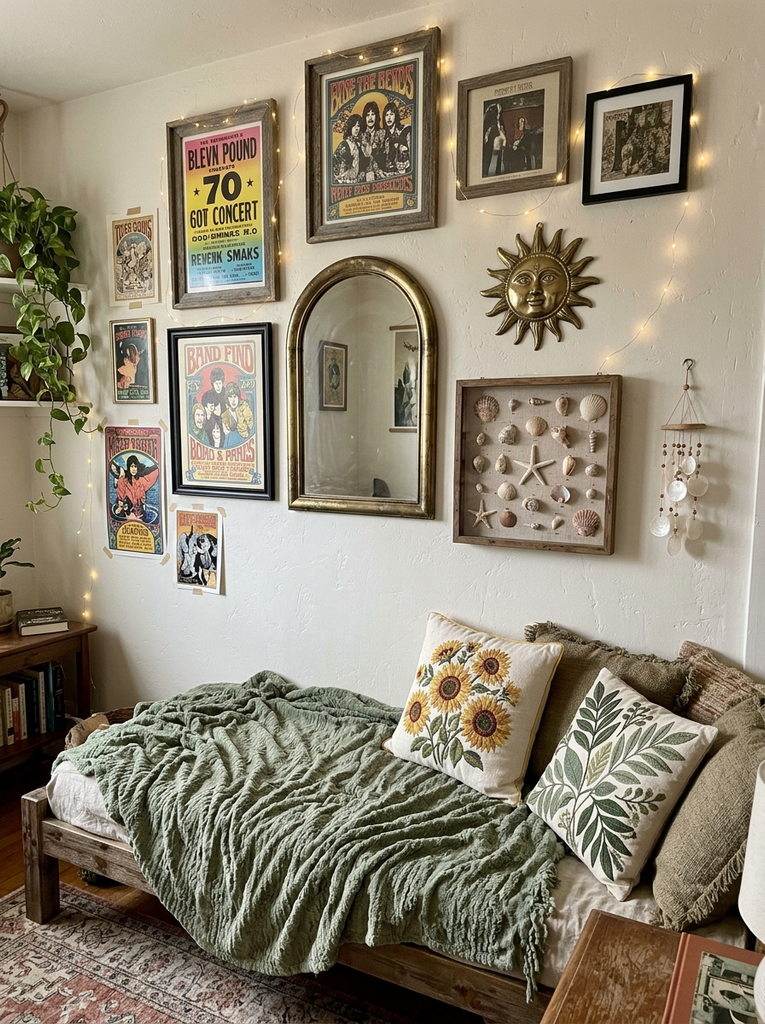
A wall display built from posters, a vintage shell chart and a tall arched mirror lets a bedroom say exactly who lives in it. Cluster the music posters in one block, hang the shell chart as a separate statement piece and tuck photo strips into the mirror frame, so each group has its own space. A sunburst wall ornament and a small wind chime add dimension above the bed, which is where the best room decor ideas for teens and students tend to concentrate.
Because the wall carries so much, the bed stays calm: soft beige bedding, a sunflower embroidered cushion, one leaf-print pillow and a sage fuzzy throw. A strand of fairy lights behind the mirror warms the corner at night. Low-tack tape or adhesive strips keep the posters renter-friendly, and swapping them each season keeps the wall alive. Lean the mirror against the wall instead of hanging it if you want a more casual look.
13. Angle a Mirror Toward the Light
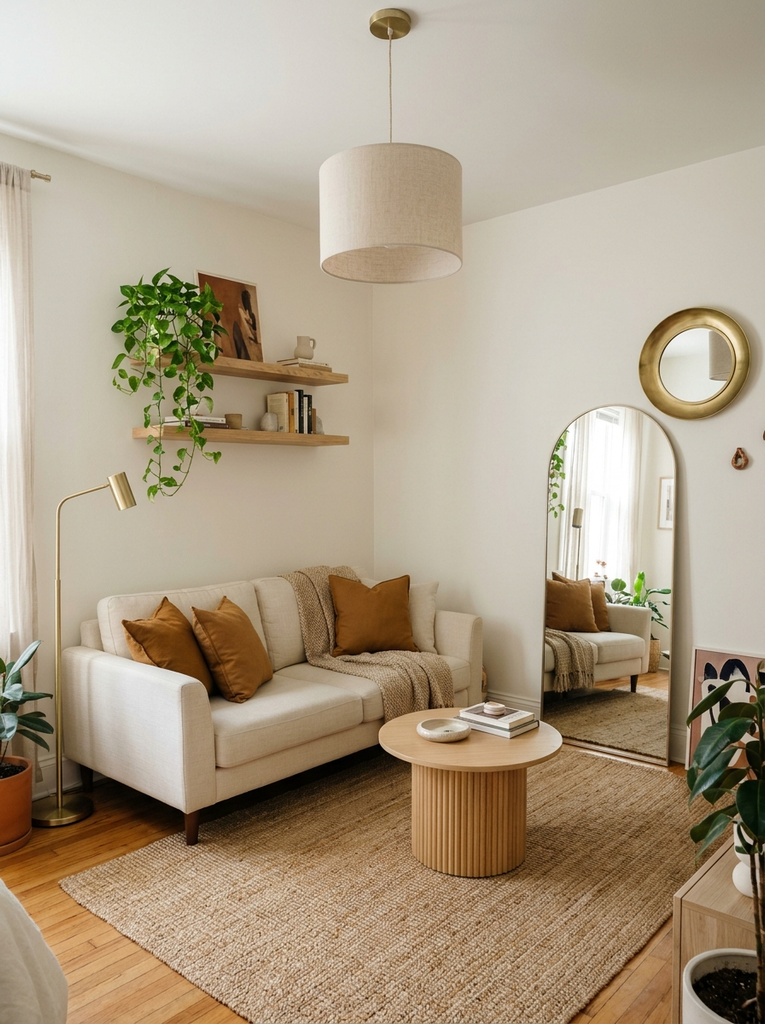
A mirror earns its place when it faces something worth reflecting. In a compact living room, a tall arched mirror and a round brass one on adjacent walls bounce light around, so the space feels wider than its footprint. This is the small trick I promised at the start: angle the mirror toward a window or a lamp, never a blank wall, because a mirror multiplies whatever it sees.
I moved a mirror a few feet in my own narrow living room so that it caught the window instead of the sofa, and the room brightened more than any new bulb had managed. Here a cream sofa with a caramel cushion, a fluted round coffee table and a jute rug keep the palette soft, while a brass floor lamp and a drum pendant layer warm light at different heights. Two floating shelves with a trailing plant and a candle add life above the sofa. Avoid placing a mirror opposite a cluttered corner, because it will double the mess.
14. Warm Up a Room With Butter-Yellow Walls and Faded Prints
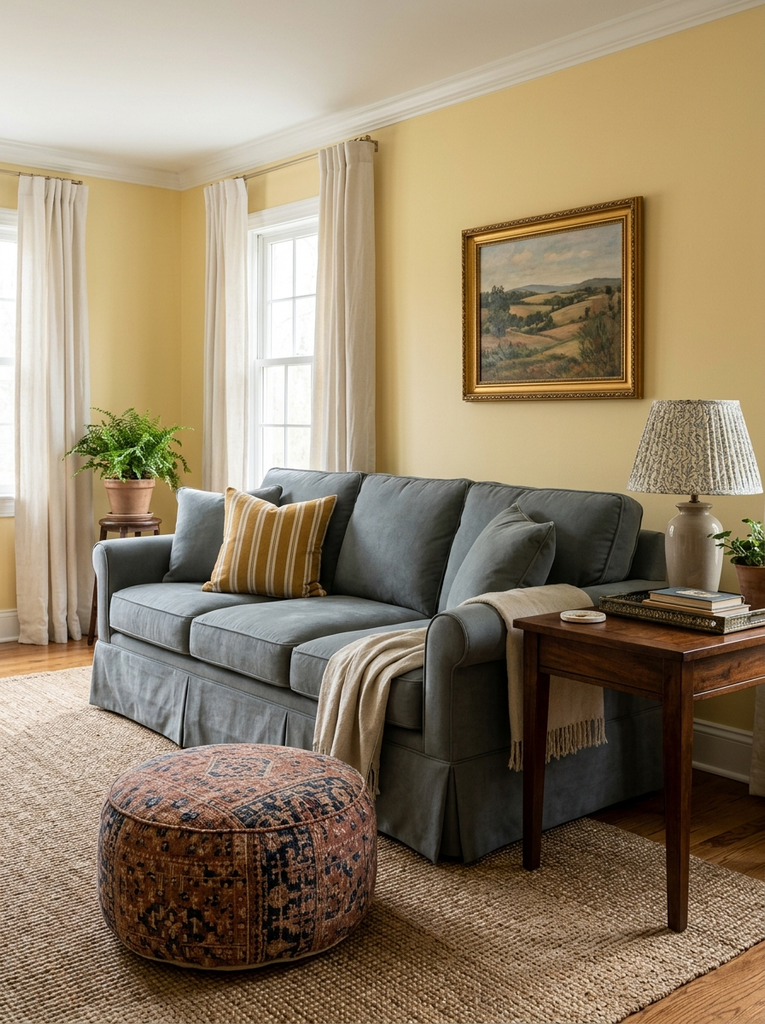
A butter-yellow wall feels like permanent afternoon sun, and it pairs beautifully with faded, slightly dusty prints. A gray-blue paisley sofa with a skirted base looks vintage and fresh at once against it, and a striped mustard cushion links the sofa to the wall. A dark side table with turned legs and a patterned lampshade gives the corner weight, so the yellow does not float.
Choose a creamy yellow with a touch of brown rather than a lemony one, which can look harsh and cool. Test a large sample patch and look at it in morning and evening light, since yellow shifts more than almost any other paint color. In a dim, north-facing room it may feel loud, so soften it with a seagrass rug and muted patterns on the ottoman. A single landscape painting and one flower in an alabaster vase are enough to finish the scene.
15. Finish the Bed With One Playful Throw
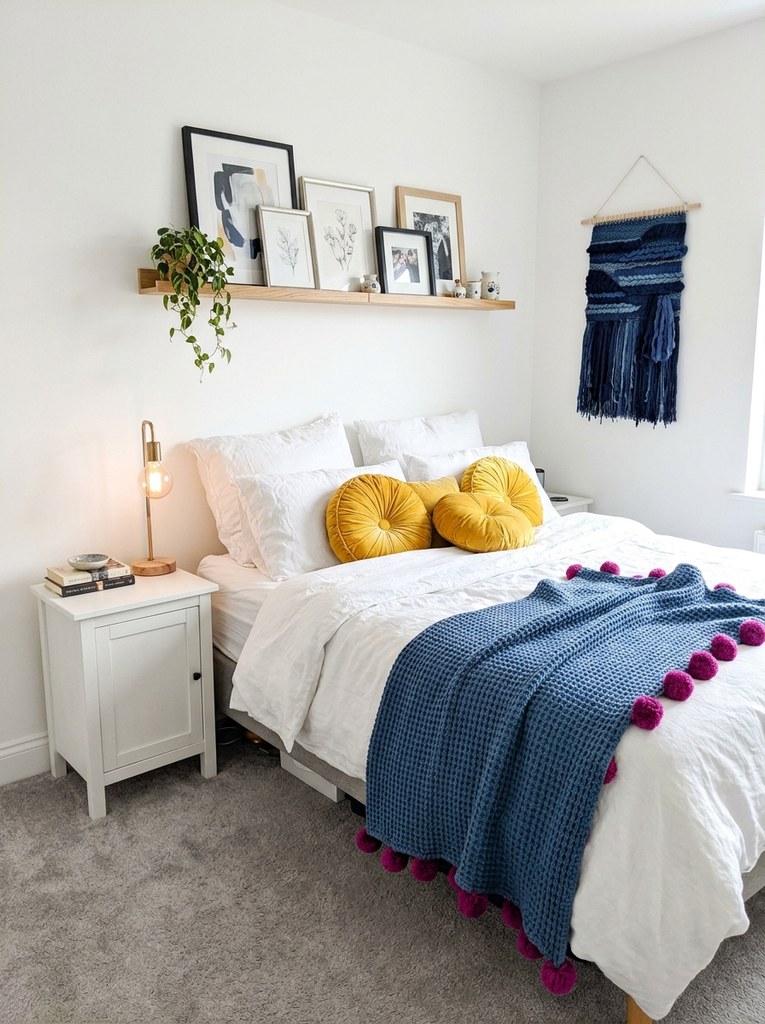
Sometimes a bedroom needs only one playful accessory to feel finished. A chunky blue throw with magenta tassels across a white bed adds color, texture and a little humor in one move, and two round yellow velvet cushions create the blue-and-yellow pairing that always looks fresh. Because the bed itself stays white, the colors read as intentional rather than chaotic.
Above the bed, a long floating shelf holds framed prints, a vase of trailing greenery and a few small treasures, while a woven wall hanging in indigo adds soft texture beside the nightstand. A slim lamp with an exposed bulb gives a cozy pool of light on the white nightstand. The beauty of this approach is that accessories are easy to swap: change the throw and cushions and the room has a new personality for next season. The dark carpet underneath makes the white furniture pop.
16. Hang a Statement Chandelier and Let the Fireplace Choose Your Colors
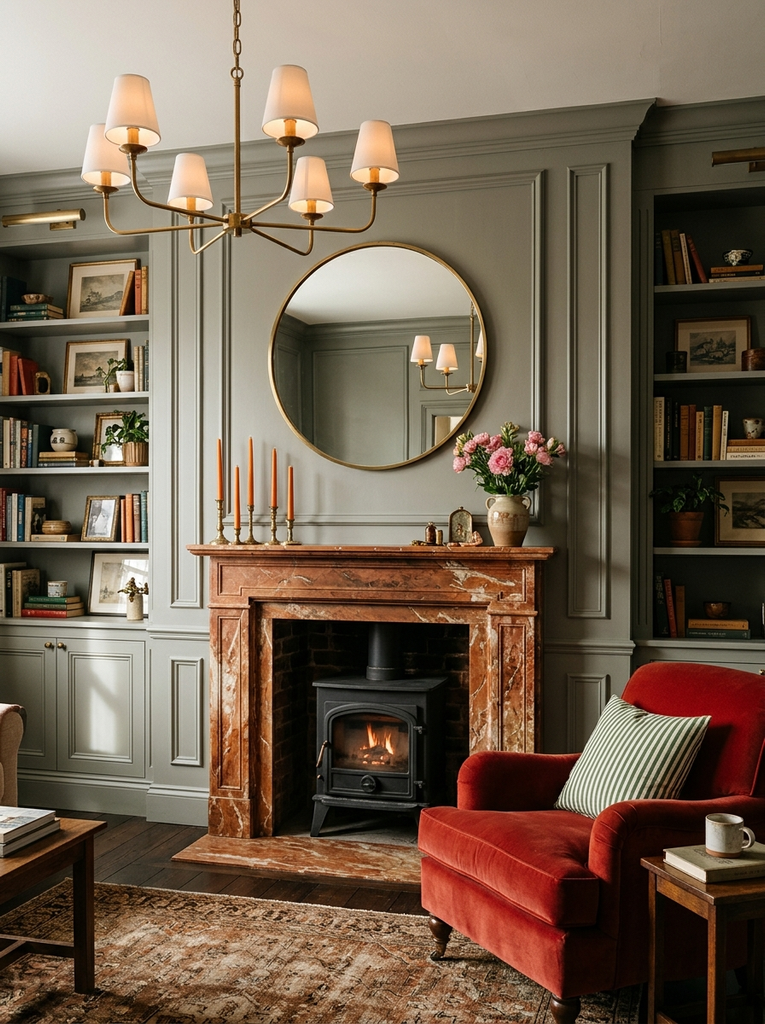
A statement chandelier is the quickest way to make a traditional room feel current. Here a brass-and-white fixture with cone shades sweeps across the ceiling, and the tone-on-tone paneled walls in a soft gray-green let it be the star. Painting the paneling, the trim and the alcove shelving the same shade makes the architecture feel richer rather than busier, and a round mirror above the mantel pulls the light and the shelf displays back into the room.
The fireplace surround supplies the palette: its terracotta marble is echoed in a red velvet chair, a striped cushion in deep green and white, and a bouquet of pink blooms. Let the fixed features choose your colors, since you can change a cushion far more easily than a surround. Orange taper candles and a small collection of ceramics on the shelves add the finishing details. Hang a chandelier so its lowest point sits well above head height, and put it on a dimmer so it can be bright for guests and soft for quiet evenings.
17. Paint the Sloped Ceiling and Frame a Sleeping Nook
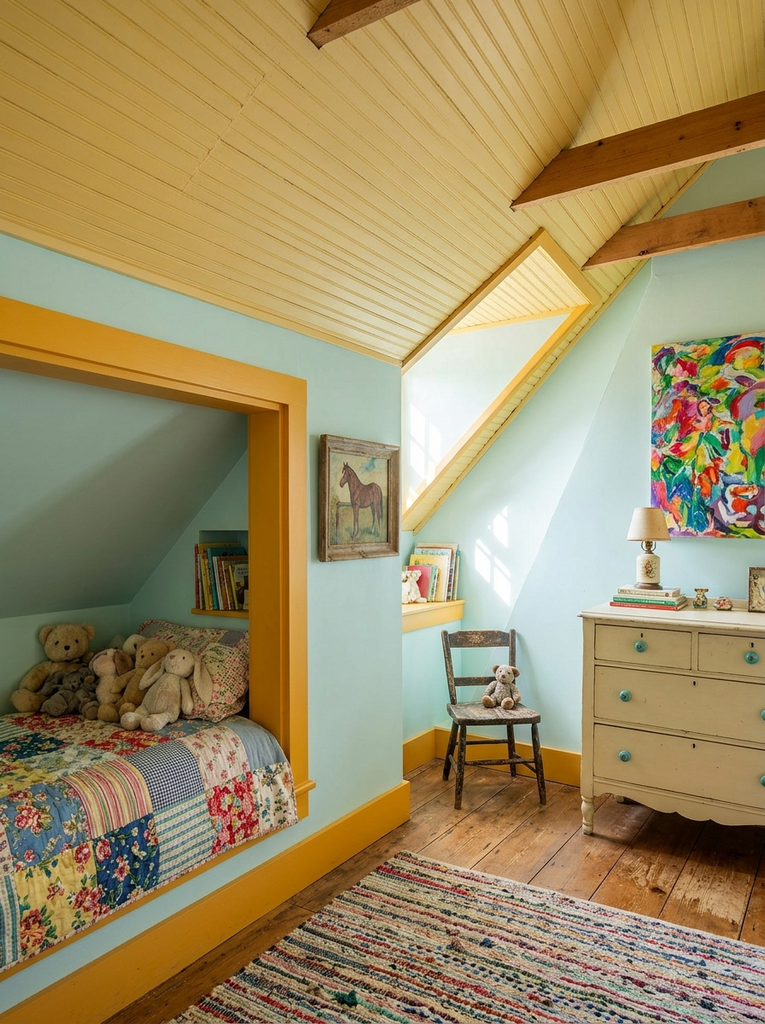
When a room has a sloped ceiling, treat it as a fifth wall and paint it. A warm yellow on the wooden planks and a pale aqua on the walls give an attic bedroom a sunny, storybook feel that plain white could never match. The trim around the built-in bed nook is painted the same yellow, which frames it like a picture and makes the alcove the clear heart of the room.
A recessed nook feels snug when it has its own layers: a patchwork quilt, a few soft toys, a framed horse print and a pillow or two. A cream dresser with aqua knobs and a vintage child’s chair add charm without crowding the floor. Because yellow and aqua are both soft, keep the rest of the room quiet and let one colorful painting carry the mood. If you build a nook like this, make sure it is well lit and ventilated, and use a low-profile mattress so the opening stays comfortable. Painted trim is a weekend job, which makes this one of the most affordable room decor ideas for an attic.
18. Light a Dark Bedroom in Layers
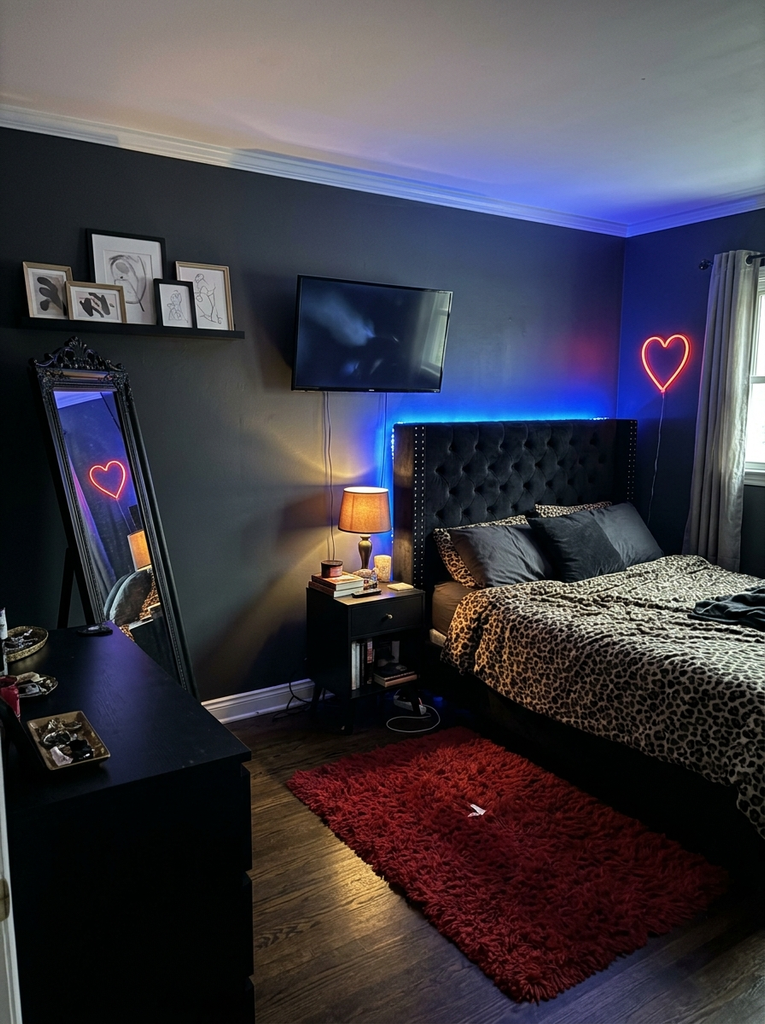
A dark, moody bedroom can feel luxurious rather than gloomy when the lighting is planned as carefully as the paint. Charcoal walls, a black tufted headboard and black furniture create a deep backdrop, and slim LED strips along the ceiling edge, the mirror and the dresser outline everything in a cool glow. A neon heart on the wall adds a playful spark. The cool light needs a counterweight, which is why the warm lamp on the nightstand matters so much.
A leopard-print bedspread and a deep red shag rug bring heat and texture to the black-and-blue palette, and they keep the scheme from reading as cold. A long ledge above the bed holds framed prints so the art sits in one tidy line, and a wall-mounted screen opposite the bed keeps the floor clear. Dark rooms need plenty of surface variety, so mix matte, glossy and fluffy finishes. Keep the strip lighting on a remote and a dimmer so the room can shift from lively to restful at bedtime.
Bringing It All Together
Looking across these eighteen rooms, the same few habits keep appearing. Each one has a clear focal point, a restrained palette with one or two accent hues, plenty of texture and warm light at more than one height. None of them depends on expensive furniture, and nearly every idea works in a rental. The strongest room decor ideas are the ones that solve a real problem, whether that is a blank wall, a dark corner or a floor you did not choose.
Start with the smallest change that excites you, whether that is a bigger piece of art, a mirror moved a few feet or a throw in a color you love. Live with it for a week, then add the next layer. A room that grows slowly feels collected, while a room bought in a weekend rarely does. Pick one idea from this list and try it tonight.