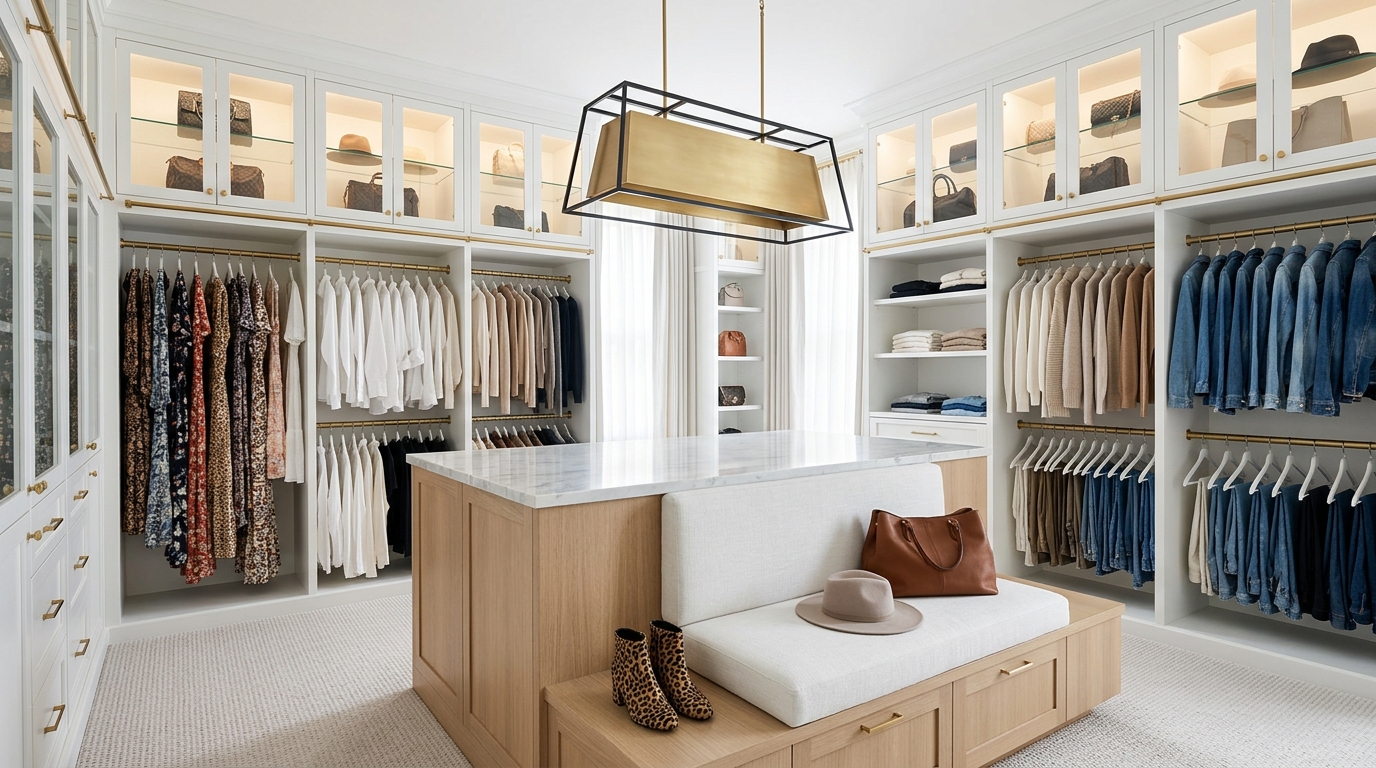
From dressing-room built-ins to a child-height rod, these real closets show how smart zones, the right hardware and a little restraint turn crowded storage into a space that works every morning.
The best closet organization ideas rarely begin with a shopping trip. They begin with a plain question: what do you reach for every day, and what is standing in its way? Most closets fail because storage was planned by shelf and rod instead of by routine, so the things you use daily end up in the hardest spots while rarely worn pieces take the prime space at eye level. A closet that works feels easy before you have had your coffee, and that ease is something you can design.
The eight closets below cover a wide range, from a dressing area with built-ins and a leather ottoman to a nursery with wire shelving, a long walk-through, and a corner reach-in with double rods. Each section shows one design move, explains why it works, and then gives you a version you can try without a full remodel. Some of these ideas need carpentry, but plenty rely on freestanding shelving, adjustable rods, baskets and a little paint. Take the moves that fit your space and leave the rest, because a closet that serves one person well will look different from one built for another.
1. Begin Your Closet Organization Ideas With Clear Zones
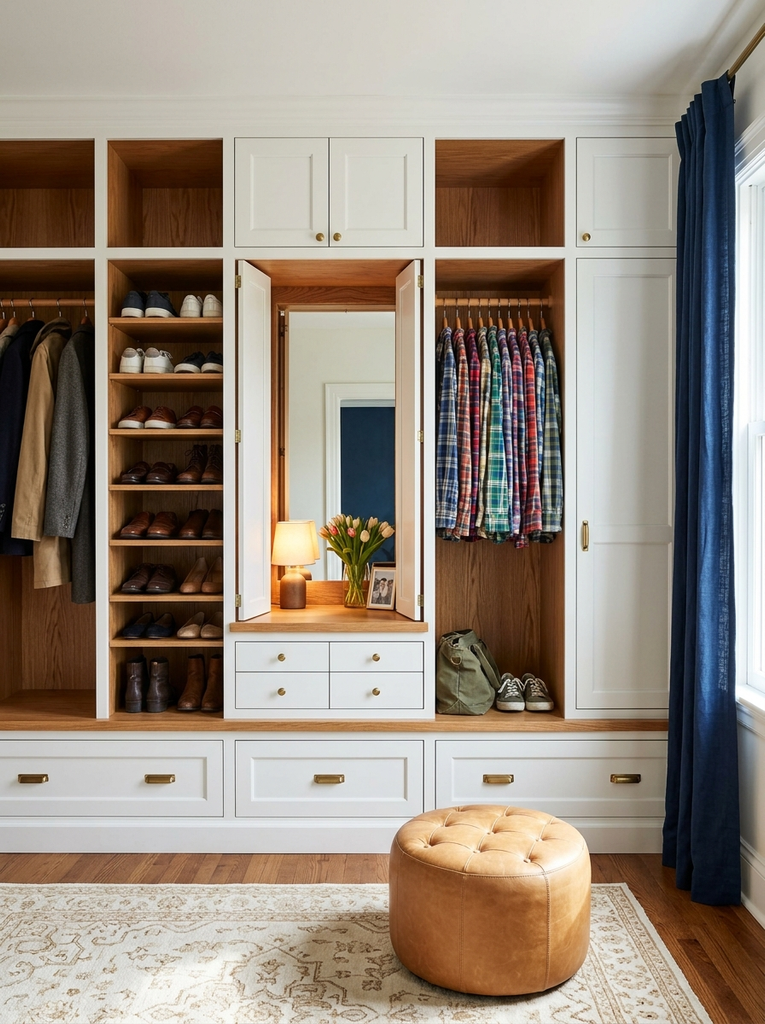
Divide the wall into zones before you buy a single bin. In this dressing area, the left cubby holds shoes, the center cabinet handles grooming and small items, and the right bay carries shirts on a single rod with a bag and sneakers beneath. Each zone has one job, so nothing competes for the same spot. That clarity matters more than the sheer amount of storage, because a closet where every category has an obvious home takes far less effort to keep tidy.
The finish helps too. White painted frames wrap warm oak interiors, which gives the cabinets depth and makes the clothes the visual focus rather than the boxes holding them. A fold-back mirror cabinet with a lamp, two shallow drawers and a small vase of tulips turns a dead middle section into a spot for getting ready, and it keeps watches, keys and cufflinks off the dresser. Three wide drawers below handle folded pieces, a classic closet storage move, and a tall closed door hides bulky overflow. Closed and open storage work best in balance, with the open parts showing what you wear most.
To copy the idea without building anything, map your closet into the same three jobs: hanging, folding and small accessories. A freestanding open bookcase can serve as the shoe zone, a low dresser can add drawers, and a tabletop mirror with a small lamp can create the dressing corner. If you cannot add wood, paint the back wall inside the closet a warm tone for a similar glow. When the room allows, leave about 36 inches of clear floor in front of the cabinets so doors and drawers open comfortably. A round ottoman like the leather one here gives you a place to sit while you put on shoes, and its soft edges are kinder than a bench corner in a busy walkway.
2. Give Pants and Folded Pieces a Pull-Out Home
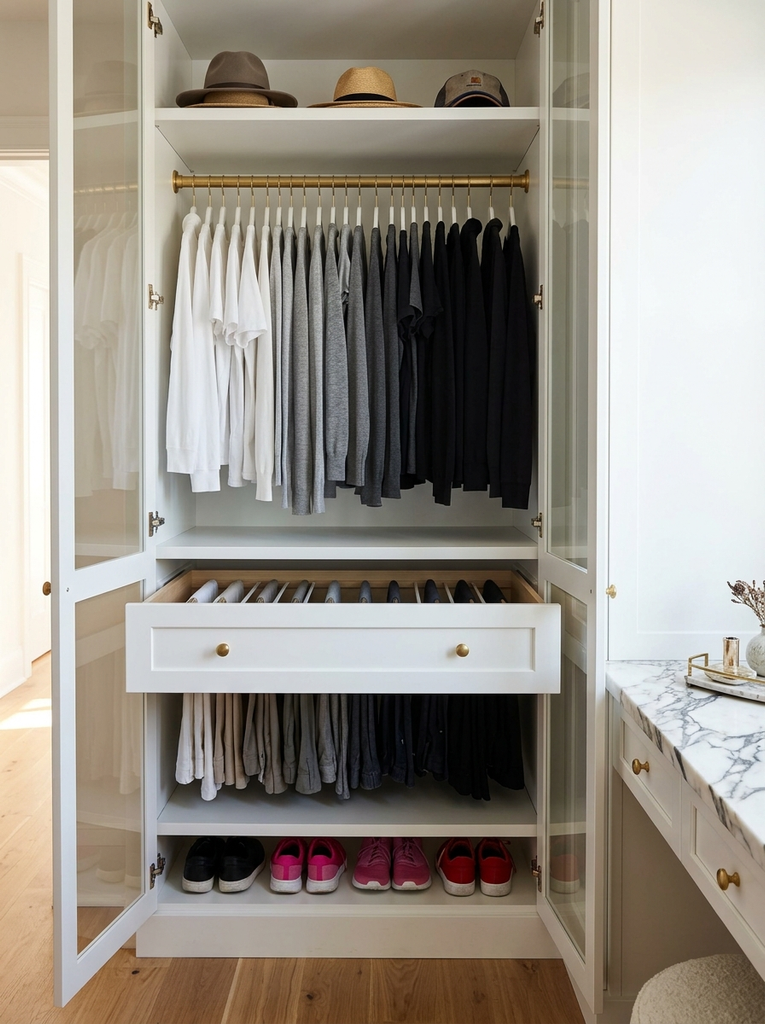
Pull-out storage lets you see everything at once, which is the real secret behind the tidiest closets. In this white cabinet, a wide drawer slides forward with rails that hold pants folded over slim bars, so every pair is visible from above without digging. Beneath it, sneakers sit in a neat row on the cabinet floor, and above it a brass rod carries tops hung in one tonal sweep. Hats rest on the top shelf, spaced apart so the crowns keep their shape. Nothing sits behind anything else.
I used to drape pants over hangers and lose track of half of them, because the ones in the middle disappeared behind their neighbors. Switching to a pull-out bar changed my closet organization overnight. I could see every pair in a single glance, and I stopped buying duplicates of trousers I already owned. That small lesson explains why this cabinet works: visibility prevents clutter more reliably than any labeling system.
The palette plays a role as well. Hanging pieces run from white through gray to black, and that gradual shift reads as calm even when the rod is full. Brass hardware adds warmth against the crisp white, and the glass-front doors keep dust off while still letting you scan the contents. If glass is not an option, a clear door-front rack or an open shelf behind a curtain gives you similar protection. Renters can get the same visibility from a slide-out bar that mounts under a shelf, with no carpentry at all. Group hanging clothes by type first and by color second, since most people search by category when they dress.
3. Double Your Hanging Space With Two Rods
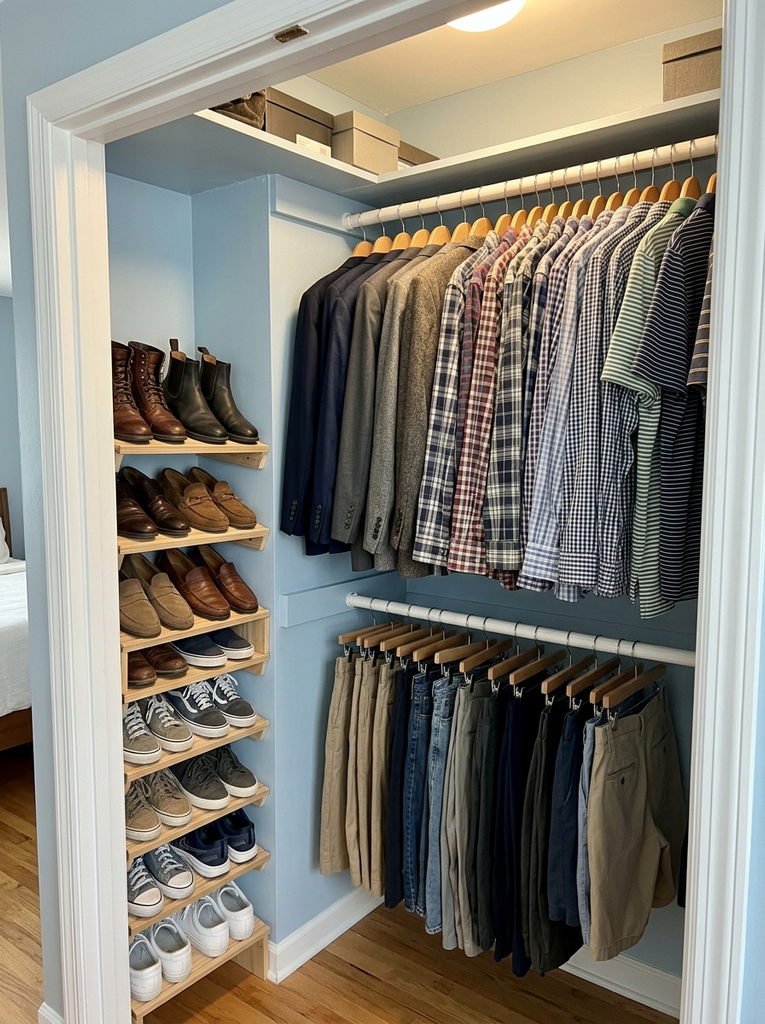
Stacking two rods is the fastest way to double hanging capacity in a reach-in closet. In this corner, the upper rod carries blazers, button-down shirts and polos, while a lower rod holds trousers and shorts with clip hangers. Most clothing is short enough that a single tall rod wastes the empty air beneath it. Standard guidance puts a double-hang setup at roughly 80 inches for the top rod and about 40 inches for the bottom rod, which suits shirts, jackets and pants folded over a hanger. Check those numbers against your own tallest garment before you drill, because good closet organization starts with measuring.
Sorting is what makes the result look as good as it does. Jackets sit on the left and short-sleeve polos on the right, and within each group the colors move from neutrals to stripes to brighter shades, so a navy shirt turns up in seconds. This kind of grouping uses visual rhythm, the same principle that keeps a bookshelf from looking chaotic. Matching clear hangers keep the shoulder line even, and an even line reads as order. Light blue paint on the walls and the crown molding brightens a space that likely gets little natural light, since pale cool colors reflect light well and make a small closet feel airy.
The shoe column on the left shows a second trick. Slim stackers hold one shoe above another on each shelf, which roughly doubles capacity, while boots stand on the top shelf where their shafts have room. Everyday shoes sit between knee and shoulder height, where they are easiest to grab. An adjustable rod kit from any hardware store turns this into a weekend project, and you can reposition it as your wardrobe changes. Skip double hanging for long dresses and coats, which need a full-height section, and reserve one side of the closet for them.
4. Label Wooden Boxes for Everything That Does Not Hang
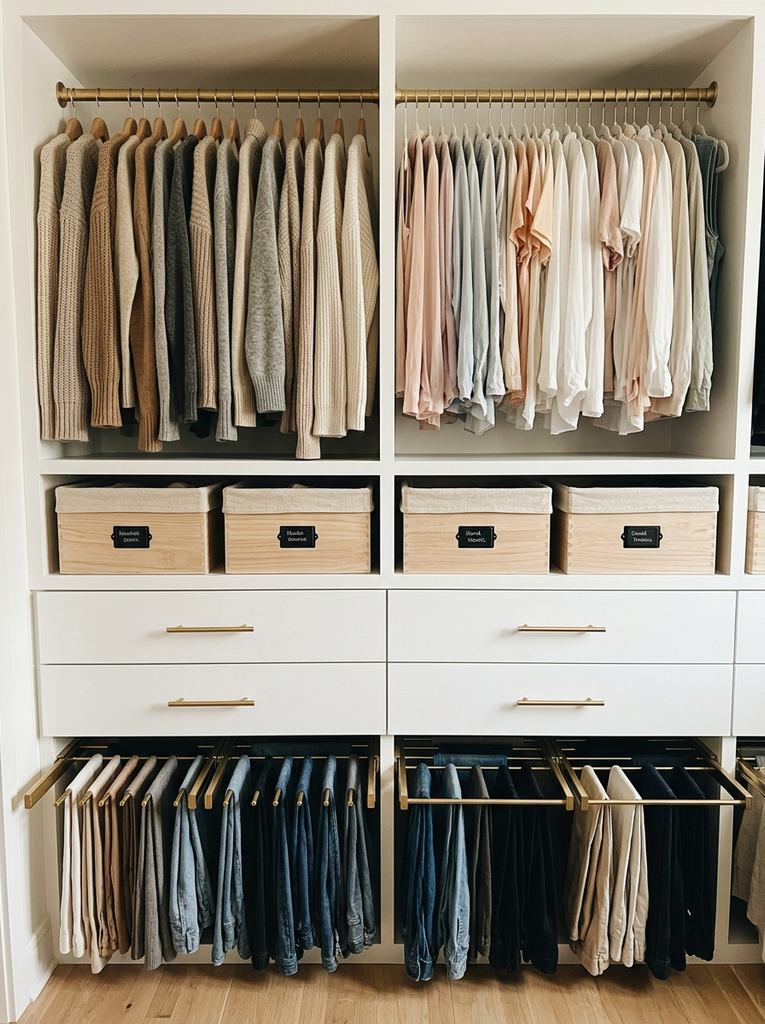
Small items are what make a closet look messy, and labeled boxes are the simplest closet organization fix for them. Here, wooden boxes with black label tags sit on the shelves above the lower drawers, each marked for a category such as accessories, apparel care, t-shirts or denim. A category label tells anyone in the household what belongs inside, which helps the system last past the first week. Matching boxes with soft felt linings also create a calm line of repeated shapes, and repetition is one of the quickest ways to make storage look intentional.
When I first started labeling bins, I made the mistake of naming them by room or by occasion, and the labels stopped meaning anything within a month. Labeling by plain category, the way these boxes do, held up far better because I never had to debate where a belt belonged. I now keep every label to one or two words so it stays readable at a glance.
Other details in this closet are worth borrowing. Two brass rods at different lengths hold sweaters on wooden hangers and lighter blouses on slim white ones, which keeps heavy pieces from crowding delicate fabrics. Heavy knits stretch on hangers over time, so fold the thickest sweaters into a box and hang only lightweight cardigans. Pull-out bars beneath the drawers hold pants without creases, and the rows of adjustable shelf holes let you move shelves as your needs change. For a budget version, felt-lined fabric bins and a pack of paper labels cost little and give nearly the same effect. Keep the boxes you open weekly at eye level and send the seasonal ones up high.
5. Divide Handbag Shelves So Every Bag Keeps Its Shape
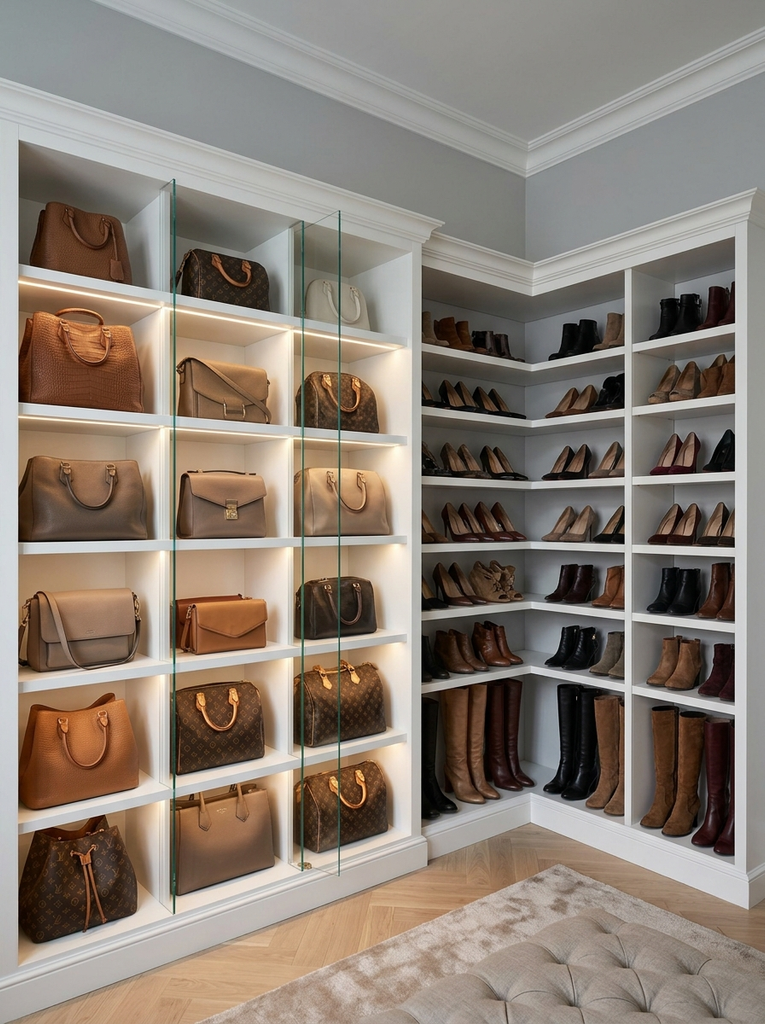
Bags last longer and look better when each one has its own upright slot. These shelves use thin glass dividers to create cubbies, so soft leather totes stand tall instead of slumping into one another. The glass is nearly invisible, which keeps the wall feeling open and lets you see every bag from the front. Shorter cubbies near the bottom suit clutches and small purses, while the tallest cubbies handle big carryalls. Shelf heights follow the size of what lives there, and that tailoring keeps the arrangement from looking like a pile.
Soft bags need support, so stuff them lightly with tissue or a small pillow insert to keep their shape, and tuck the straps inside rather than draping them across the shelf. Group bags by size and color rather than by occasion, since size drives the shelf height and color helps your eye jump to the right one. Give each bag a little breathing room, because crowded leather scuffs and creases at the corners. Move the bags you carry every day into the eye-level cubbies and let the seasonal ones live above or below.
On the right, the shoe shelves wrap around the corner in an L shape, so none of the corner depth goes to waste. Heels, wedges and flats sit one pair per slot with their fronts facing out, and tall boots stand together at the bottom where their shafts can stay upright. You can approximate the glass dividers with clear acrylic shelf dividers sold for retail displays, which slide onto an ordinary shelf, and a pair of low shoe risers will make a basic shelf show off more pairs. If your shelves are only the standard 12 inches deep, give that space to flats and sandals and store bulky boots somewhere else. White shelves against a soft gray wall also keep the focus on the colors of the leather.
6. Size a Nursery or Child’s Closet to Grow With Them
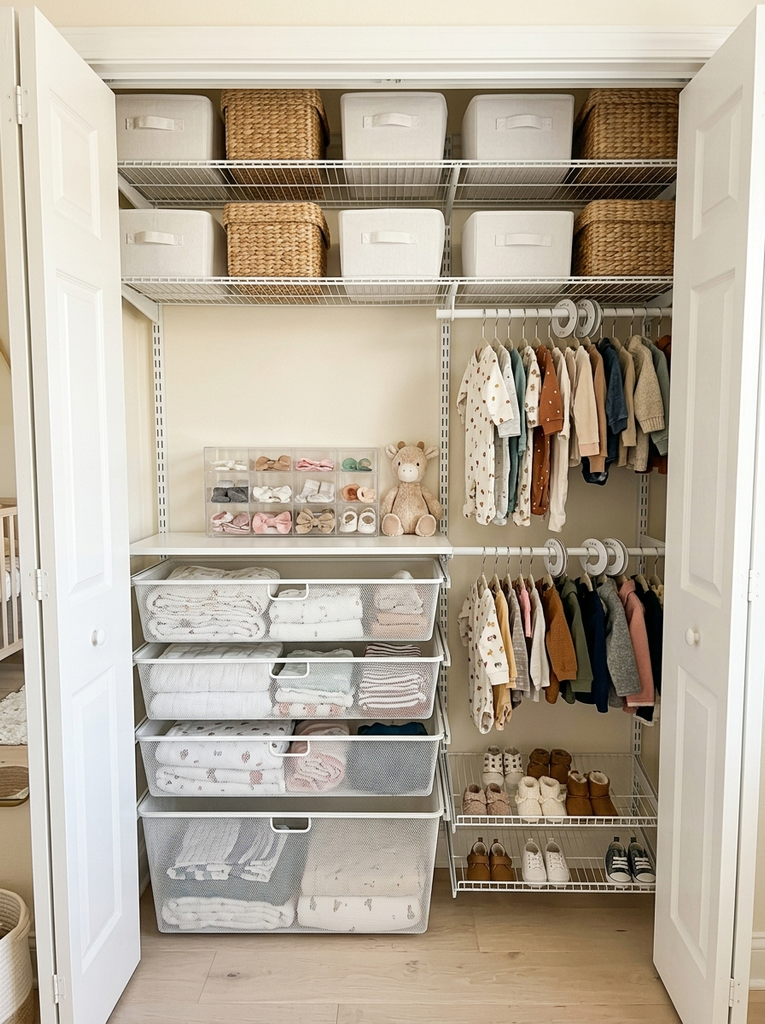
Closet organization for a child works best when the daily items sit low and the rarely used ones sit high. This wire shelving system puts lidded baskets for towels, diapers and wipes on the upper shelves where adults can reach, and keeps drawers and hanging rods lower. Because the system hangs from wall tracks, every shelf and rod can move as the child grows. Adjustable hardware is worth choosing over fixed shelves for exactly that reason. Cardigans, dresses and jackets hang on short rods, and a row of shoes sits on a slanted shelf above the coats at a height a small hand can reach.
Mesh drawers are the unsung heroes here. Because you can see the pieces through the sides, folded clothes, socks and blankets are easy to sort by type and size, and a clear divided tray keeps tiny hair clips from vanishing. Woven baskets add warmth to all that white and give the top shelf a finished look. The pale wood floor and soft pink textiles keep the mood gentle, which matters in a room meant to feel calm at bedtime.
I lowered the rod in one child’s closet so that a young child could hang up a cardigan alone, and the daily pile on the floor shrank within a week. Independence works as an organizing system, because children keep things tidy when the setup lets them do it alone. To follow this approach, keep the daily outfit zone below about 40 inches, put adult-only supplies on the higher shelves, and store the next size up in a labeled bin overhead. Wire shelving can leave faint lines on soft knits, so add a shelf liner or fold those pieces into drawers. Review the contents each season, since children outgrow clothing quickly and clutter builds wherever a closet is not edited.
7. Stretch a Narrow Closet With a Mirror and Slanted Shelves
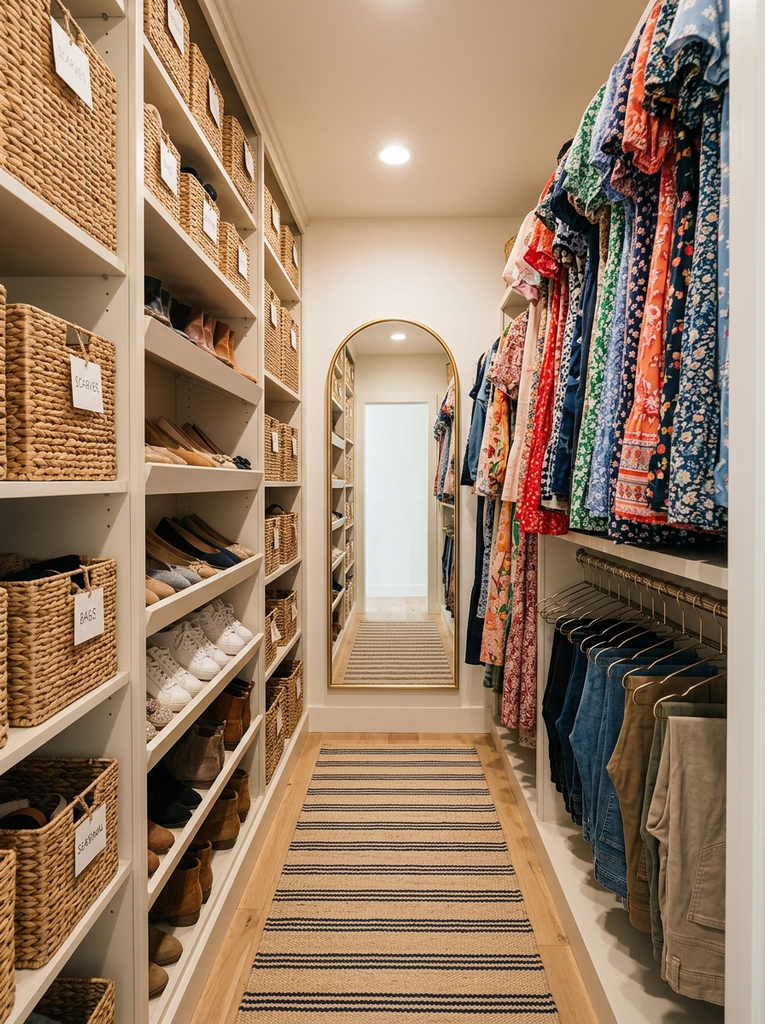
A narrow closet needs to feel like a hallway with a purpose, not a tunnel. This one keeps shoes on slanted shelves along one side, with labeled woven baskets above them, and hangs dresses along the other, leaving a clear aisle down the middle. The slant presents every pair at a glance, so a shoe is easy to find even in a tight space. The labels on the baskets keep the top shelves useful, because items out of reach are easy to forget unless something names them.
A tall mirror with a slim gold frame at the end of the aisle does double duty. It bounces light back down the length of the closet and visually extends the depth, and it gives you a spot to check your outfit before you leave. A mirror at the end of a long sight line is a long-standing trick for making a narrow room feel wider. The striped runner on the floor points the eye toward that mirror and protects the surface along the busiest path.
Under the hanging dresses, a row of slim hooks holds pants, scarves and other pieces that would otherwise eat up shelf space. White hangers throughout keep the rhythm steady, and the dresses are grouped by length so the hemline stays even. Aim for an aisle of at least 36 inches so you can walk and turn without brushing against anything, and closer to 42 inches if two people share the space. If your closet is shallower than that, a slim over-the-door mirror and a runner still cost little and still make the room feel longer. A dimmable fixture at the center of the ceiling helps avoid the dark ends common in long closets.
8. Pair Wood-Front Drawers With Sliding Shoe Trays
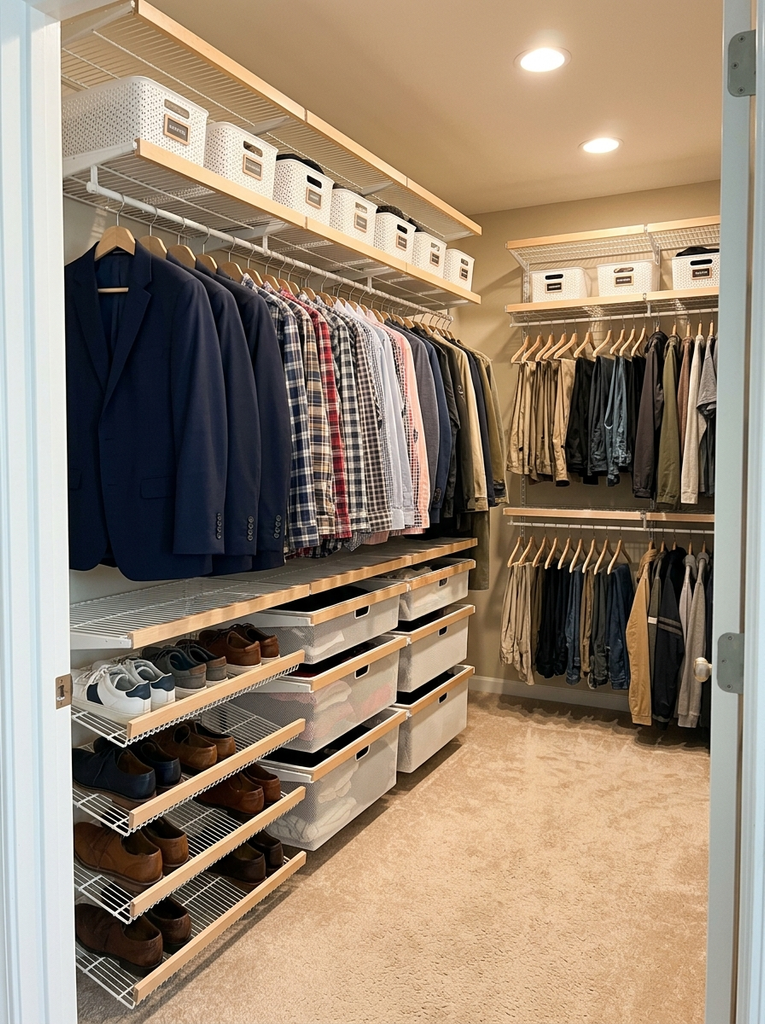
Mixing wood with white wire can make a utilitarian system look like furniture. In this walk-in, birch-front shelves and drawers sit on a white wire frame, and the pale wood adds a warmth that plain wire never has. Mesh drawers handle folded clothes, while sliding trays tilt to show sneakers and loafers as you pull them forward. Baskets overhead take care of seasonal items. Everything the owner wears regularly sits within arm’s reach.
The tilted trays are the standout feature. Shoes slide out toward you, so you see the whole pair without crouching, and pushing them back tucks them out of sight. Because each tray holds only a few pairs, you naturally limit how many you keep, which keeps the collection edited. Above, shirts and blazers hang in a flow from dark jackets to lighter checks, with enough space between hangers that fabric does not wrinkle. Baskets on the high shelves have their labels turned outward, so even the things you rarely touch are easy to find.
To copy it, start with a wall-mounted wire or track system sold at most home improvement stores, then add wood-faced shelves and a few sliding drawers where your budget allows. Set the hanging rod at about 66 to 72 inches for shirts and jackets in a single-hang section, and put the drawers directly beneath for the pieces you wear weekly. A shelf liner keeps thin wire lines from marking delicate knits. Carpet or a rug softens footsteps and quiets a long closet. Finish by choosing one hanger style for the entire closet, since matching hangers calm the look more than any other single change.
What Makes It Feel Finished
Across all eight closets, the same quiet habits do the heavy lifting, and they are what separate lasting closet organization from a one-weekend makeover. Every item has a clear home, matching hangers or boxes repeat down each line, and daily pieces live between knee and shoulder height. Light matters as much as hardware, so choose warm bulbs around 2700K to 3000K, which make fabrics look true and the space inviting, and add a strip light if the closet has no window. The best closet organization ideas also leave room to breathe, because a closet filled to the last inch cannot stay organized for long.
Begin your closet organization with a short edit: take everything out, return what you wear, and donate what you do not. Then pick the two or three moves from this list that fit your space, install them in order of impact, and live with the result for a month before adding more. Closet organization improves in layers, and each small change makes the next one easier to see. Come back each season to adjust, and the space will keep earning its place in your routine.